
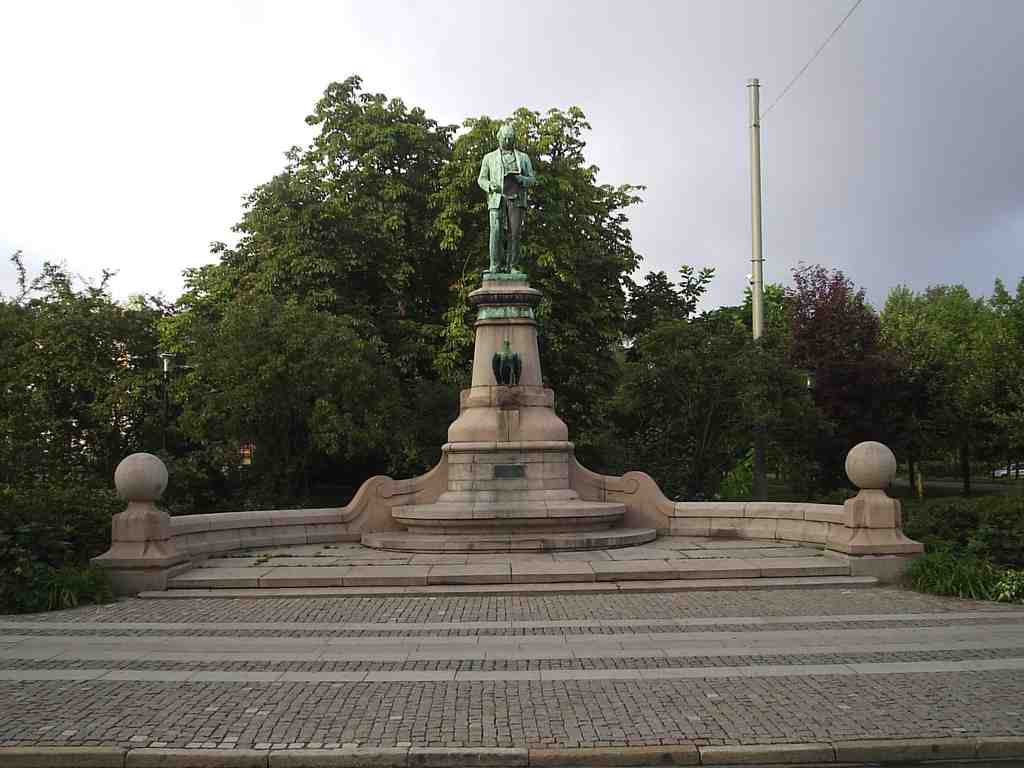
If you look straight ahead, you'll see a tall bronze statue of a man standing on a grand stone pedestal, framed by trees and flanked by two large stone spheres at either side-right at the beginning of Kungsportsavenyen.
Step a little closer and let's meet John Ericsson, one of Sweden’s most inventive minds! Imagine it’s the late 1800s: horses clop along the avenue and the smell of coal fills the air. A group of excited locals are gathered at this very spot, and a hush falls as a new statue is unveiled with great fanfare. There stands John Ericsson in his bronze coat, forever looking ahead-not just because he likes the view of Kungsparken, but because he loved looking to the future.
Ericsson was the Swedish inventor who gave the world the boat propeller and helped design the famous ironclad warship USS Monitor during the American Civil War. So, yes, you could say he made things move just a bit faster! But behind this tribute is a story full of drama and emotion. It all started with Claes Adelsköld, a railway builder who decided that Ericsson deserved a statue. Donations rolled in, and finally, Ingel Fallstedt, a sculptor from Denmark, got the job. At first, Fallstedt wanted to put Ericsson’s head on a column with a giant lion below-clearly thinking outside the box! The committee, though, wanted arms, legs… the full Ericsson experience. After some debate, a group of architects took over the pedestal design, letting Fallstedt focus on the statue itself.
But creating John in bronze wasn’t easy. Fallstedt, who usually worked with other materials, was under a mountain of stress. In a studio in Denmark, he shaped and reshaped the statue, feeling the pressure to honor a national hero. Sometimes he was so anxious, you could probably hear the sculpting tools clattering to the floor. When he finally finished the statue and sent it off to the foundry, his exhaustion was absolute, and, sadly, he never saw the statue in its final place-his story ended in heartbreak, as many believed the statue “killed him” with the stress it brought.
Still, when the unveiling day came and the cloth dropped, a rumble of applause swept through the crowd. Now, whenever you pass by, you’re looking at more than a work of art-you’re seeing the triumphs, struggles, and big dreams of people who wanted to change the world. And remember, every time you see a propeller, tip your hat to John Ericsson, Gothenburg’s master of invention.




