
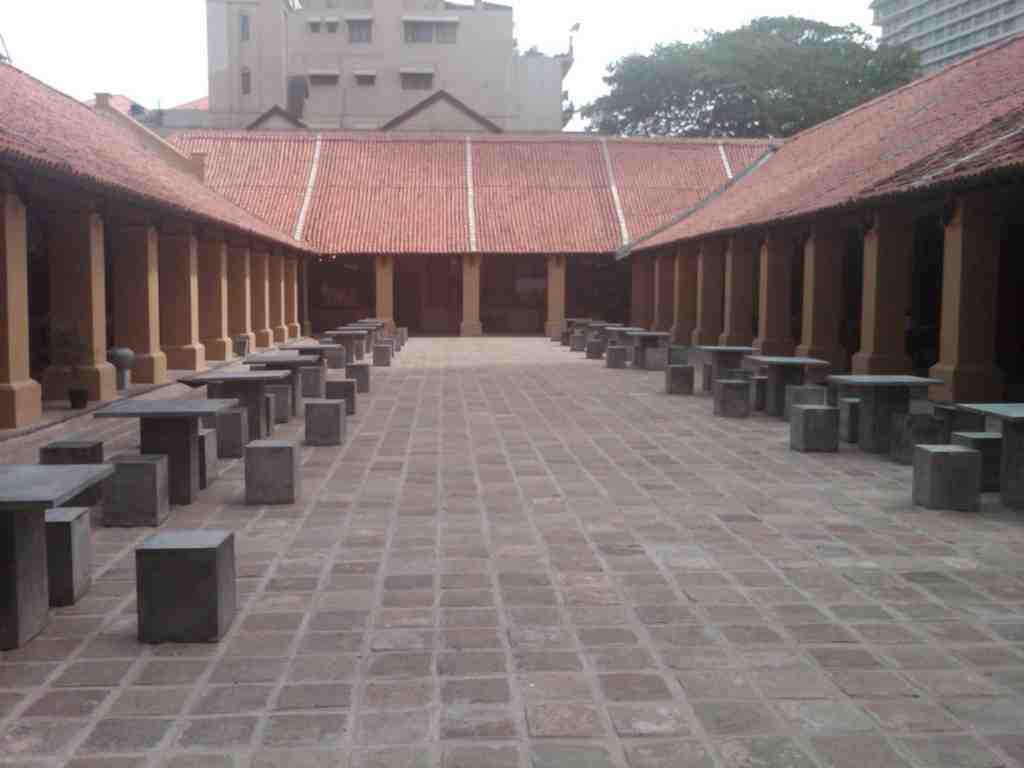
Straight ahead, you’ll spot the Old Colombo Dutch Hospital by its low, red-tiled roofs and sandy-yellow walls, all wrapped around a broad, stone courtyard lined with sturdy columns and rows of simple stone benches.
Alright, take a deep breath and look around-you’re standing in front of what’s believed to be the oldest building in the entire Colombo Fort area! If Colombo were hosting a game of hide and seek for old buildings, this one would probably win by just sitting here, looking relaxed and ancient.
Now, imagine the year is 1681-pirates might have been roaming the seas, ships sailing in with exotic goods, and here, Dutch officers and seafarers would stumble in from the harbor just nearby, weary from their long journeys. This place wasn’t built for shopping sprees or to host trendy cafes-it was once a hospital, one of the first of its kind, caring for those who fell ill while working for the Dutch East India Company. Picture sailors with sunburnt faces lying on simple mats, the sickest awarded a mattress-consider that real hospital luxury for the time! Their clothes? Shipped all the way from Java.
Maybe you would have met the hospital’s resident doctor, Paul Hermann. Imagine him with a satchel of strange herbs, wandering about the courtyard, gathering local plants for his patients. He’s famous as the father of botany in Sri Lanka-so next time you forget to water your houseplant, just think, he’d be mildly disappointed!
The old hospital was thoughtfully built with thick, cool walls and massive teak beams-designed to be strong enough to defy the tropical heat, hurricanes, and maybe even the odd stubborn patient. The long verandas running the lengths of the wings are perfect for catching sea breezes, and in the old days there was even a canal flowing right beside here-until the British, never ones for a romantic waterway, filled it in after they took over.
Skip ahead through time-this place became a police station, then took a heavy blow in 1996 during a violent attack. But Colombo’s Dutch Hospital is nothing if not resilient. In 2011, it was reborn as the bustling shopping and dining precinct you see today, its old courtyards now echoing with laughter, clinking teacups, and maybe the occasional shopper arguing over a bill.
So as you stroll under these old beams and soak in the atmosphere, remember-hidden behind these sturdy walls are barely-whispered stories of sailors, doctors, mystery canals, explosions, and centuries of Colombo’s changing heartbeat. Not bad for a “hospital,” right?


