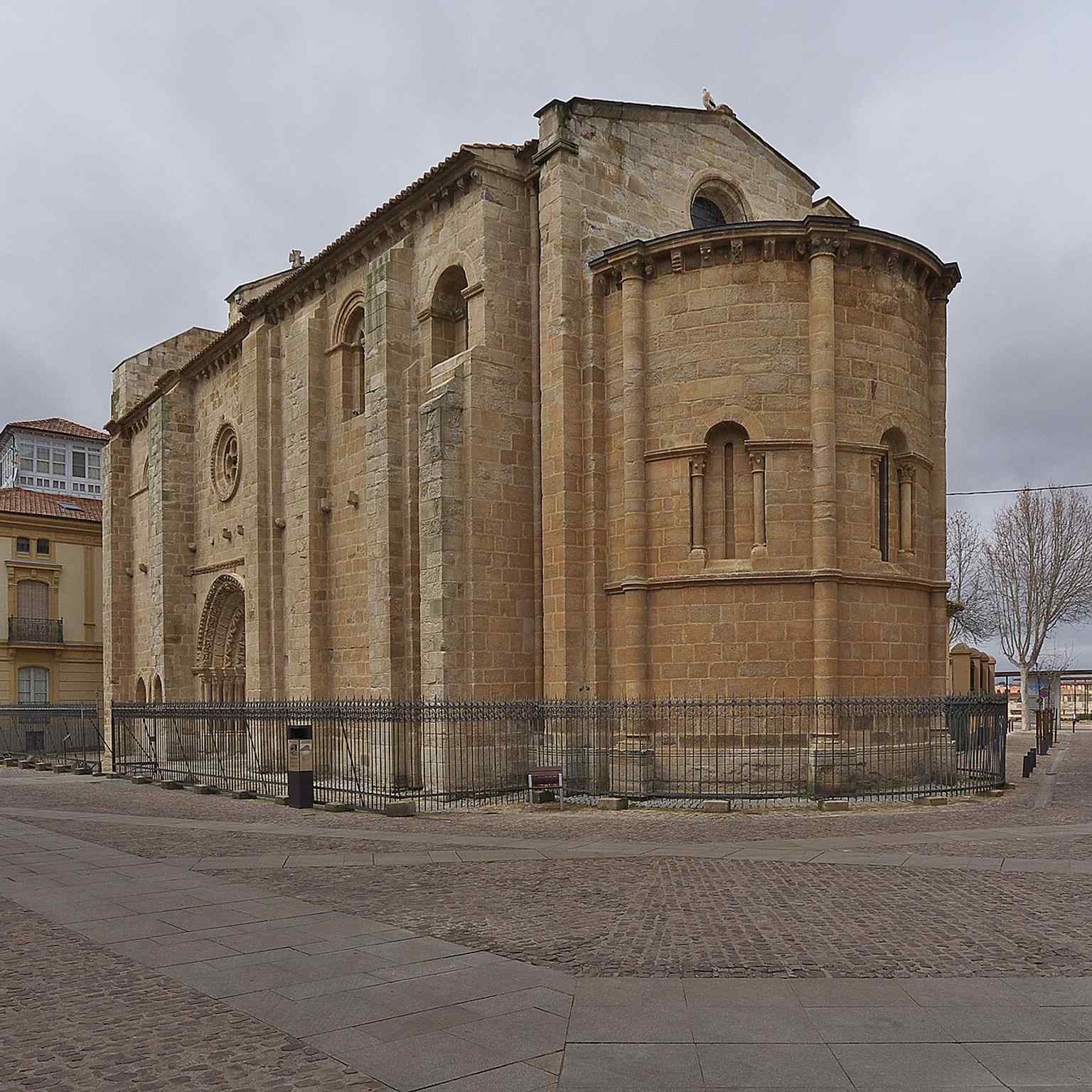
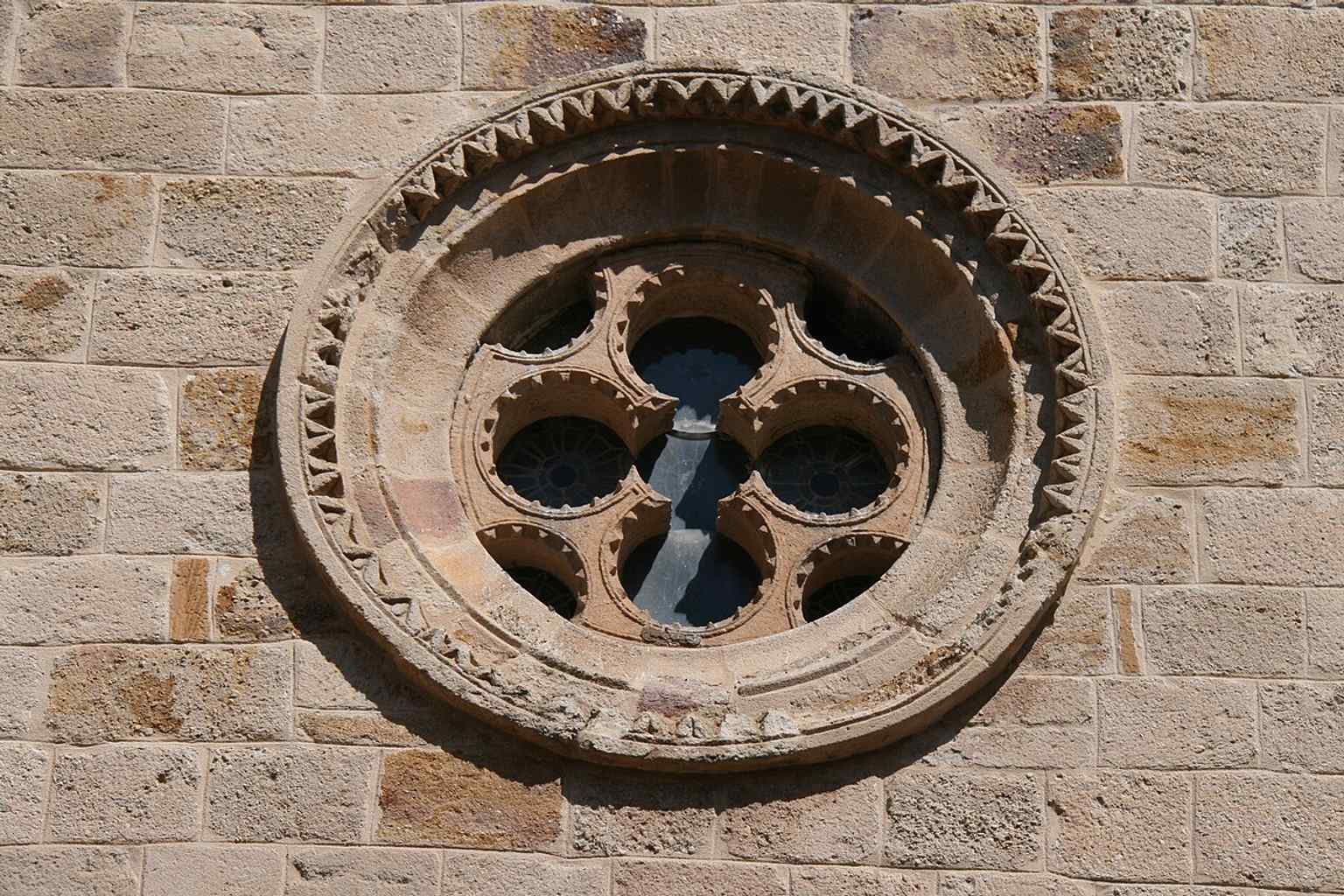
On your right, this compact warm-stone church is easy to spot by its rounded Romanesque massing, its deep shadowed south portal, and the small rose window framed with tiny columns.
Santa María Magdalena looks settled... but its story refuses to sit still. Documents mention it by eleven fifty-seven, and a completion date of twelve fifteen survives in the testament of the master builder Giral Fruchel. That sounds tidy, until it doesn’t. Later writers credit Fruchel, tradition links the church to the Knights Templar, and other scholars argue it belonged instead to the Order of the Hospital, the group later known here through the Order of Malta. So this place gives us our first clear case of contested authorship and ownership: one building, several claimants, no perfectly clean origin story.
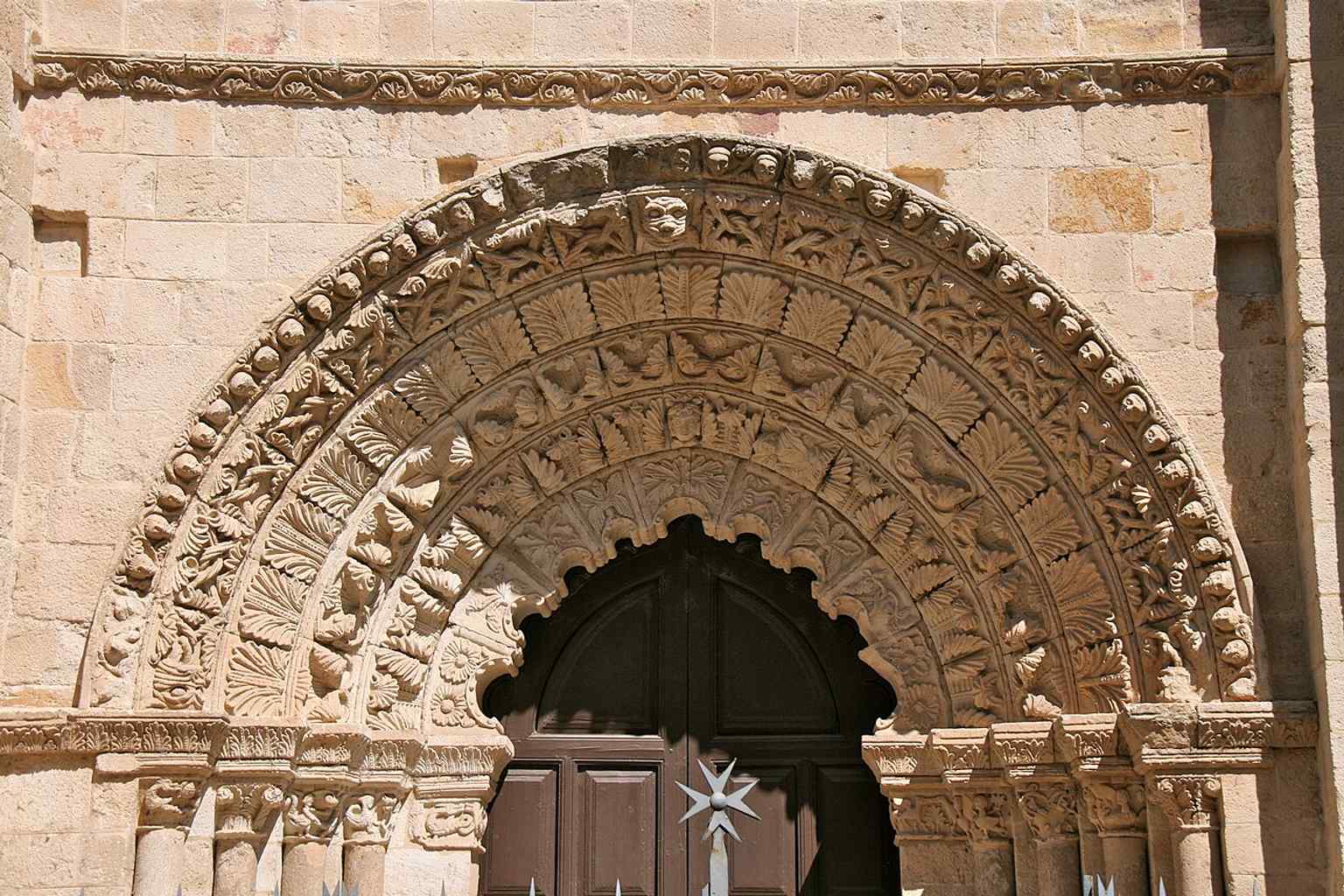
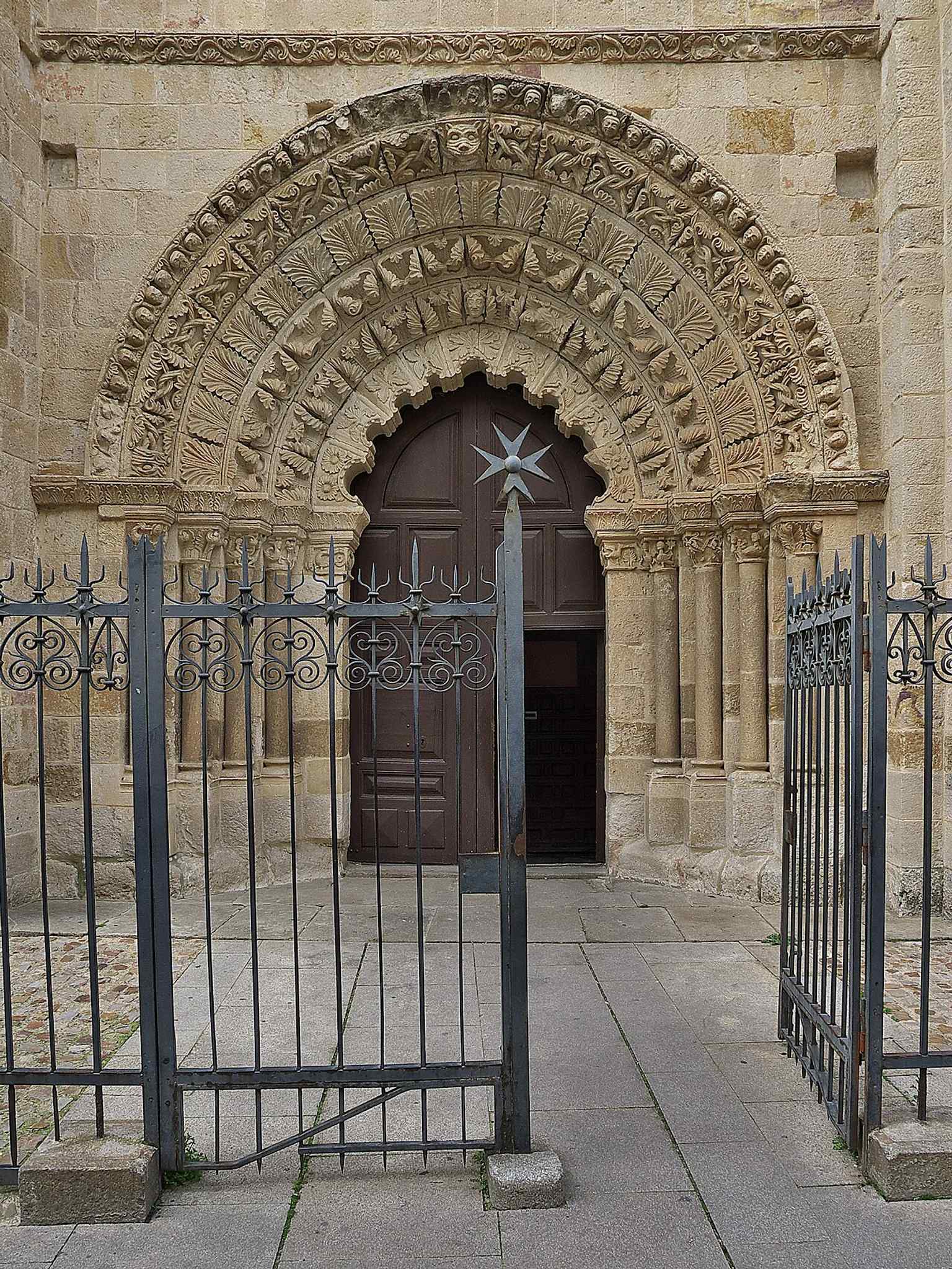
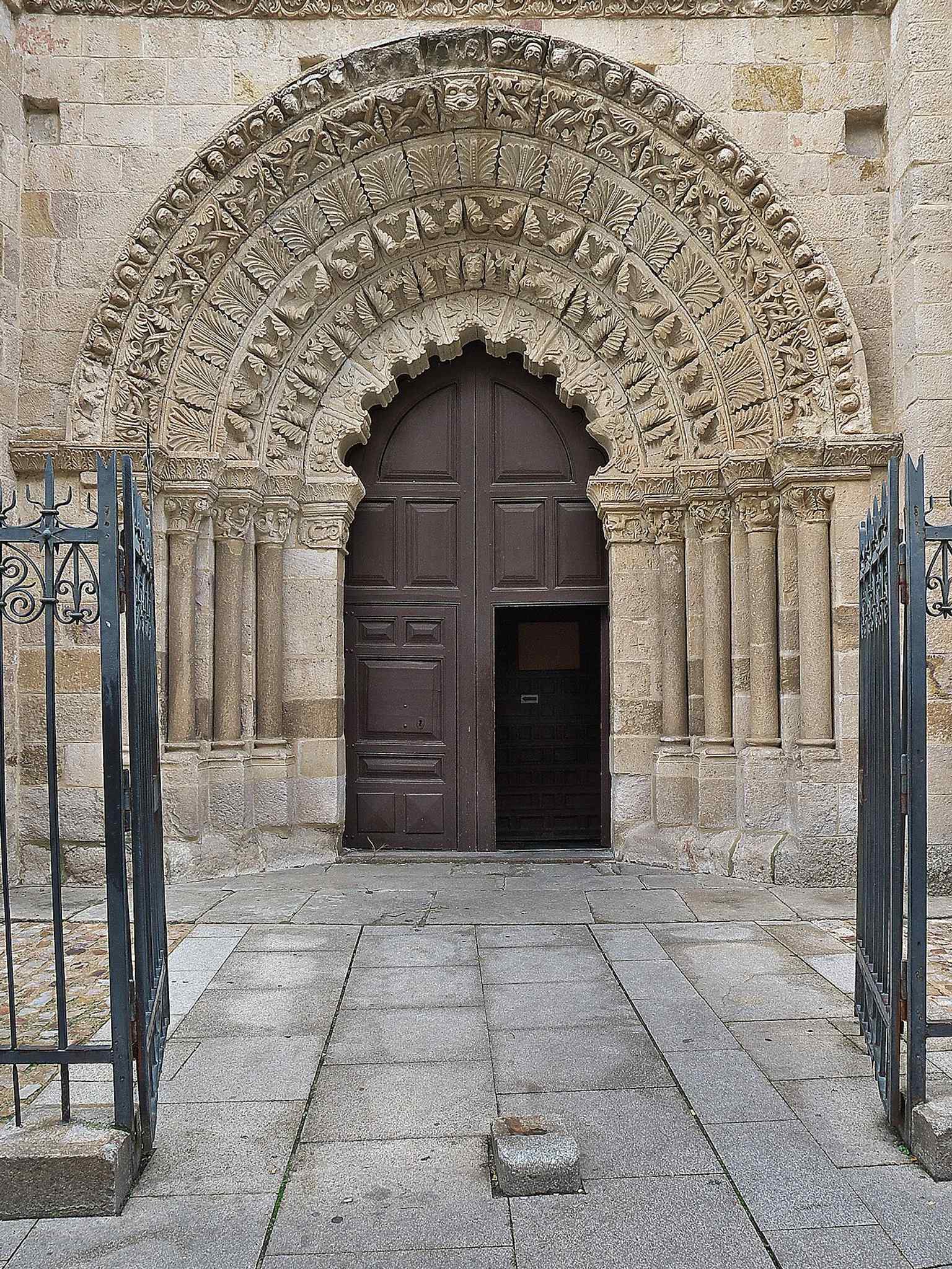
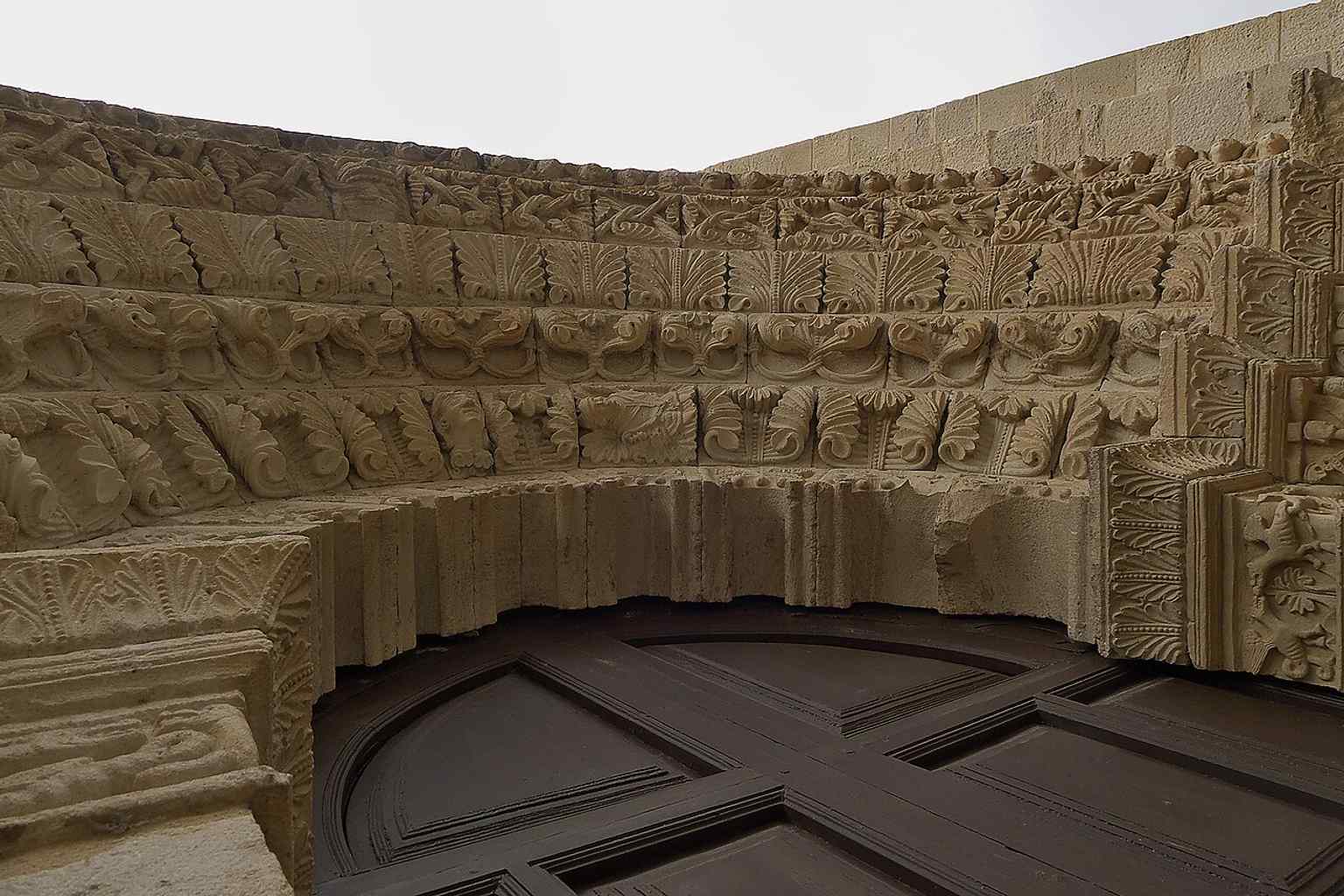
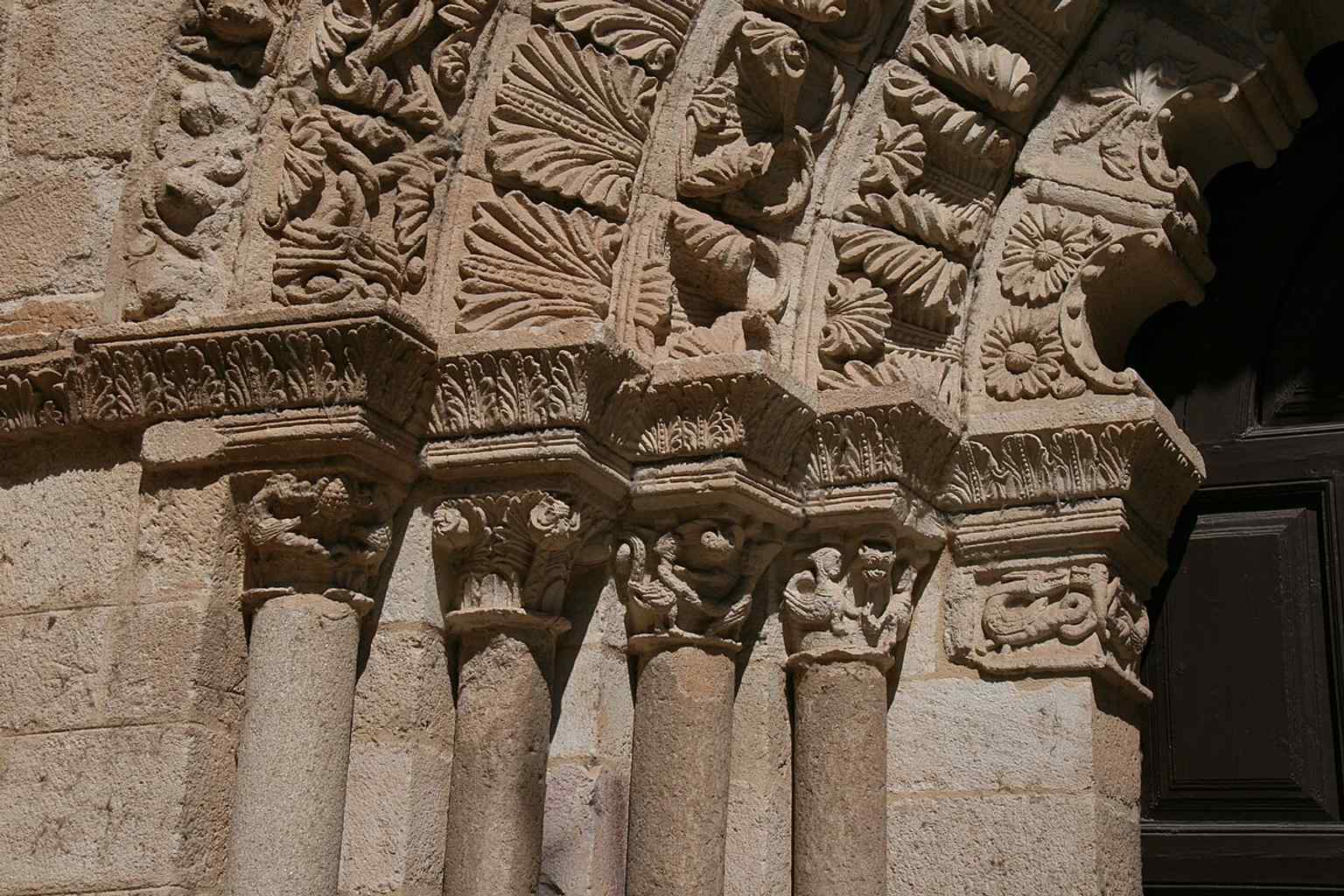
Now study that south portal for a moment. The doorway sinks inward through layered arches and slender shafts, almost like a stone funnel. Some sources say the city council gathered here, turning a church entrance into a kind of outdoor council room. In a legal text from twelve eighty-nine, Santa María Magdalena even appears as a reference point in an assault case, which is wonderfully practical. Holiness, yes... but also directions for civic business. If you want the close-up, pull up the portal image in the app.
The south portal is the landmark’s most famous doorway, where some sources say the city council once gathered.Photo: Tamorlan, Wikimedia Commons, CC BY-SA 3.0. Cropped & resized.
Architectural historian Gómez Moreno thought this portal might be the oldest part of the church. It also picked up a local superstition: if you cannot make out the carved bishop here, you will never marry. Romanesque sculpture, apparently, had a side career in personal forecasting.
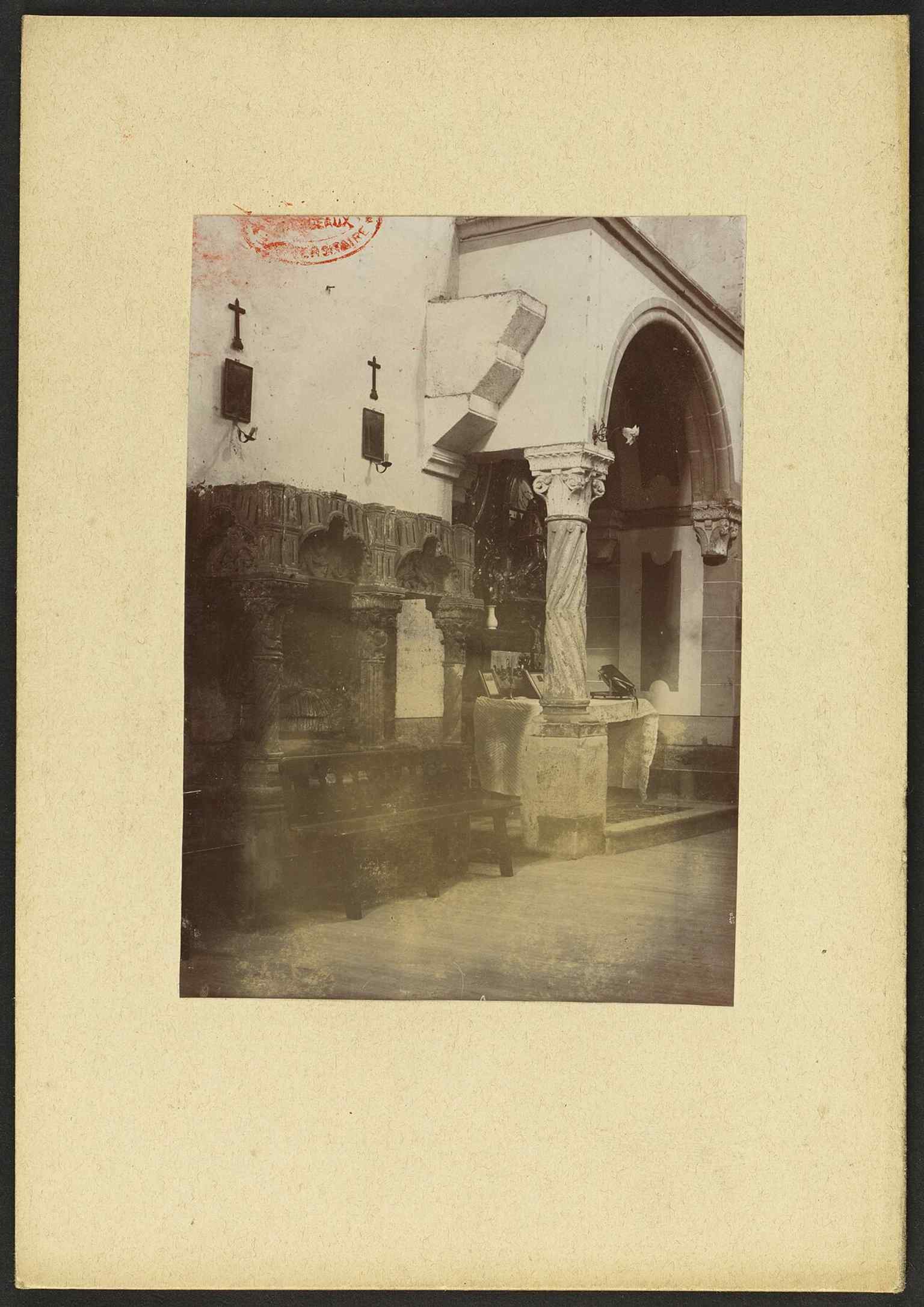
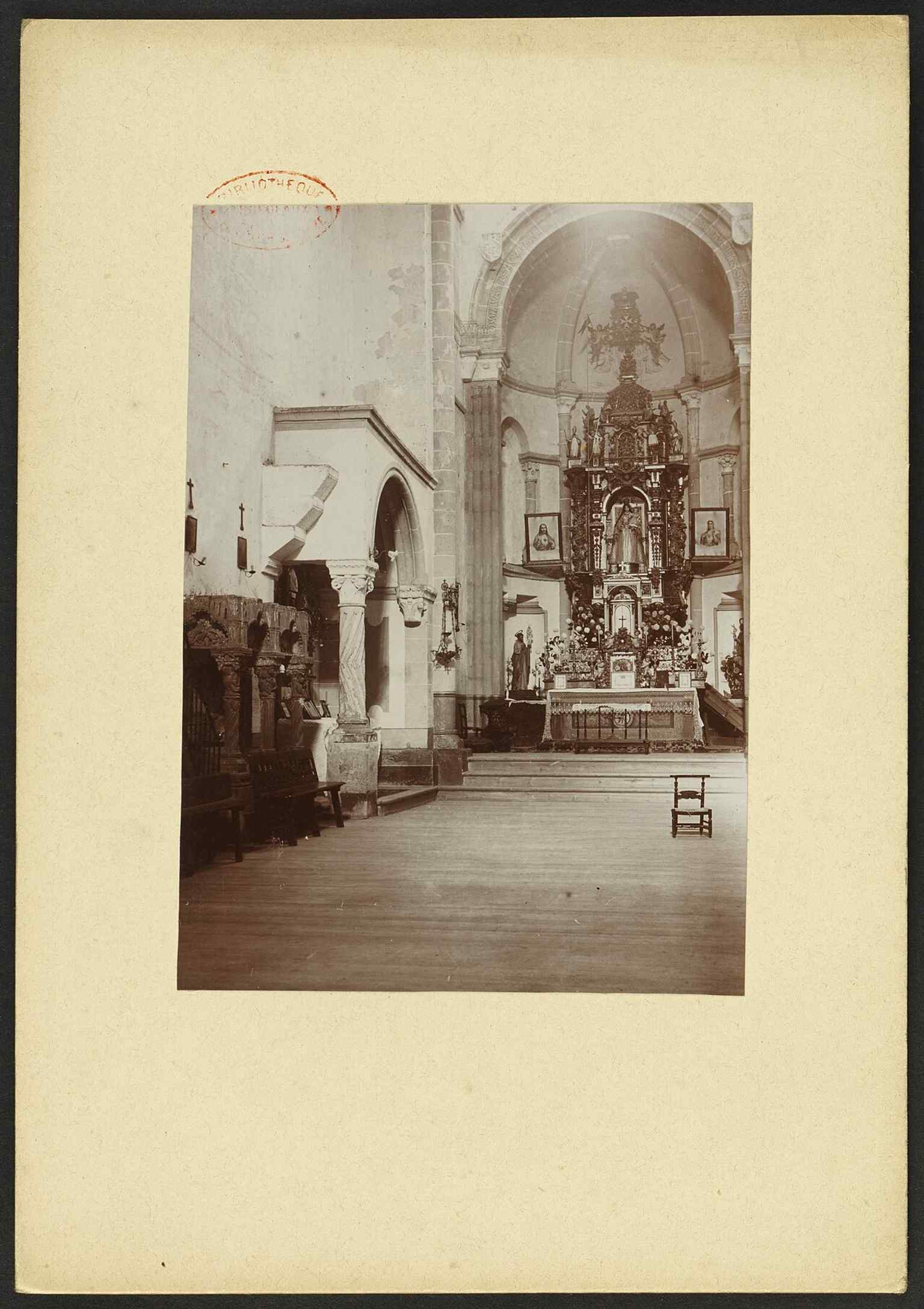
Inside, there is an even better mystery: a thirteenth-century tomb often attributed to Doña Urraca of Portugal, though careful scholars call her simply an unidentified lady. You can see that monument on your screen. For much of the twentieth century, the Servants of Mary cared for this church until two thousand and five; after that, it became more visibly a heritage monument, protected since nineteen ten, but also a fragile one.
A Romanesque tomb inside the church, echoing the anonymous lady often linked with Doña Urraca de Portugal.Photo: Jean-Auguste Brutails, Wikimedia Commons, Public domain. Cropped & resized.
At the next stop, only about one minute away at Corpus Christi Convent, the human imprint grows much more personal. If you plan to return, the church generally opens from ten to two and from five to seven, with shorter hours on Sunday.
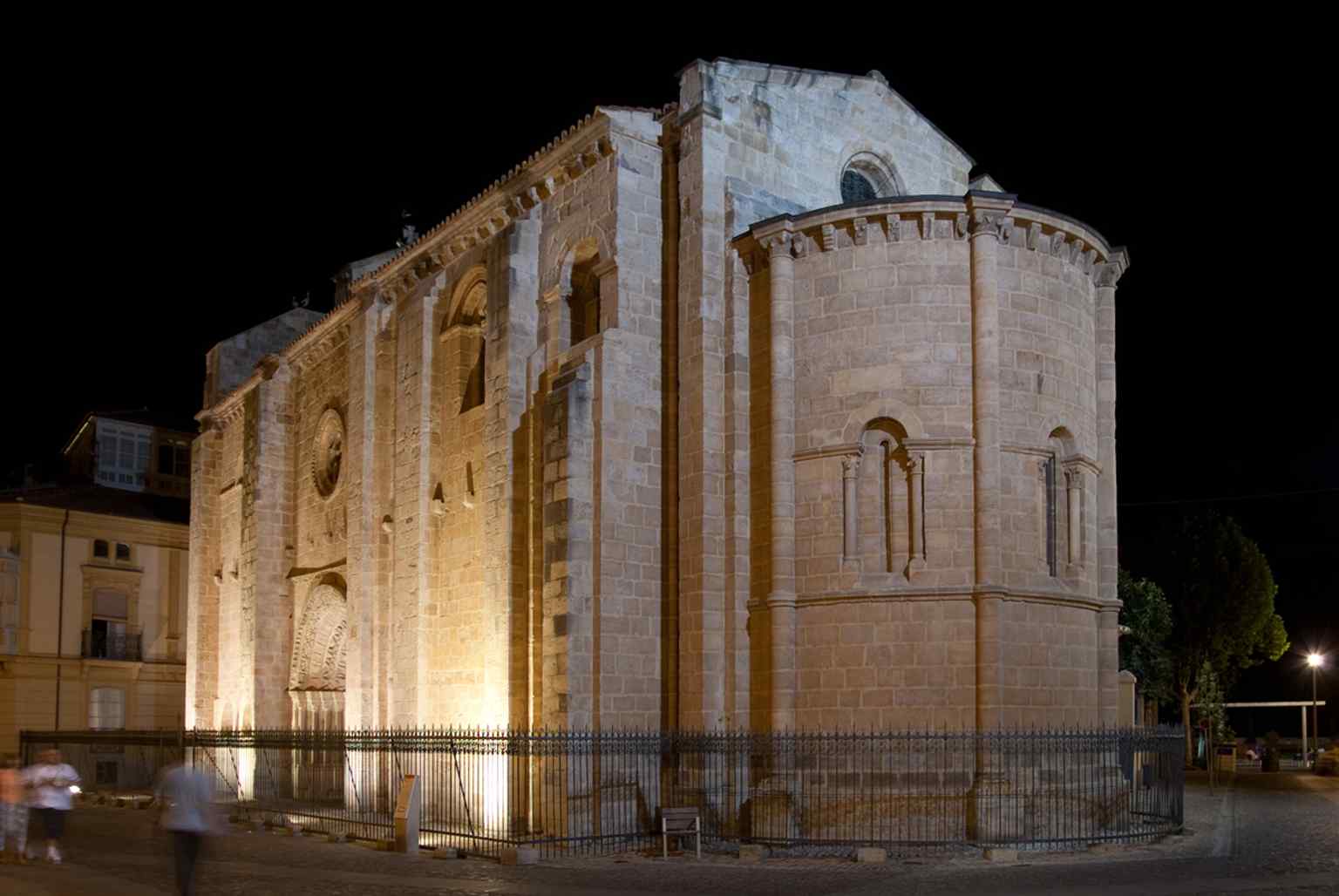
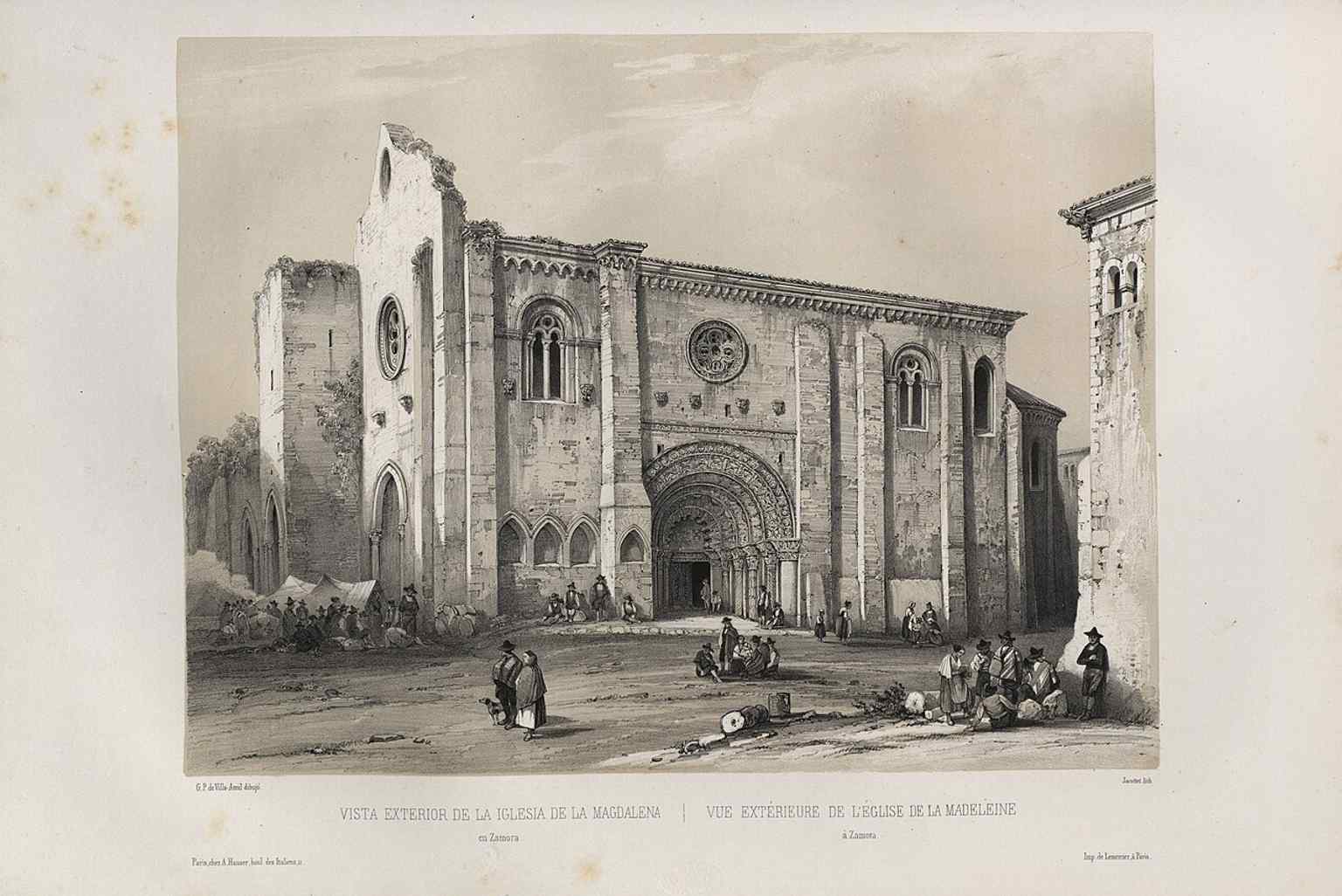
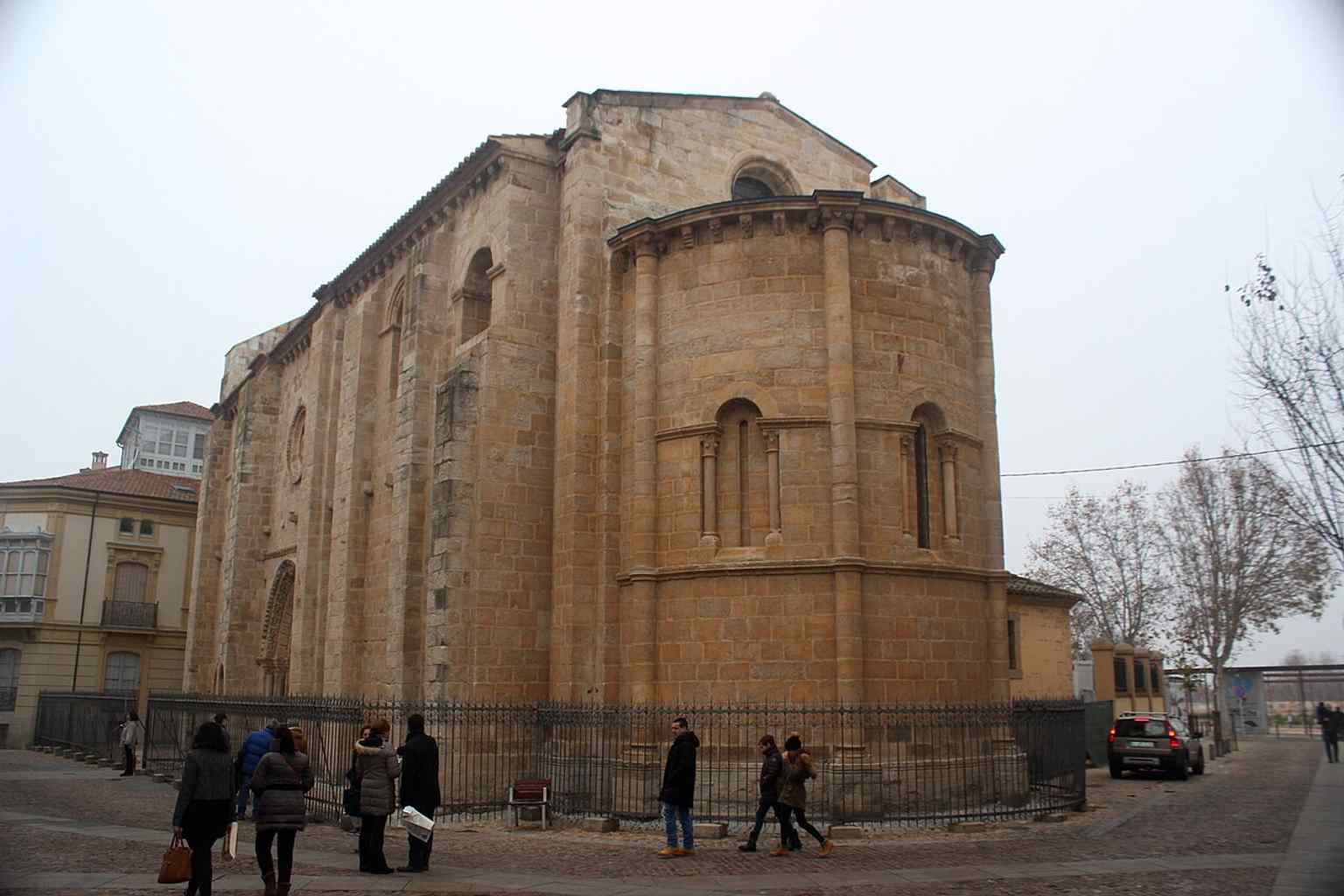
The church’s east end and apses show the Romanesque massing of a 12th-century building that took decades to complete.Photo: Jose Luis Filpo Cabana, Wikimedia Commons, CC BY 3.0. Cropped & resized.The rose window recalls the church’s refined Romanesque stonework, often compared with the Temple Church in London.Photo: Tamorlan, Wikimedia Commons, CC BY 3.0. Cropped & resized.A richly carved south portal with the ornate Romanesque decoration that made the doorway a local point of wonder.Photo: Jose Luis Filpo Cabana, Wikimedia Commons, CC BY 3.0. Cropped & resized.This 12th–13th century south portal is one of the church’s signature Romanesque features and likely its oldest major part.Photo: José Luis Filpo Cabana, Wikimedia Commons, CC BY 3.0. Cropped & resized.Close-up of the portal’s arch mouldings, a good view of the sculpted detail that inspired local superstition.Photo: José Luis Filpo Cabana, Wikimedia Commons, CC BY 3.0. Cropped & resized.The choir interior reflects the building’s medieval liturgical life and the long history of use and care inside the church.Photo: Jean-Auguste Brutails, Wikimedia Commons, Public domain. Cropped & resized.A carved impost from the doorway, one of the small Romanesque details that survived centuries of worship and weather.Photo: Tamorlan, Wikimedia Commons, CC BY 3.0. Cropped & resized.Night view of the church, showing how this protected monument still anchors Zamora’s historic center.Photo: Yildori, Wikimedia Commons, CC BY-SA 3.0 es. Cropped & resized.An 1844 engraved view of the Magdalena, showing how the church was documented long before modern restoration campaigns.Photo: Genaro Pérez Villaamil / Louis-Julien Jacottet, Wikimedia Commons, Public domain. Cropped & resized.A modern exterior view that helps connect the church’s medieval fabric with today’s conservation concerns.Photo: Miguel Hermoso Cuesta, Wikimedia Commons, CC BY-SA 4.0. Cropped & resized.arrow_back Back to Zamora Audio Tour: Zamora's Historic Heartbeat
Loved by travellers
Thousands of tours started. Plenty of opinions.
4.8 across the App Store and Google Play. Here's a few we keep coming back to.
starstarstarstarstar
This tour was such a great way to see the city. The stories were interesting without feeling too scripted, and I loved being able to explore at my own pace.
Started this tour with a croissant in one hand and zero expectations. The app just vibes with you, no pressure, just you, your headphones, and some cool stories.






.JPG)

.%20%C3%81bside.jpg)
.JPG)
.%20Portada.jpg)


.JPG)


