
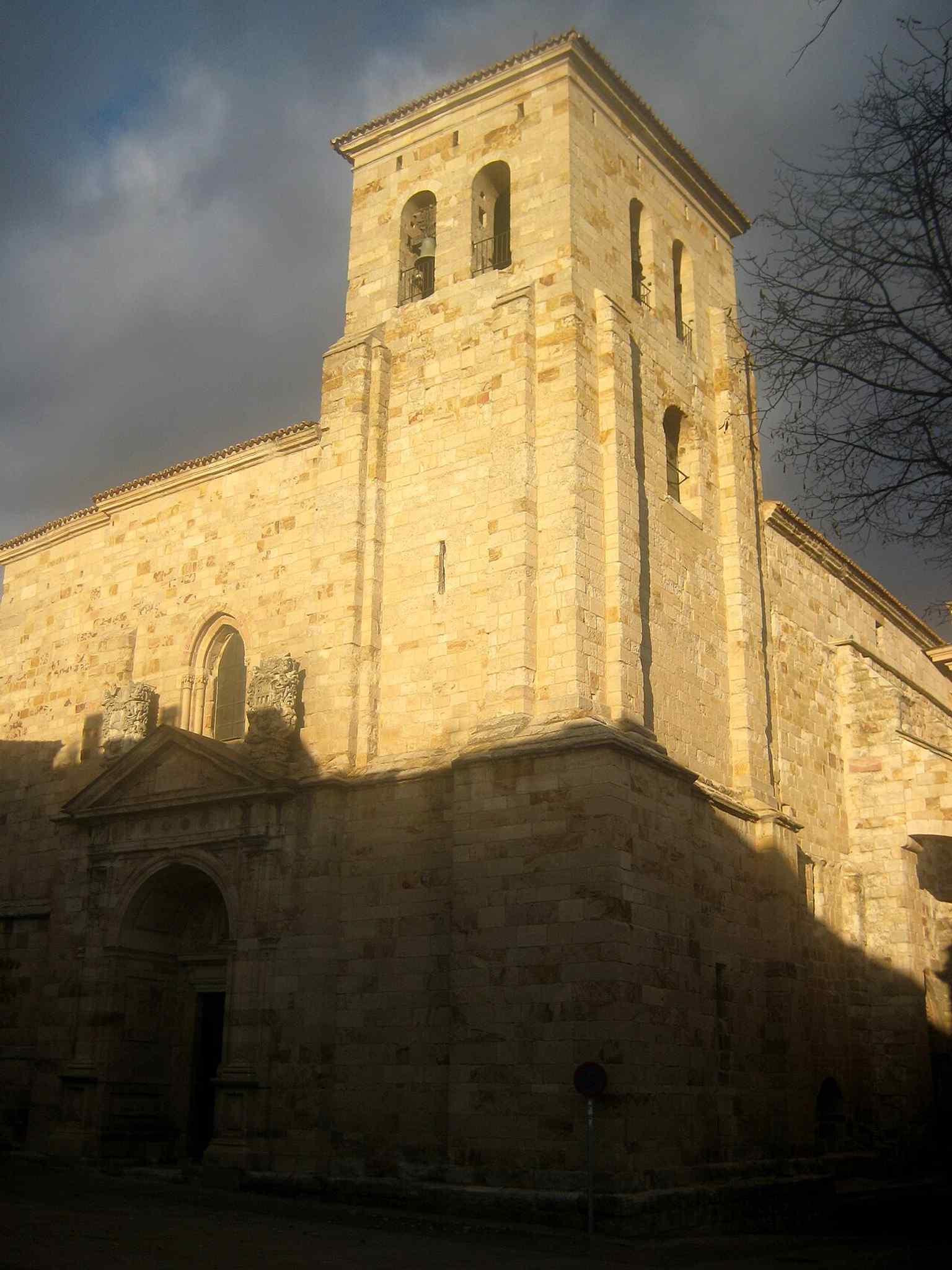
On your left stands a broad sandstone church with a square bell tower, a heavy block-like body, and a neoclassical doorway that puts a calm eighteenth-century face on a much older building.
This is San Pedro y San Ildefonso, the largest and most important church in Zamora after the cathedral... which is saying something in a city that collected churches the way other places collected arguments. It began under King Fernando the First of León and Castile, on the site of an earlier church, Santa Leocadia, and some historians push the sacred history here back as far as the seventh century. So this is not just one building. It is a stack of intentions.
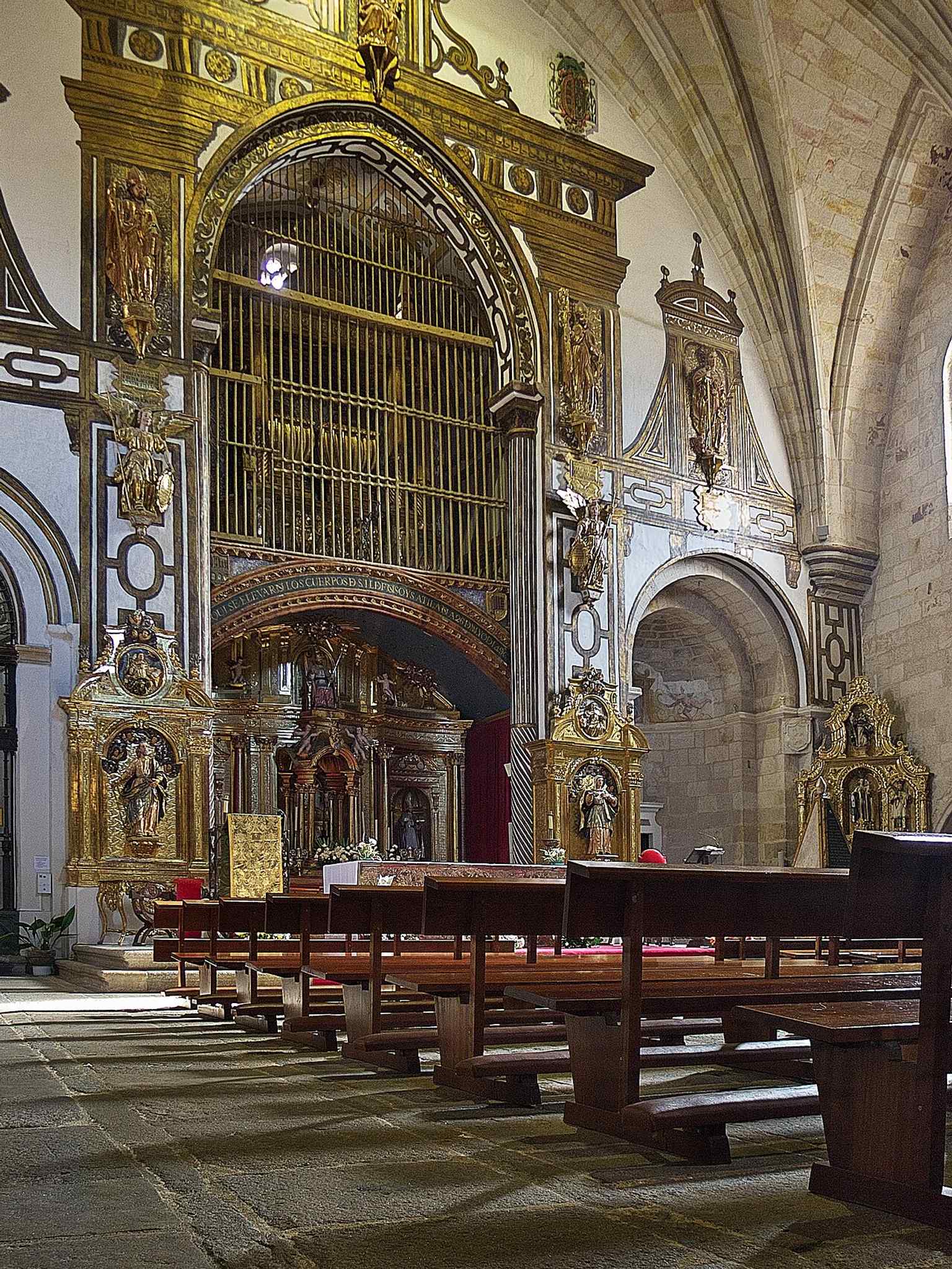
At first it was Romanesque, the sturdy medieval style built for thick walls and rounded forms. Later generations kept altering it. They turned what had been three aisles into one great central hall, the nave, with ribbed vaults overhead. Remove two rows of interior supports, and stone gets temperamental, so builders added exterior buttresses and flying supports along the side street to hold the roof in place. Medieval problem-solving: first make the space grander, then invent a way to stop it falling down.
And then comes the real turn in the story. Zamora did not only defend sanctity with walls and gates; it also claimed to uncover holiness in public, dramatic ways. Sacred discoveries mattered here. Bodies, dreams, inscriptions, witnesses... that was how a city proved heaven had chosen a place.
The great episode came in the year twelve sixty. Tradition says a shepherd from Jambrina dreamed that the Virgin told him to come here, warn the priest, and point out the exact spot where Bishop Suero should dig. Suero came in person, celebrated Mass, ordered a stone slab lifted, and workers found a stone chest. Inside sat a cypress box with a Latin inscription naming Saint Ildefonso. Normally you would file that under "excellent medieval storytelling." But a Franciscan chronicler, Juan Gil de Zamora, said he actually witnessed the discovery and wrote it into his book about illustrious people. That makes the tale unusually hard to dismiss.
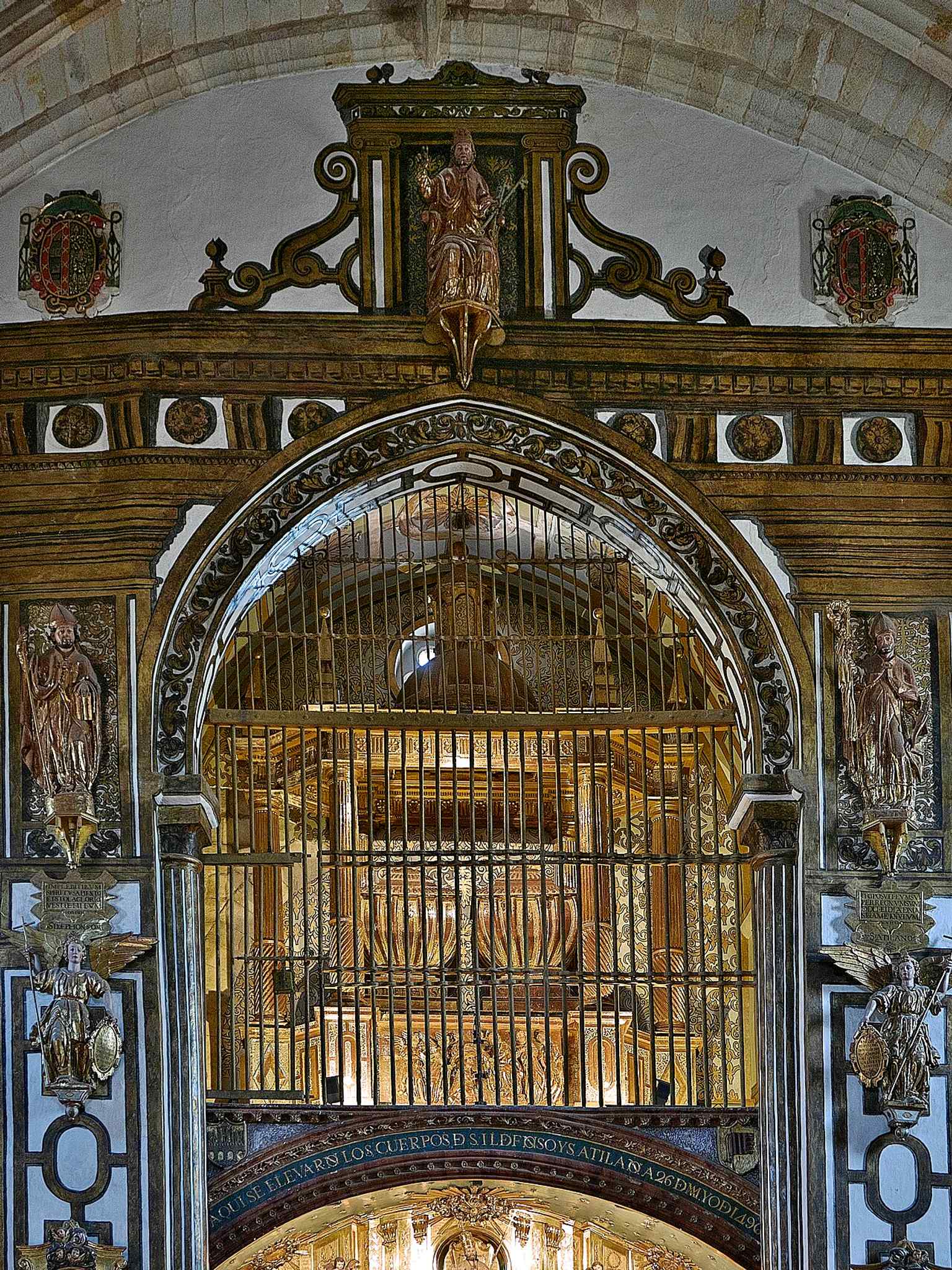
The find changed the church itself. What had simply been San Pedro expanded its identity to honor Saint Ildefonso as well. His relics, probably brought here by Mozarabic Christians from Toledo during the repopulation under Alfonso the Third, turned this place into a prize. Toledo wanted them back, repeatedly. There were even attempts to steal them. So Zamora answered with guardians: the Caballeros Cubicularios, a very old confraternity charged with protecting the relics of Saint Ildefonso, and later Saint Atilano too, Zamora’s first bishop and patron saint. If you check the image on your screen, you can see the saints' tombs inside the church.
The building kept changing because the story kept growing. Between seventeen nineteen and seventeen twenty-three, Joaquín Benito Churriguera repaired the interior, reworked the tower, and added the west front, while the city itself paid for part of the work and placed its coats of arms there. The tower image in the app shows that later bell stage rising above the medieval core. Even in nineteen eighty-nine, restoration uncovered a carved stone altar frontal from the late thirteenth century, as if the church still had one more secret tucked into the masonry.
In fifteen hundred it became an archpriestal church, meaning a senior parish church with special rank. Belief here never stayed private. It gave Zamora prestige, authority, and something fiercely worth defending. From here, continue in about five minutes to San Isidoro, another church where memory and relics helped shape the city’s standing.





.jpg)
.JPG)
.jpg)