
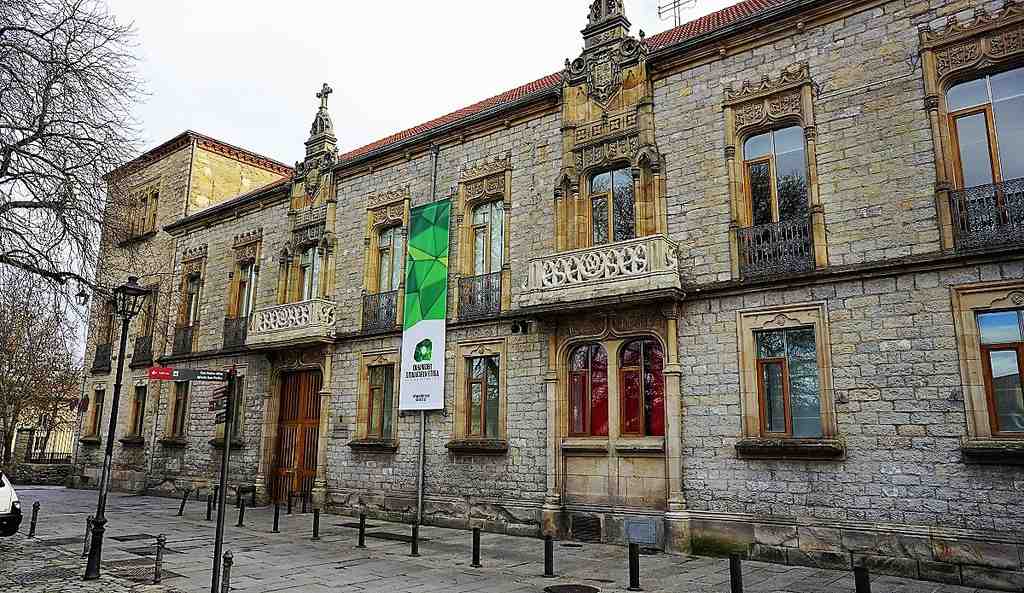
As you walk up the gentle slope of El Campillo, look ahead for a stately stone building, wider than it is tall, with an elegant façade showing pointed neo-Gothic arches and a sense of quiet grandeur. You'll notice the soft golden color of the walls against lush green trees in the background. The entrance is approachable, and if you peek in, you might catch a glimpse of its inner courtyard, a secret world hidden just behind the doors.
Imagine yourself here in the 1500s. The year is 1524. There’s the faint clatter of horse hooves and the murmuring of finely dressed nobles. This is the new home for someone powerful: Hortuño Ibáñez de Aguirre, a man of the King’s own council-and even the Inquisition. He and his wife, María, first dreamed this place would be a home for Dominican nuns, but once it stood finished, shimmering bright and new, they decided to live here themselves.
They promised the nuns a convent somewhere else, while within the palace, guests gathered in the cool, shadowed courtyard, their voices echoing off the two-story stone arches. Kings and queens, grand dukes, and even the infamous Joseph Bonaparte-yes, Napoleon’s own brother-slept here when passing through Vitoria. Picture the royal wagons creaking to a halt, servants bustling, and perhaps a watchful, suspicious glance from a palace guard.
The name “Montehermoso” comes from the marquises who lived here. One marchioness even nannied the children of Spain’s kings. Tales of secret meetings and high drama unfolded behind these walls-political alliances, whispered plots, and romances, all hidden from the city below.
The palace changed with the times. Once seized by the church and remade as a bishop's seat, it later became a soldiers’ barracks during the turbulent Carlist wars. The façade you see today owes its castle-like look to a grand makeover in the 1800s. Every stone hints at drama-from royal banquets to moments of collapse and ruin.
Now, the world within Montehermoso springs with creativity. Since 1997, it's a living center of art and culture, humming with music, photography, dance, and teamwork, often crafted by Vitoria’s own artists. Beyond the old walls is something even stranger: a tunnel leads to the city’s Victorian-era Water Depository, a vast underground space used for wild, futuristic exhibitions. Imagine music echoing under stone, paintings glowing in hidden chambers, and children laughing as they discover the secrets left by centuries.
Pause here and take it in-the crisp air, the timeless stones. If these walls could talk, you’d hear stories of queens, soldiers, rebels, and artists, all woven together into the heart of Vitoria-Gasteiz.




