
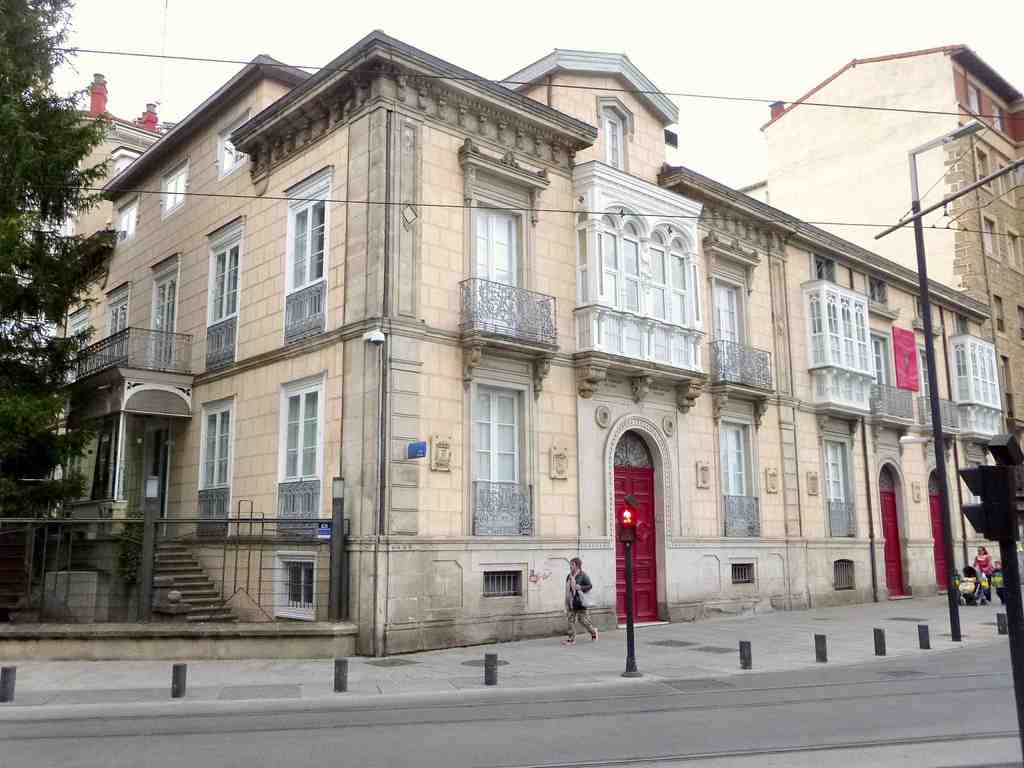
Look around you for a striking, elegant stone building with light-colored blocks, grand windows edged with delicate ironwork, and a row of brilliant red doors. To spot the General Boards of Álava, just follow the street on your right until you see a group of tall buildings, then look for those eye-catching red doors and the ornamental iron balconies above. This is where the story truly begins.
Can you hear the echo of footsteps across stone? Right in front of you stands the home of one of Europe’s oldest parliaments - the General Boards of Álava. It’s not just one building, but three, all connected like secret passageways in an old detective novel.
Travel back to 1463, when the air was filled not with the honking of cars, but the clatter of horse-drawn carts and distant voices rising in debate. Under these roofs, powerful decisions shaped the life of the whole province. Imagine the old council members clutching their cloaks tight on chilly mornings, stepping through these doors to decide the fate of their neighbors. Everything happened here - laws were born, taxes set, arguments settled, and sometimes, legends say, a bit of drama played out in the darkened corners.
For centuries, these halls held not only administrators but stories: of rebellion and silence, of celebration and worry. Under the grand nineteenth-century facade, you can almost hear heated words bouncing off the walls - and maybe even the sound of parchment being unfurled for a historic decree.
Though the outside looks calm and stately, inside these doors the work never really stops: from approving budgets, to picking leaders, to guarding ancient rights that go back to the days when villagers gathered to drive out bandits and keep peace on these green hills. This is government, not as a distant idea, but as a living, breathing part of local life - alive just behind those bold red doors you see before you.
If you're keen on discovering more about the sede, funciones y competencias or the historia, head down to the chat section and engage with me.




