
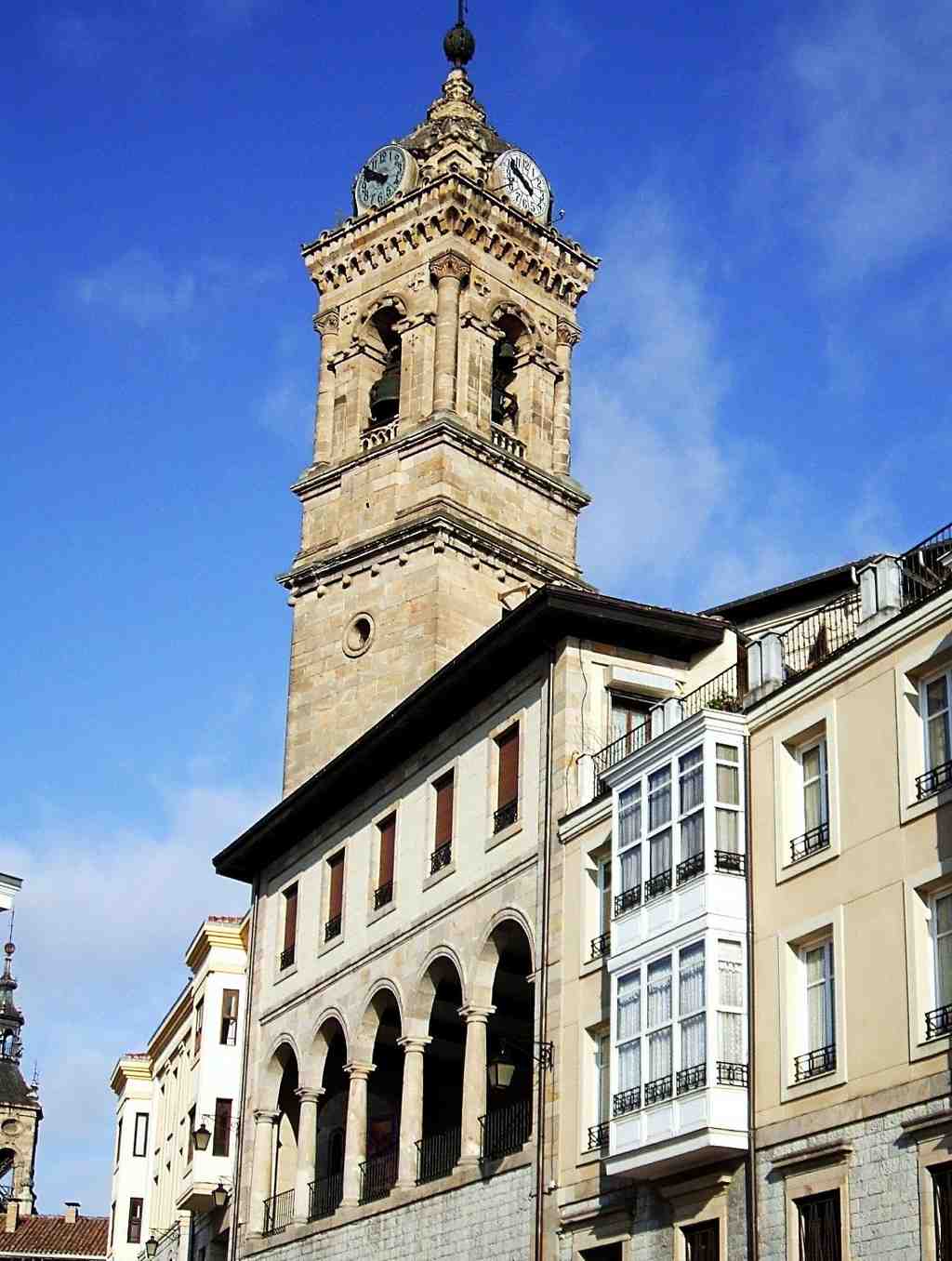
As you walk ahead, look for the tall tower rising above the nearby buildings, with rounded arches at its base and a clock shining at the very top. The stonework has a warm, golden color and stands out against the more modern, pale facades next to it. When you see that elegant bell tower, you’ve found the Church of San Vicente Martyr right in front of you.
Imagine the distant echo of bells as we arrive here, right at the edge of Vitoria’s old town. This church, built between the 1400s and 1500s, is packed with stories. Its walls are Gothic, almost shifting into the Renaissance style, and they’re built on what was once a powerful fortress. Picture armored knights patrolling these grounds during the reign of King Sancho VI of Navarre. The fortress was handed over to the city by the Catholic Monarchs in 1484, and during the wild bandit wars of medieval Vitoria, this place was captured and recaptured-one Christmas night, it was stormed and conquered under cover of darkness!
As you look at the side walls, you’ll spot strong arches and a dramatic porch with six stone arches, reused from a lost monastery. Slip closer and you might spot the grand stone shells filled with holy water, gifts sent from faraway Philippines by the Marquess of Montehermoso. Beside the door is another old font and a 1500s stone carving of Calvary. The air in here tends to feel cool and serene, but don’t be fooled by the calm-these stones witnessed centuries of fierce fighting and tense peace.
Step inside with your imagination: Three tall naves stand equal in height, separated by round pillars with barely any decorations. Each column carries the weight of simple, soaring vaults above you. Look up and imagine seeing stone animals, carved into the walls, silently watching over every visitor. Where the great choir once sang, the pillars suddenly double in strength, as if bracing themselves for the giant silvery voices above.
Then there’s the tower-a whopping 54 meters tall, built in the 1800s in an eye-catching neo-Byzantine style, replacing an even older, likely medieval tower. Today, guided tours take visitors up to see the sprawling city below.
In the main chapel, there’s a display of royal power: the Catholic Monarchs’ coat of arms, and a lavish Baroque altarpiece, glimmering with statues and carvings that tell the trials of Saint Vincent, the church’s namesake martyr. Take a moment to imagine the older gothic tomb beneath a pointed arch: Here rests Don Nicolás, who died in 1349, his tomb stone marked by ancient shields and strange creatures.
So as you stand here, you’re on the very ground where enemies clashed, legends were born, and quiet moments of faith carried people through the centuries.




