
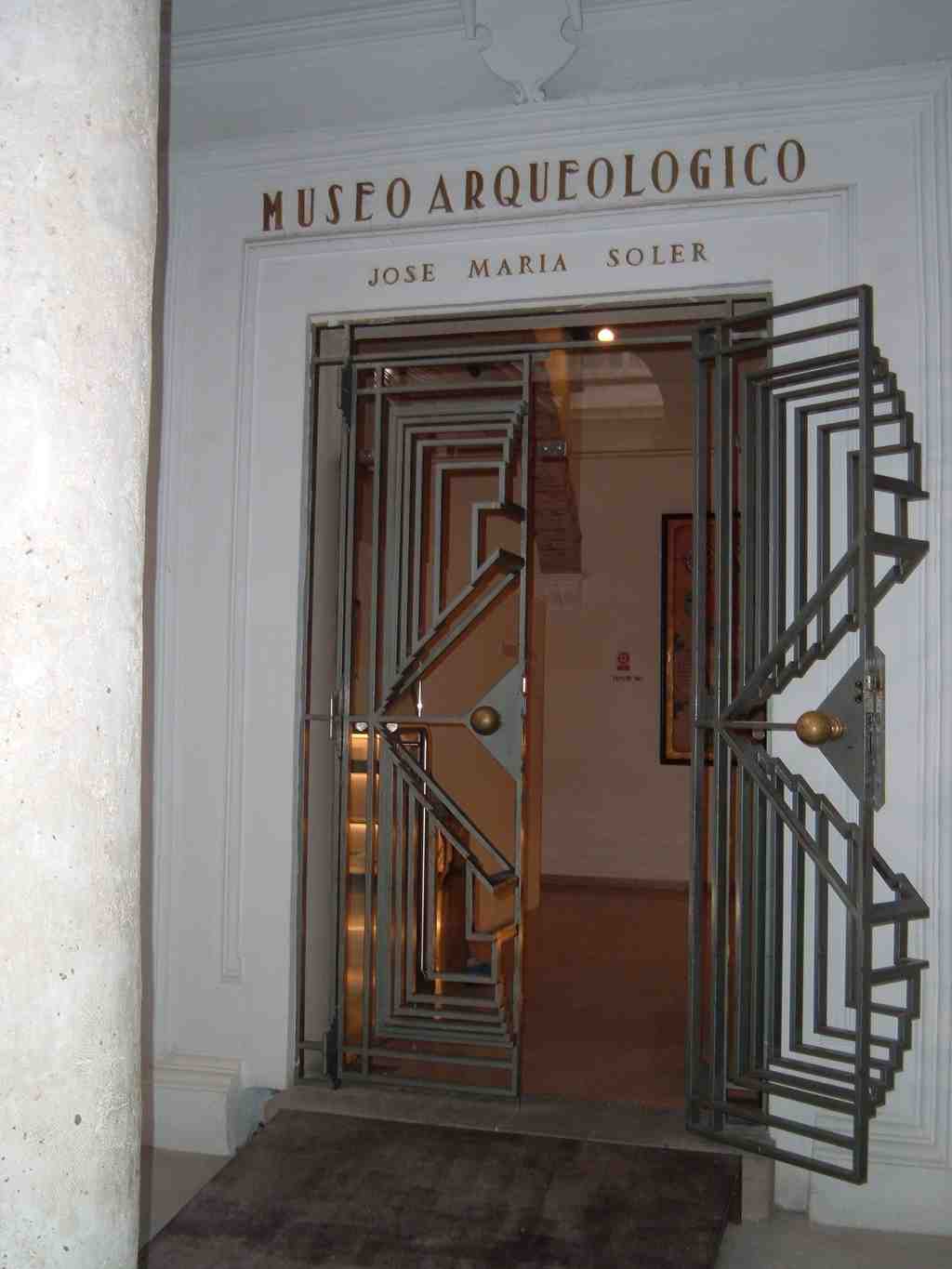
Look for the white doorway framing a striking geometric metal gate, with the name "Jose Maria Soler" gleaming in gold letters just above the entrance.
You are standing before a place that, for decades, held the heart and history of this region. This building is not just a museum; it is a monument to curiosity and the man whose name is written above the door: José María Soler.
To understand the treasures that were kept here, you must first understand the man who found them. Soler was not a wealthy aristocrat or a university professor with endless funding. He was a postman. After the Spanish Civil War, he lost his position at the post office for political reasons. It was a dark time, but Soler did not let it break him. Instead, he turned to the land. He walked every inch of these hills, his eyes scanning the ground, learning to read the soil better than any book could teach. He became a self-taught scholar, a guardian of secrets that had been buried for thousands of years.
And then, in 1963, the earth finally spoke back to him.
It began with a simple twist of fate. A local mason was sifting sand for construction work when he found a dirty, heavy bracelet. His wife took it to a jeweler, who scraped away the grime and saw the unmistakable glint of gold. They called Soler immediately. The postman-turned-archaeologist traced that sand back to a dry riverbed called the Rambla del Panadero.
Imagine the scene. It is the first of December. Soler and his team are digging in the dirt. The sun is setting, the light is failing, and they are exhausted. They are just about to give up for the day when a hoe strikes something hard. Clink.
They brushed away the earth and found a ceramic vessel. Inside, and scattered around it, was something that would change history: The Treasure of Villena.
It was a hoard of sixty-six pieces. Eleven bowls of beaten gold, twenty-eight bracelets, bottles of silver and gold. In total, they pulled ten kilograms of gold from the ground. It remains the most important prehistoric treasure ever found in Europe, a collection so vast and precious it rivals the great finds of Mycenae.
But here is the part of the story that feels most human. That night, after pulling a king's ransom from the mud, Soler and his team realized they had a problem. There was no secure vault, no police escort ready for such a sudden discovery. So, they did what they had to do. They split the treasure up and took it home.
Picture these men, simple workers and a former postman, sleeping that night with pounds of ancient gold hidden under their beds and in their wardrobes, guarding a fortune that belonged to history.
For years, this building you are looking at served as the home for those wonders. But the collection was more than just shiny metal. Recently, scientists discovered something even more miraculous about the treasure. Two of the iron pieces found with the gold were not made of earth-born metal. They were crafted from meteoritic iron. That means the artisans of the Bronze Age, three thousand years ago, were forging jewelry from a fallen star.
Eventually, the treasure outgrew this space. The collection has now moved to a new, larger home in an old flour mill and power plant called the MUVI, ensuring that Soler’s legacy has the room it deserves.
But Soler wasn't the only one in Villena with a passion for collecting the past. While he looked for the gold of kings, others looked for the clay of the common people.
Let’s continue our walk. We are going to head to a place that celebrates a much more humble, yet equally vital, part of life.




