
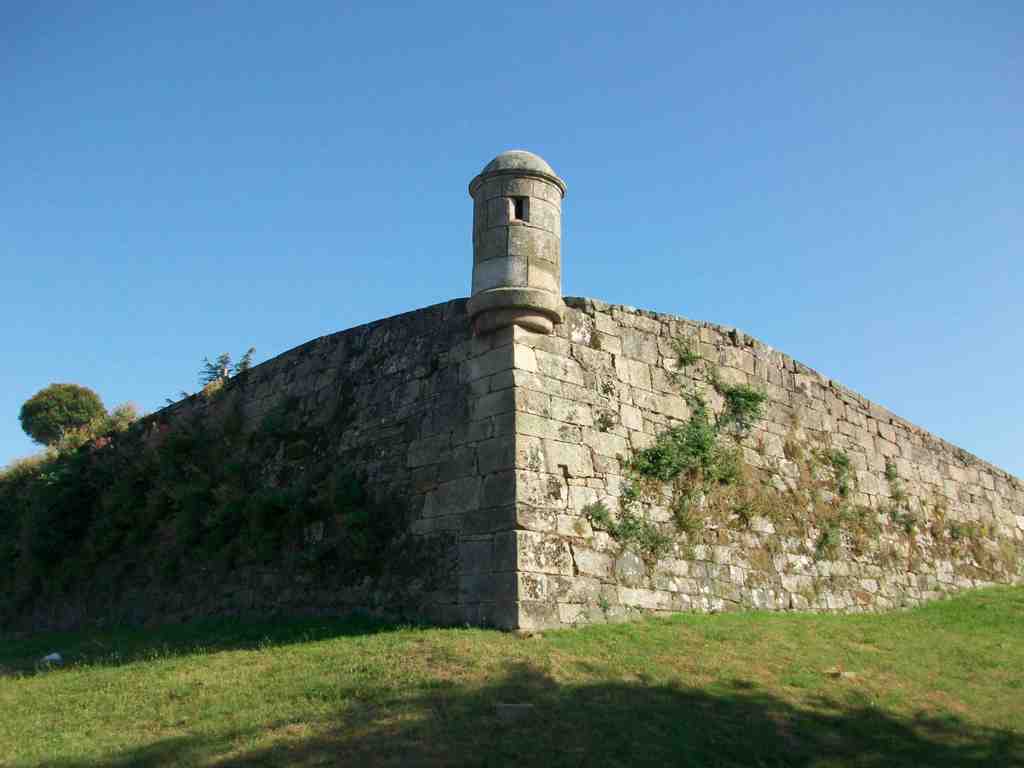
Take a look on your left and you'll spot the sturdy, sloping stone walls of the Castle of San Sebastián with its small, round sentry turret perched at the corner-almost like a watchful stone pigeon overlooking Vigo!
Now, let your imagination run wild as you stand in front of this timeworn fortress. Back in 1656, when the air was heavy with the shouts of soldiers and the clang of hammers, Vigo wasn’t quite the bustling city it is today. King Philip IV was in charge, and everybody was a little jittery about enemy ships-especially the English and Portuguese. To keep the city safe, the people of Vigo started building up their defenses, and right here, where the castle now stands, there used to be a humble little chapel to San Sebastián. Someone must’ve thought, “Sorry Saint, but we need cannons more than candles!” So, up went these thick stone walls, designed by Juan de Villarroel y Prado, the same mastermind behind the nearby Castro Fortress.
It wasn’t an easy start! The wall rose quickly, but, well, let’s just say it wasn’t exactly top-of-the-line-no deep moat, and the stones might have been a bit loose. The tension was real during the Portuguese War of Independence. Soldiers would have ducked behind these walls, eyes wide as the enemy circled Vigo for six days straight! Soon after, clever engineers even linked this castle to the Castro Fort using secret tunnels-talk about mystery beneath your feet!
As centuries passed, the castle wore many hats: lookout, hospital, even a barn for sheep after the English left it in ruins in 1719. It was a military barrack until 1964, then the city took ownership. At one wild point in the 1970s, people talked about demolishing what was left, but luckily, that idea was tossed aside-whew! Now, as you take in the rough stone and feel the breeze, remember that this battered old castle has been Vigo’s silent guardian, holding centuries of secrets in its shadowy tunnels and windswept walls. Pretty epic, right?




