
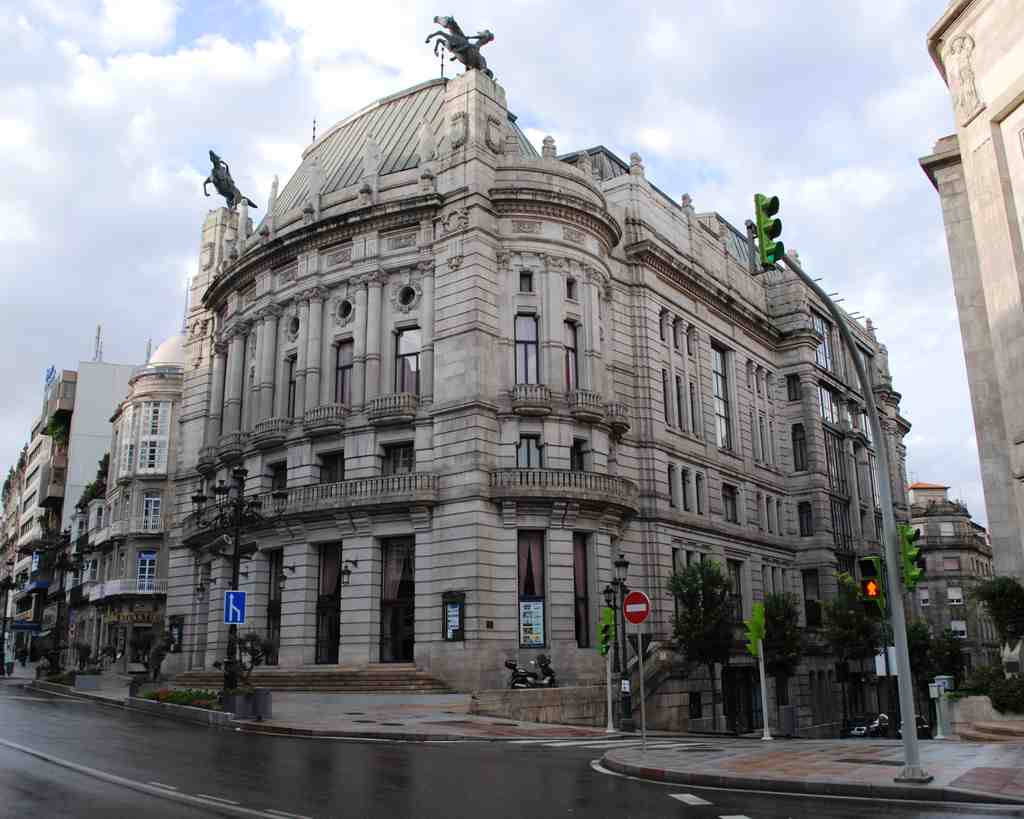
To spot the Afundación Theatre, look for an impressive neobaroque palace just ahead on your left, crowned with dramatic stone horse statues galloping along the rooftop and a grand façade packed with sculpted columns and arched windows.
Now, imagine the heartbeat of Vigo at the turn of the century. The citizens, hungry for culture and entertainment, rally together to build a theatre right here where you’re standing. In 1900, their dream takes shape as the Teatro Rosalía de Castro, opening its doors with Verdi’s “Aida”-I’d say the drama was on stage, but… just wait. The excitement was real, but so, sadly, was misfortune-the theatre’s first act didn’t rake in enough to keep the curtain up. It ended up a storage warehouse, which isn’t quite the fate any theatre buffs would wish.
Enter José García Barbón, Vigo’s theatrical superhero. He swoops in and, with an enthusiasm that would make any opera singer jealous, brings theatre back to the city. But then, on a February night in 1910 after a carnival show, disaster strikes-a roaring fire devours the building. Imagine, the very stage where haunting arias soared now filled only with ashes and the scent of smoke.
But the city’s passion proved as stubborn as a diva after curtain call. García Barbón’s nieces, determined that Vigo would not lose its cultural soul, chose the brilliant architect Antonio Palacios to rebuild. And wow, did Palacios deliver! Inspired by the Paris Opera and Bilbao’s Arriaga Theatre, he conjured up the stunning neobaroque marvel in front of you, finished in 1927. Notice the opulent stonework and those brave horses perched up top-like they’re ready to leap into a standing ovation at any minute.
This new Teatro García Barbón wasn’t just for plays and operas-it was a buzzing hub for concerts, balls, popular dances, even cinema. Did Vigo’s very first bingo round happen here? Absolutely-beneath those chandeliers a few lucky folks called out numbers instead of lines.
Throughout the decades, the theatre was transformed again, with new names, new owners, and new roles-at one point it became the beating cultural heart of a bank, and today it thrives as Afundación Theatre. From devastating fires and daring rescues to wild bingos and concerts, this building has thrown its own drama onto the streets of Vigo. Not bad for a place that started as a city’s stubborn wish-talk about a showstopper!




