
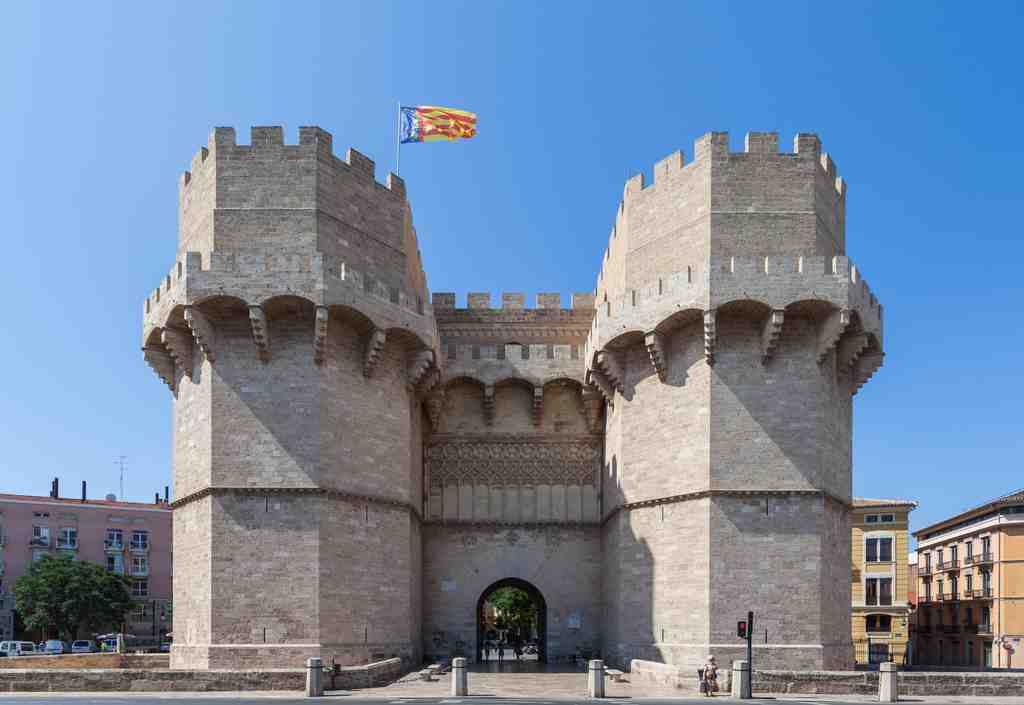
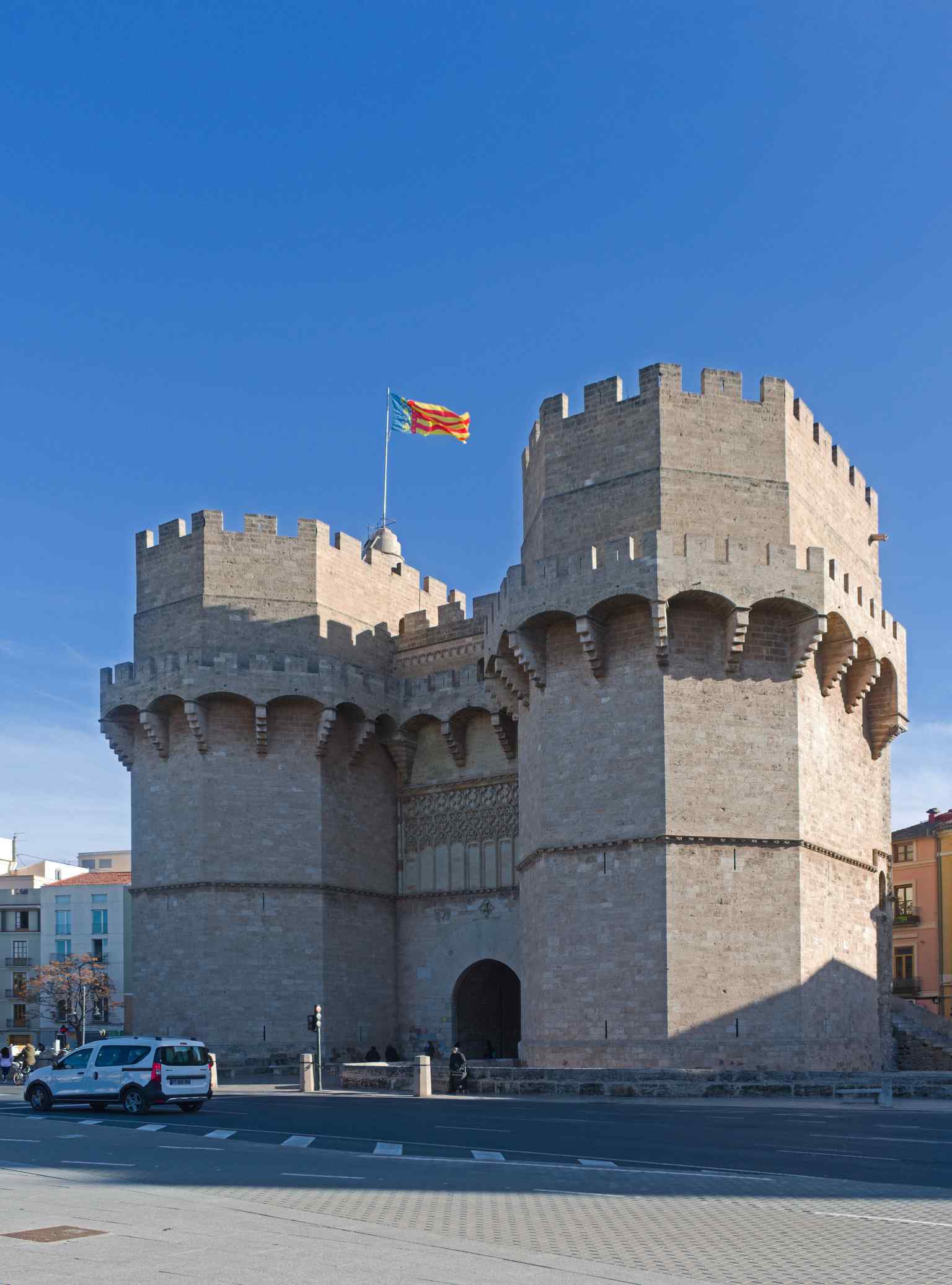
Ahead on your right, you will spot a massive medieval gateway made of solid limestone blocks, featuring two giant polygonal towers flanking a central arched entrance. We just walked over from the House of Rocks a minute ago, but while that building stores the history of local festivals, this towering structure is the grand stage for it. These are the Torres de Serranos. Back in the late fourteenth century, Valencia was entering its golden age. Trade was booming, the city was rich, and the local government decided they needed a front door that properly showed off their wealth. So, in 1392, they hired master builder Pere Balaguer. They even paid him one hundred and sixty-five sueldos for travel expenses, which is roughly a couple thousand dollars today, just to tour around Catalonia and Aragon and gather inspiration from other gothic monuments.
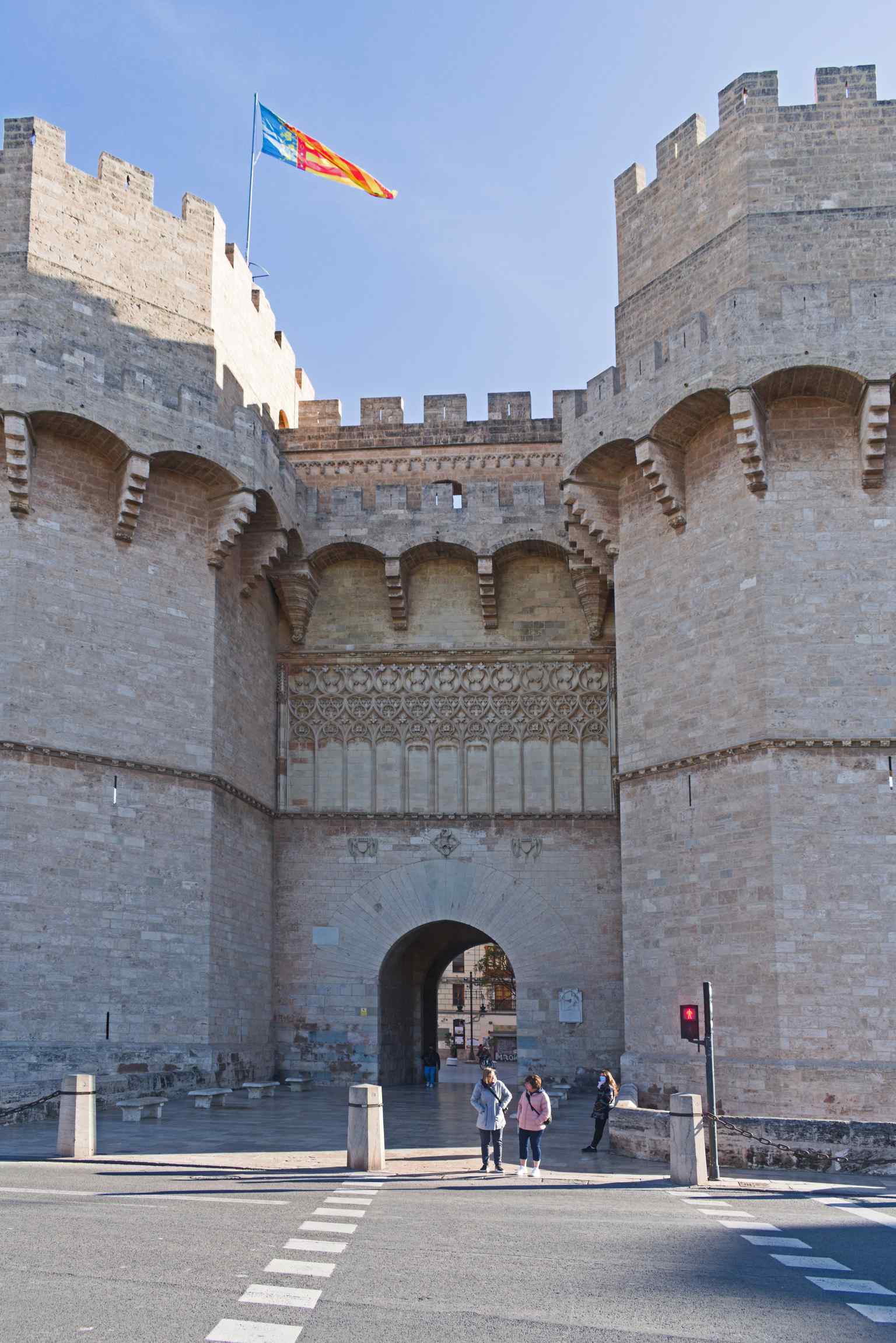
Balaguer was a bit of a perfectionist. He personally visited the stone quarries along the coast, selecting the perfect limestone and having it precisely cut before it was ever shipped by boat to Valencia. The result is what you see now. The towers are polygonal on the outside, a clever design choice that eliminated blind spots for defenders. But their real purpose was theater. This was the main entrance for kings and foreign ambassadors arriving from the north. The city wanted them intimidated and impressed before they even set foot inside.
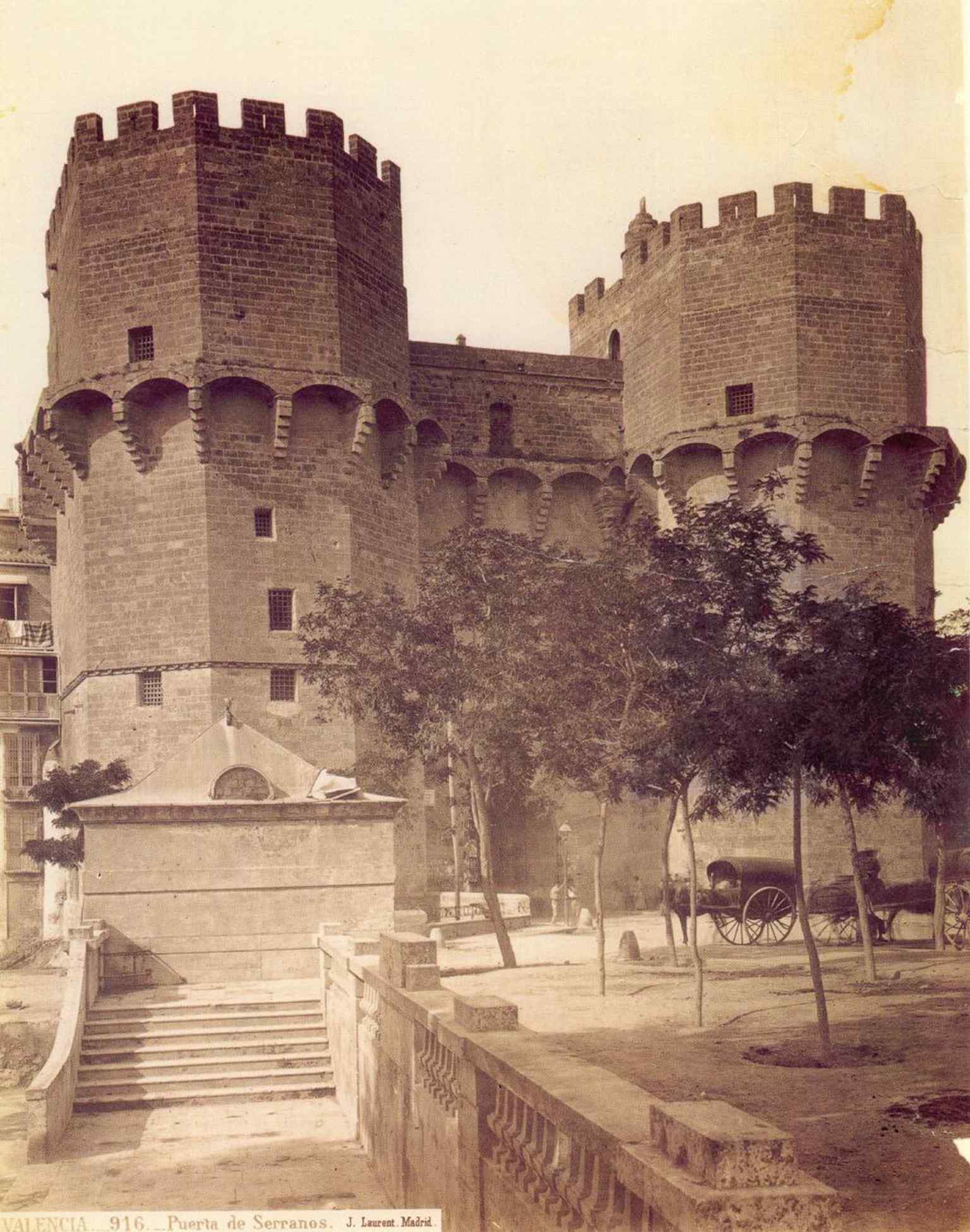
Oddly enough, the very thing that saved these towers from destruction was a downgrade in their status. In 1586, they were converted into a prison for nobles and knights. When a later civil governor ordered the old city walls torn down to make room for urban expansion, the Torres de Serranos were spared simply because the city still needed a secure place to put its aristocratic inmates. The app has a neat side-by-side showing what this place looked like back in 1870 compared to today, so you can see how much the surrounding streetscape has completely transformed.
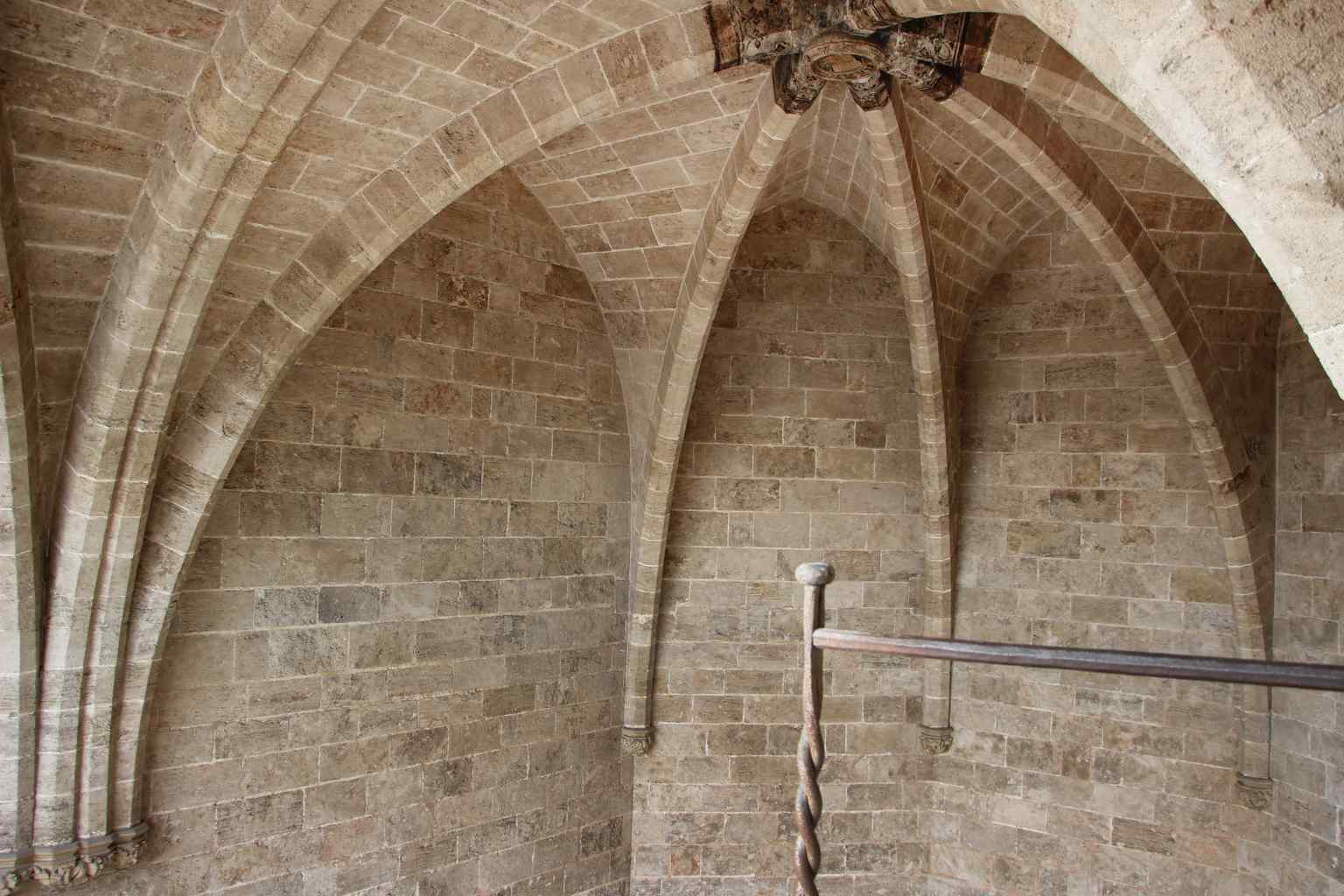
These resilient walls served another crucial purpose during the Spanish Civil War in 1936. When priceless masterpieces from the Prado Museum in Madrid were evacuated to Valencia, they were hidden right inside these towers. To protect the art from aerial bombings, engineers built a massive concrete vault over the first floor, topped it with a thick layer of rice husks to act as a shock absorber, and then piled a meter of soil on top of that.
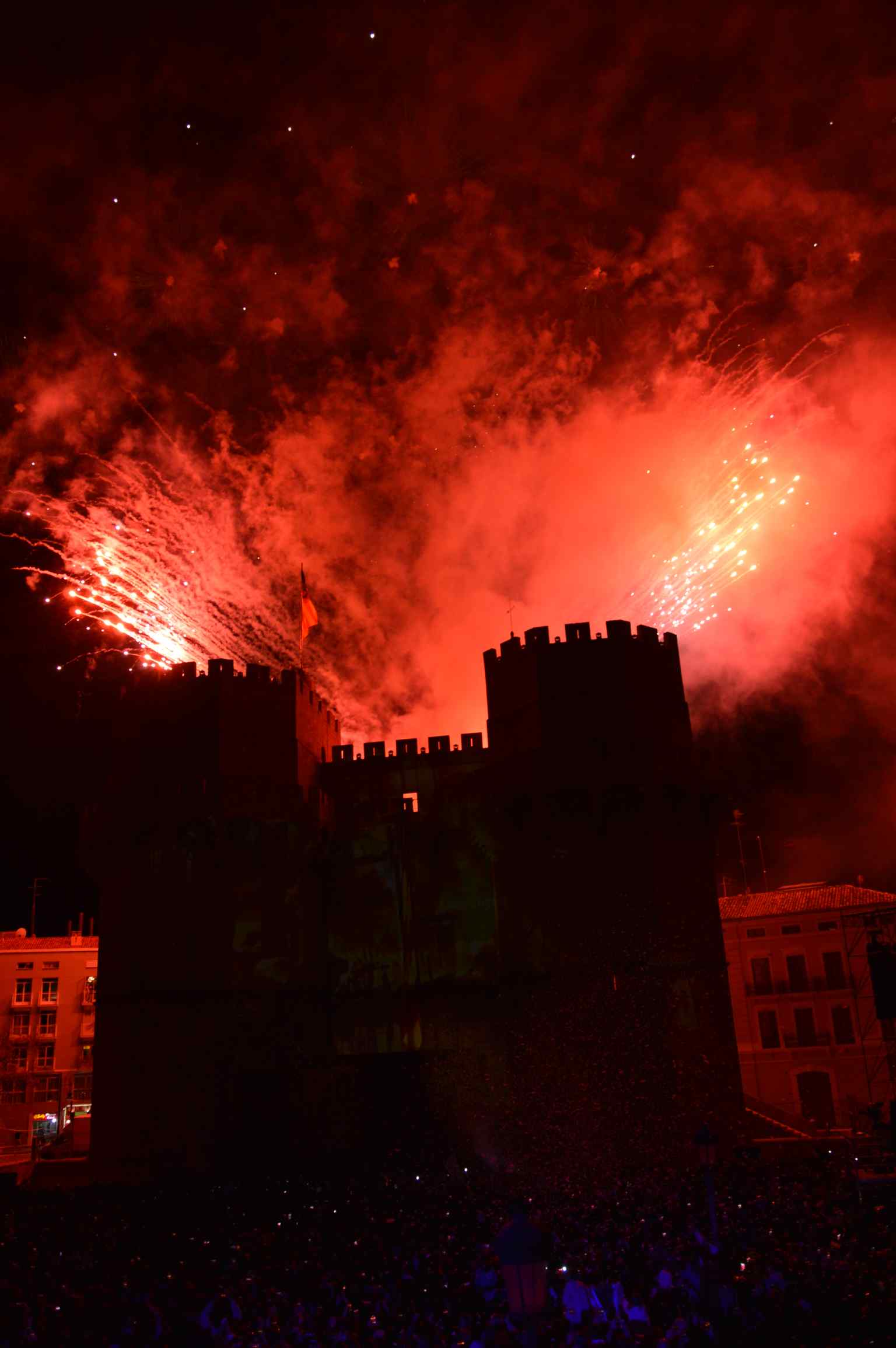
Today, the towers are the centerpiece of the city's biggest party. On the last Sunday of February, the fallera mayor, the elected queen of the festival, stands on a grandstand right in front of this gate for the crida, which is the official public proclamation that kicks off the famous Fallas celebrations. You can actually go inside and climb to the top for a spectacular view of the city, and they are generally open Monday through Saturday from ten in the morning to seven in the evening, and until two in the afternoon on Sundays. Enjoy the view of this formidable gateway before we stroll over to our next destination, the Rationists' Hall.






