
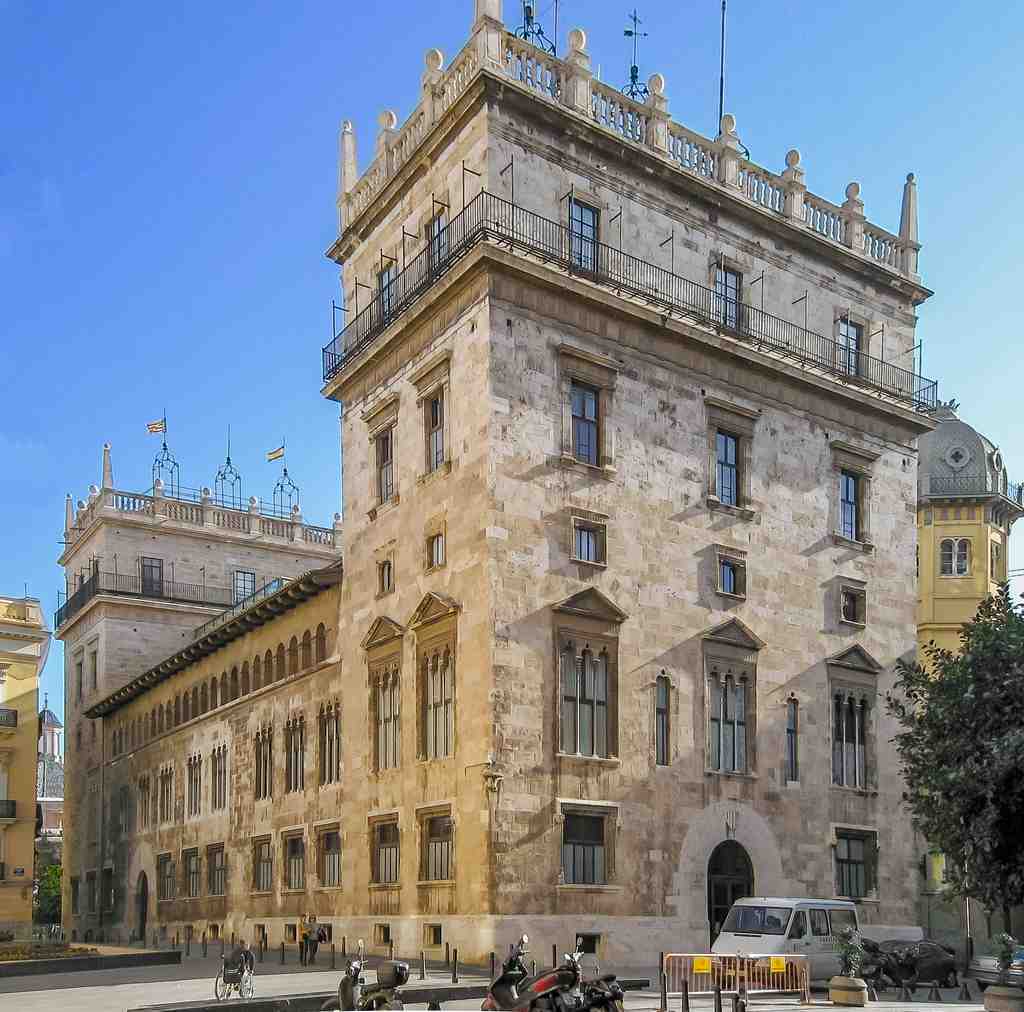
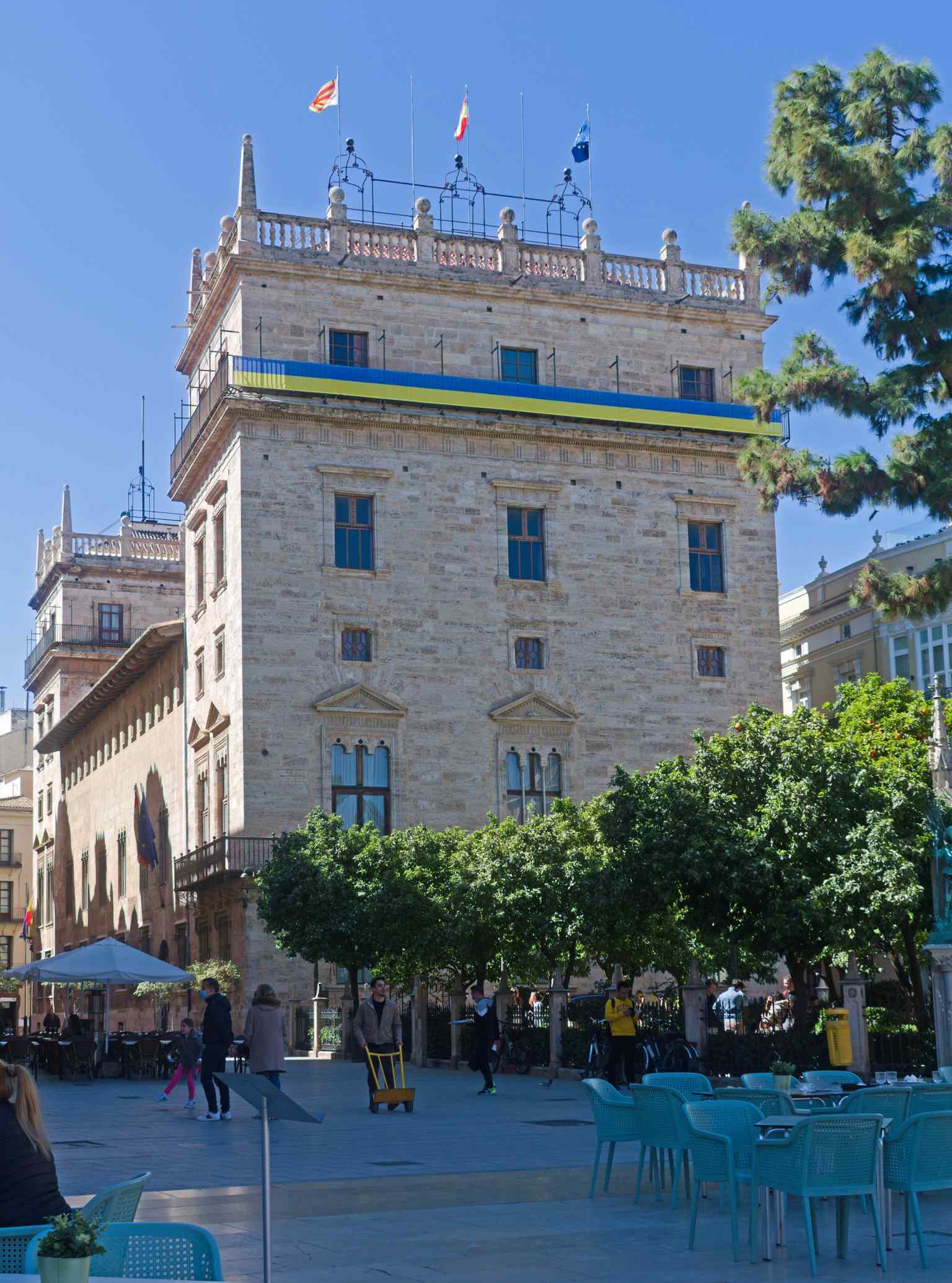
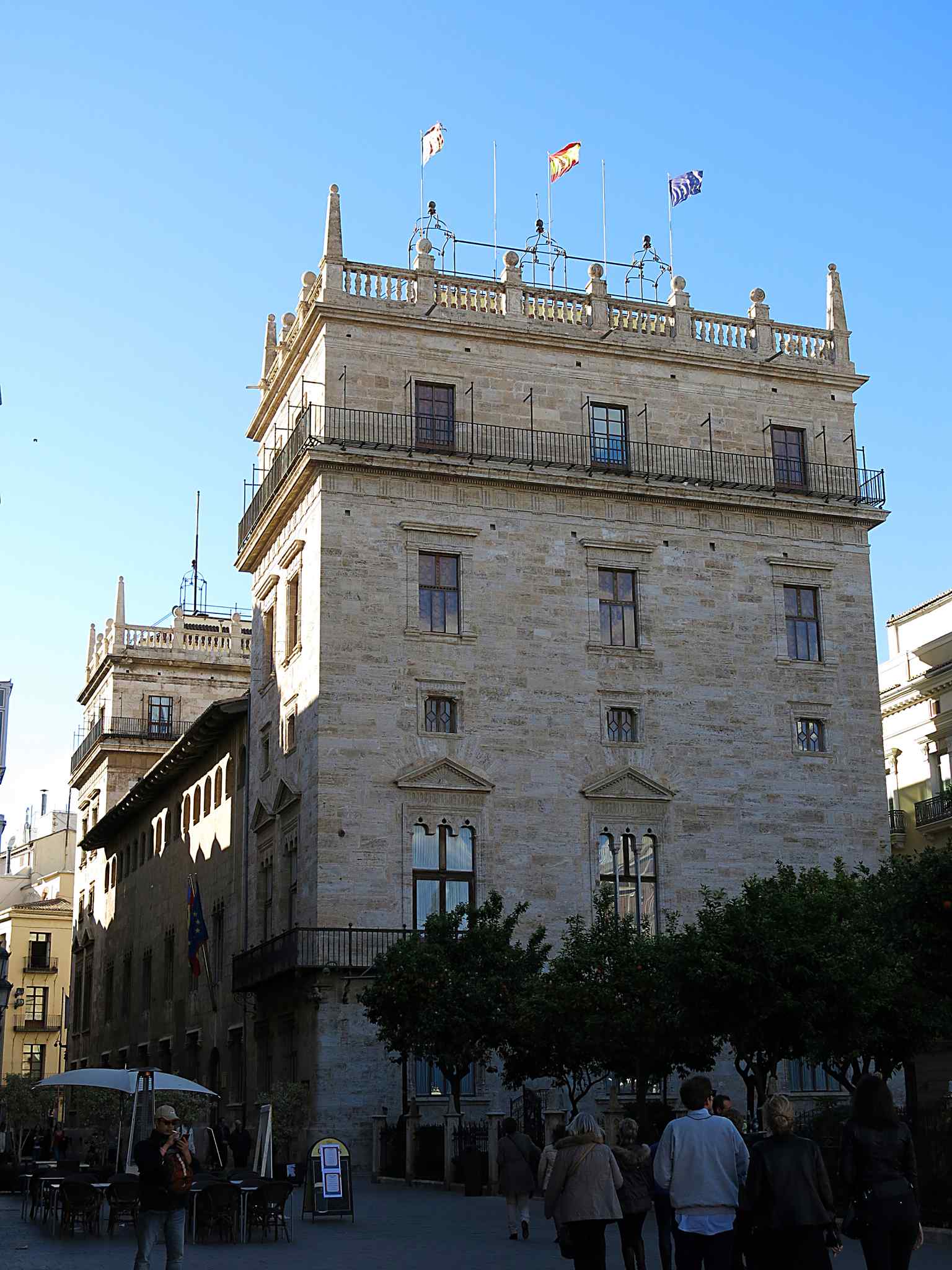
Right in front of you is a massive pale stone complex dominated by a square tower, featuring a classic arched entryway at its base and a striking black wrought-iron balcony wrapping around the upper level. Just a short walk ago we were admiring the Palace of the Marquis de la Scala, but this building is the undisputed historic heavyweight of the city. Welcome to the Palace of the Generalitat Valenciana. Today, this is the headquarters of the regional government, but its story goes all the way back to fourteen twenty-one. Back then, the deputies in charge of collecting regional taxes decided they were tired of moving around to different temporary offices. They rented a couple of rooms in a modest local house right about where you are standing. Apparently, tax collection was a pretty steady business, because within a year they bought the entire house, and over the next few centuries, they just kept expanding.
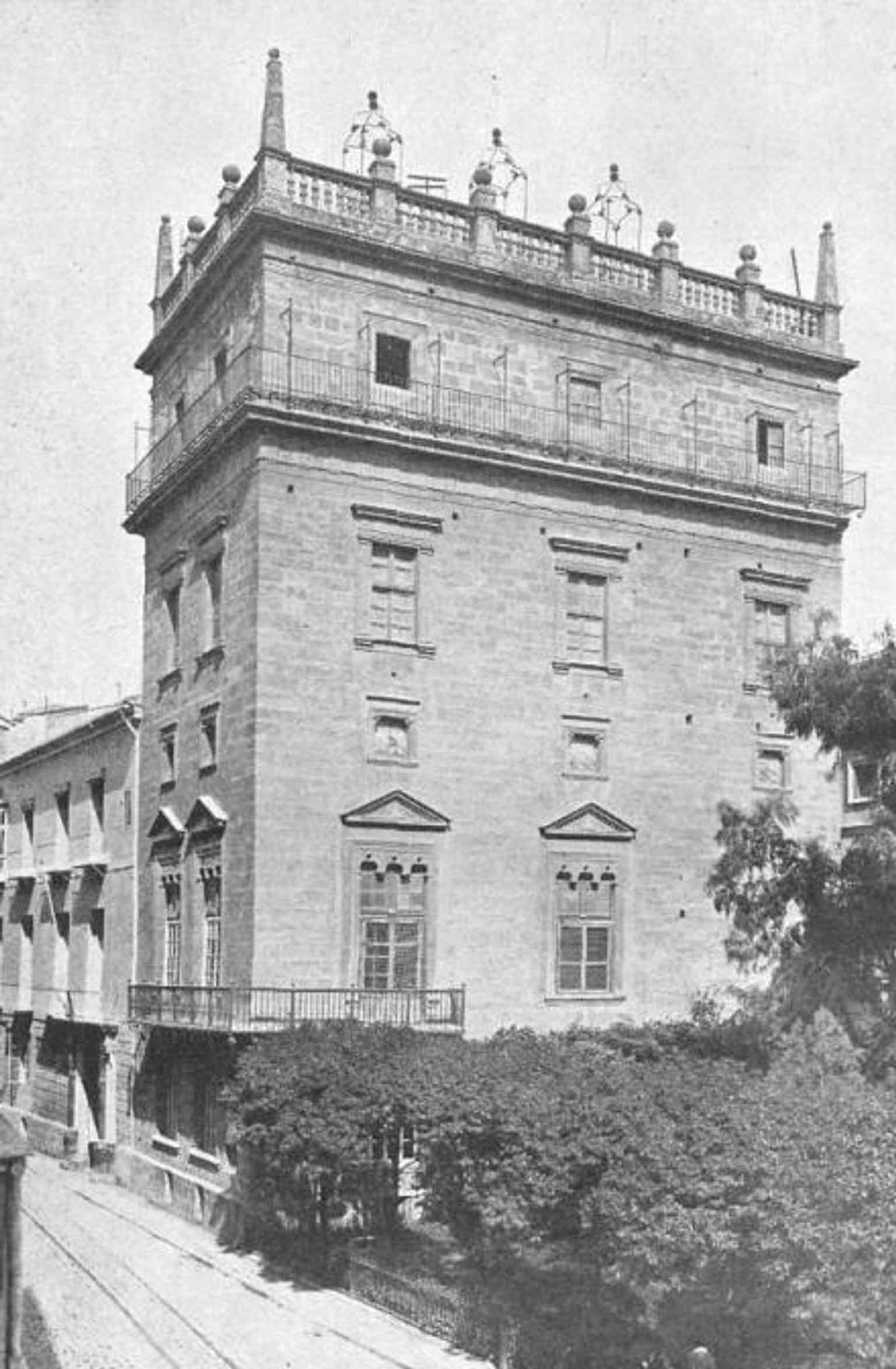
What you are looking at today is a complex mix of eras. It is a blend of Mediterranean Gothic, which you can spot in those elegant pointed arches, heavily layered with later Renaissance additions that brought in more symmetrical, classical features. The construction dragged on for generations, with the city's finest master builders leaving their mark. If you tap the image in your app, you can slide between how this looked in nineteen eleven and today to see how much the building has evolved over the last century.
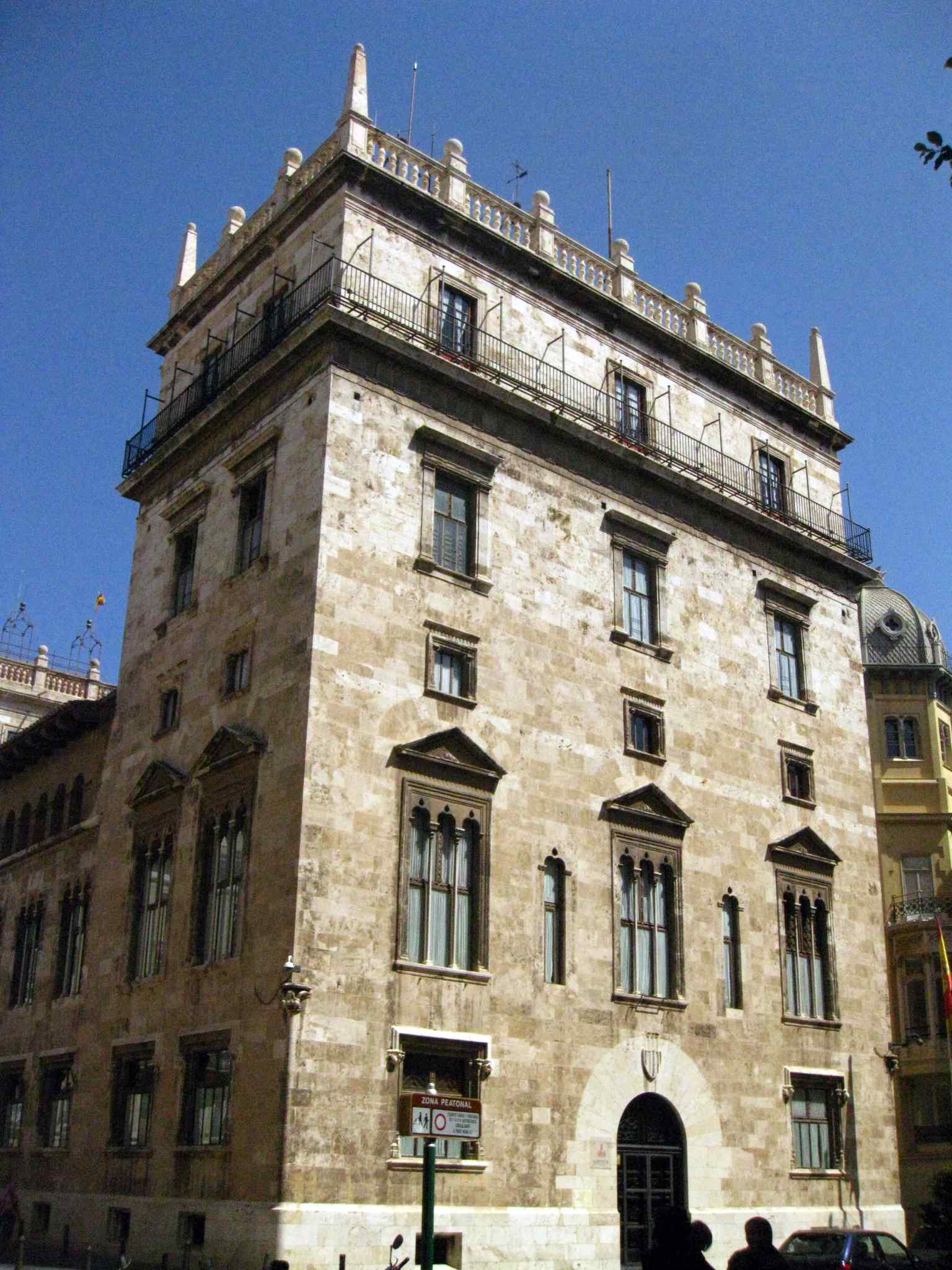
You might notice the building has a very balanced, imposing look now, but it definitely did not start out that way. That grand tower you see on the eastern side is the original, finally topped off in the late fifteen hundreds. But the matching tower on the western side? That is actually a bit of an architectural magic trick. It was built in the nineteen fifties by an architect named Luis Albert. He managed to seamlessly blend the new addition with the old by using authentic sixteenth-century stones, which were salvaged from a bombed palace in a nearby town.
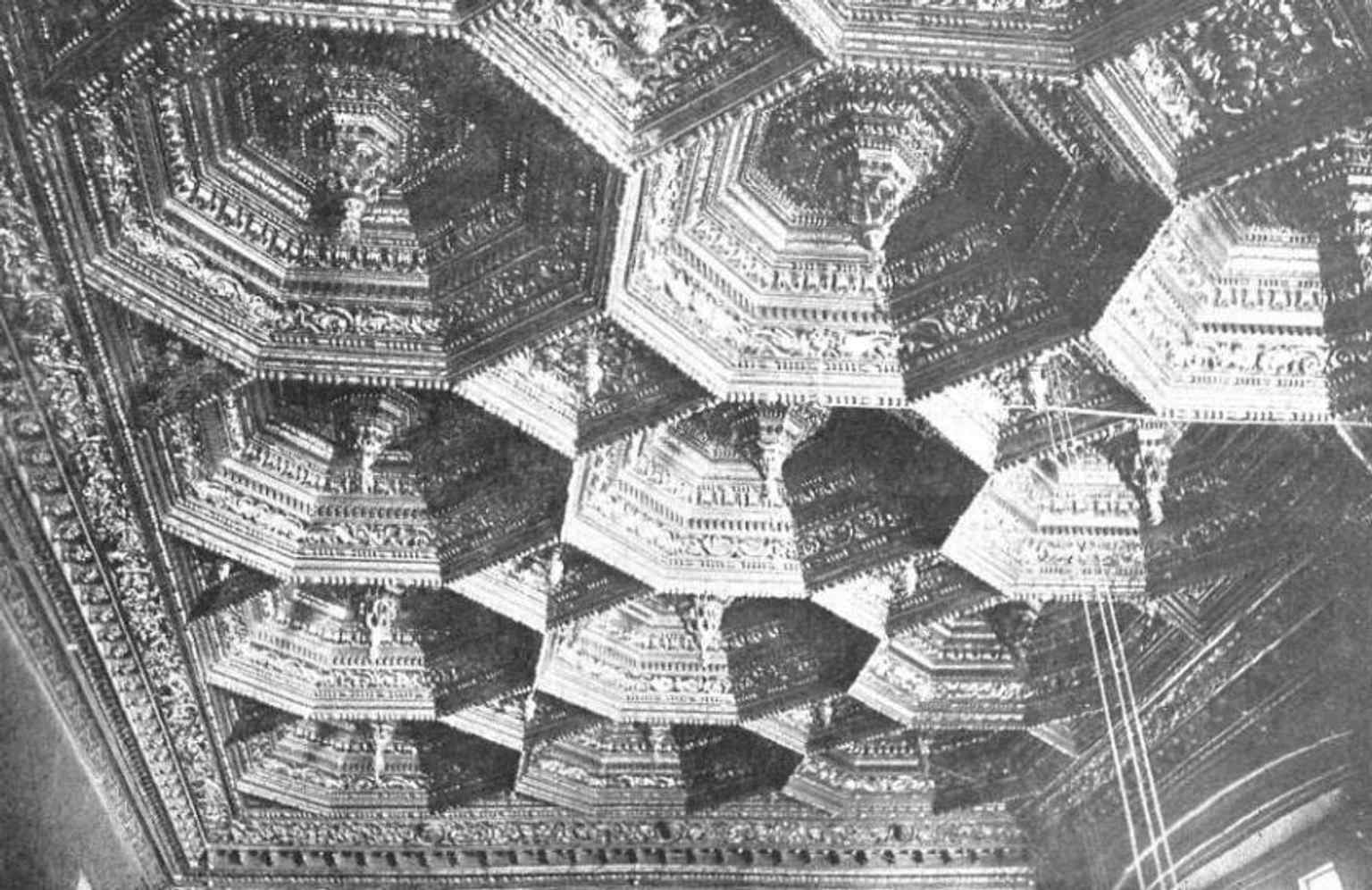
While the outside is certainly impressive, the real showstoppers are hidden behind those thick stone walls. Inside, there is a central open-air courtyard with a beautiful floating staircase that leads up to the main floor. The interior also boasts the Sala Dorada, or Golden Room. It earns its name from an incredibly rich, gold-leafed wooden ceiling intricately carved by the master craftsman Ginés Linares in fifteen thirty-four. Then there is the Hall of the Cortes. The Cortes was the traditional regional parliament where the three main social classes of the kingdom met to make decisions. The walls of that monumental hall are covered in vast Renaissance paintings by Juan Sariñena and other prominent artists. They actually painted the sixteenth-century deputies directly from life, creating a permanent, highly realistic record of the city's power players.
It is still a working government building today, though visitors can often peek inside Monday through Friday from eight in the morning until eight in the evening, and on Saturdays from nine to two. Feel free to admire the details before we head to the next stop.






%2C_torre_antiga%2C_des_de_la_pla%C3%A7a_de_la_Mare_de_D%C3%A9u.jpg)