
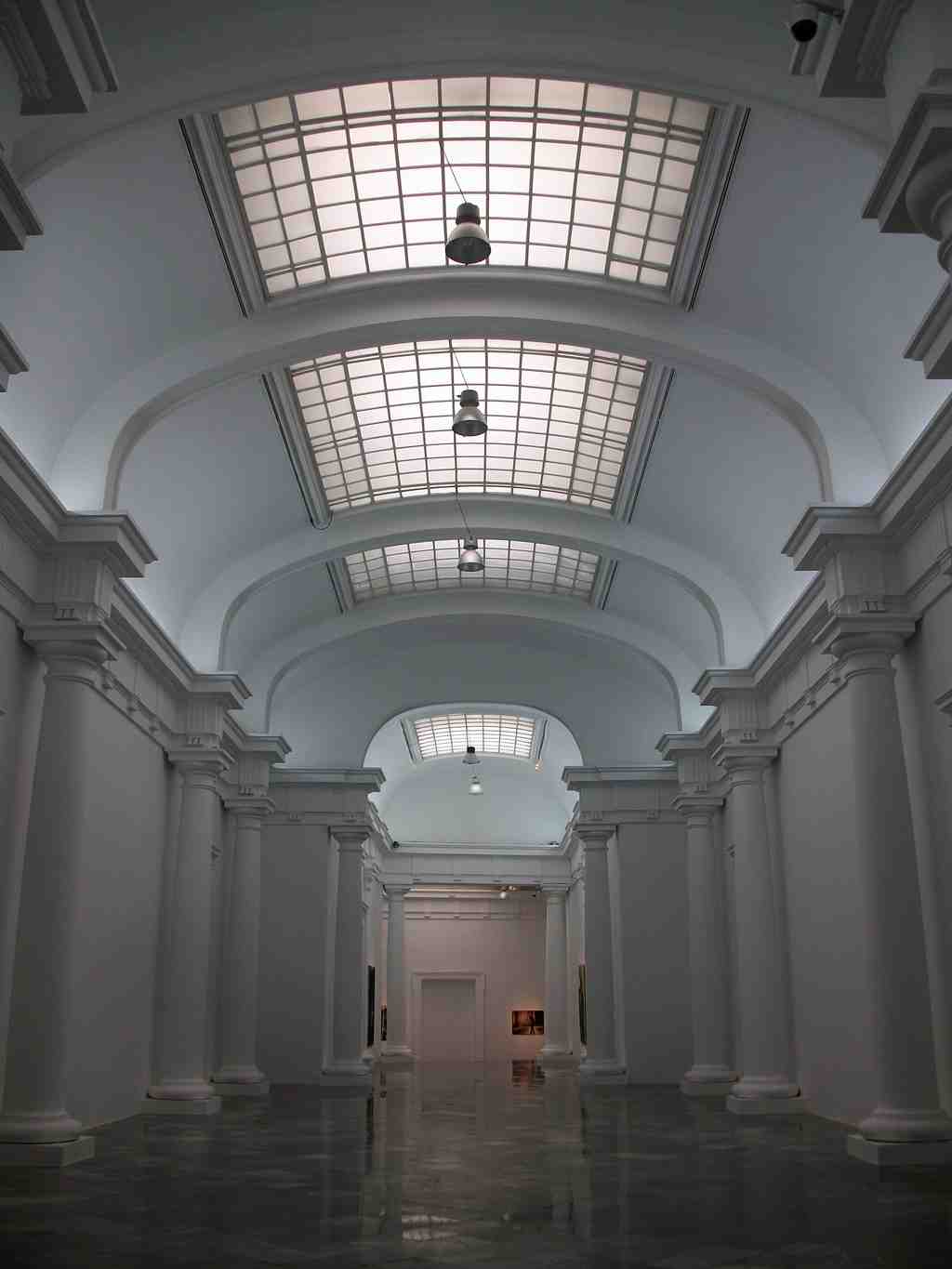
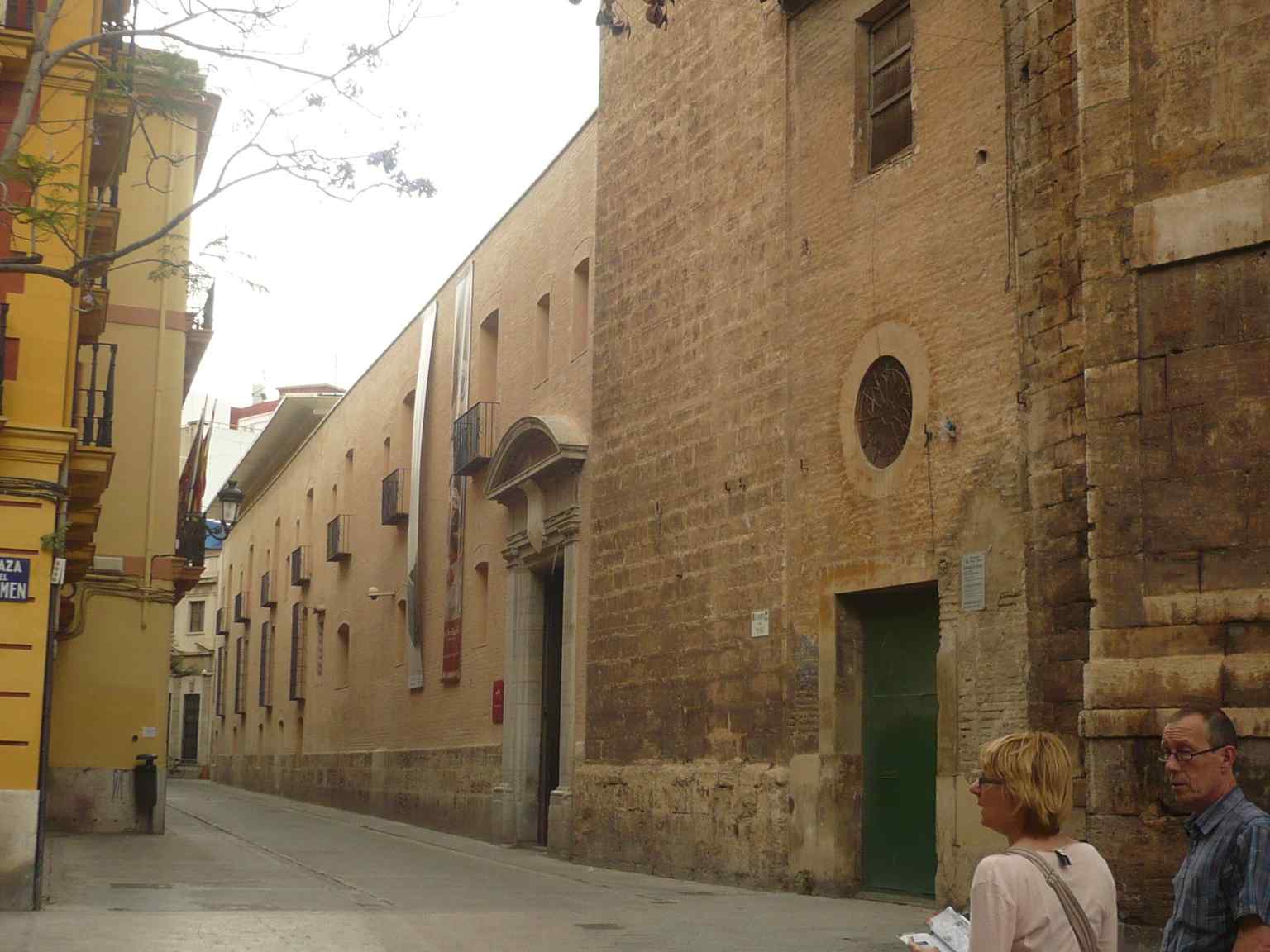
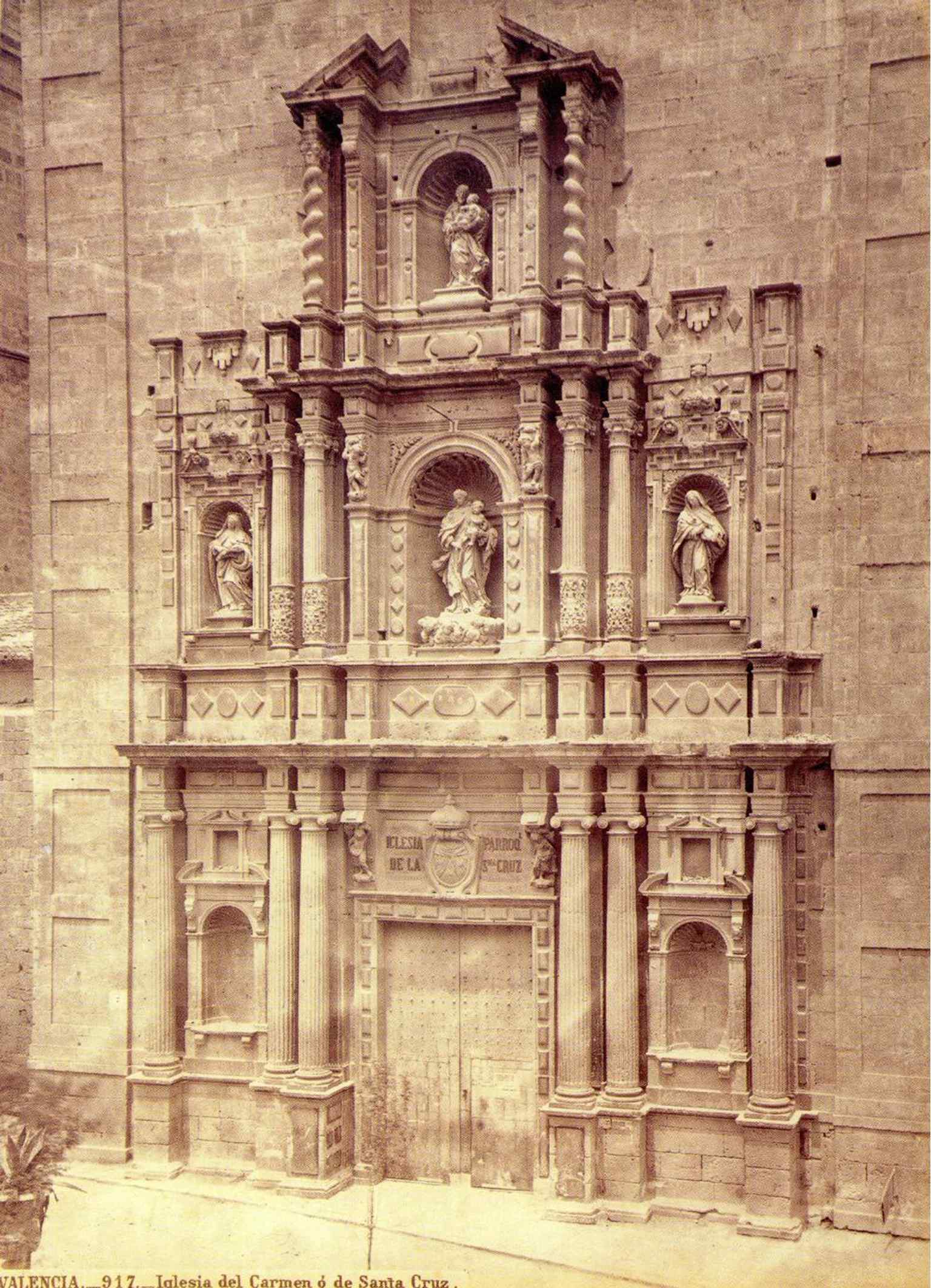
Just ahead on your left is the Carme Centre, a space where you will find a striking interior featuring pristine white columns, elegant arched vaults, and large grid-patterned skylights illuminating the polished floors. We are just a minute's walk from our last stop at Na Jordana, but stepping up to this building feels like stepping through several centuries all at once. This complex started its life way back in 1280, when the King granted the Carmelite monks permission to build a monastery here. Over the centuries, the monks kept adding to it, creating a rather beautiful blend of styles. There is a medieval chapel, a Gothic cloister-which is a covered walkway typically wrapping around an open courtyard-and a newer Renaissance cloister added in the fifteen hundreds. The attached church also boasts a highly decorative Baroque facade. Check the app to compare a historic 1870 photo of this intricately carved facade with how it looks today.
By the nineteenth century, the monks were gone, and the building began a new life serving the arts. It housed the Royal Academy of Fine Arts, and during the Spanish Civil War, it played a crucial role as a massive vault. Just as we learned at the Torres de Serranos, invaluable masterpieces from the Prado Museum were also secretly brought here to keep them safe.
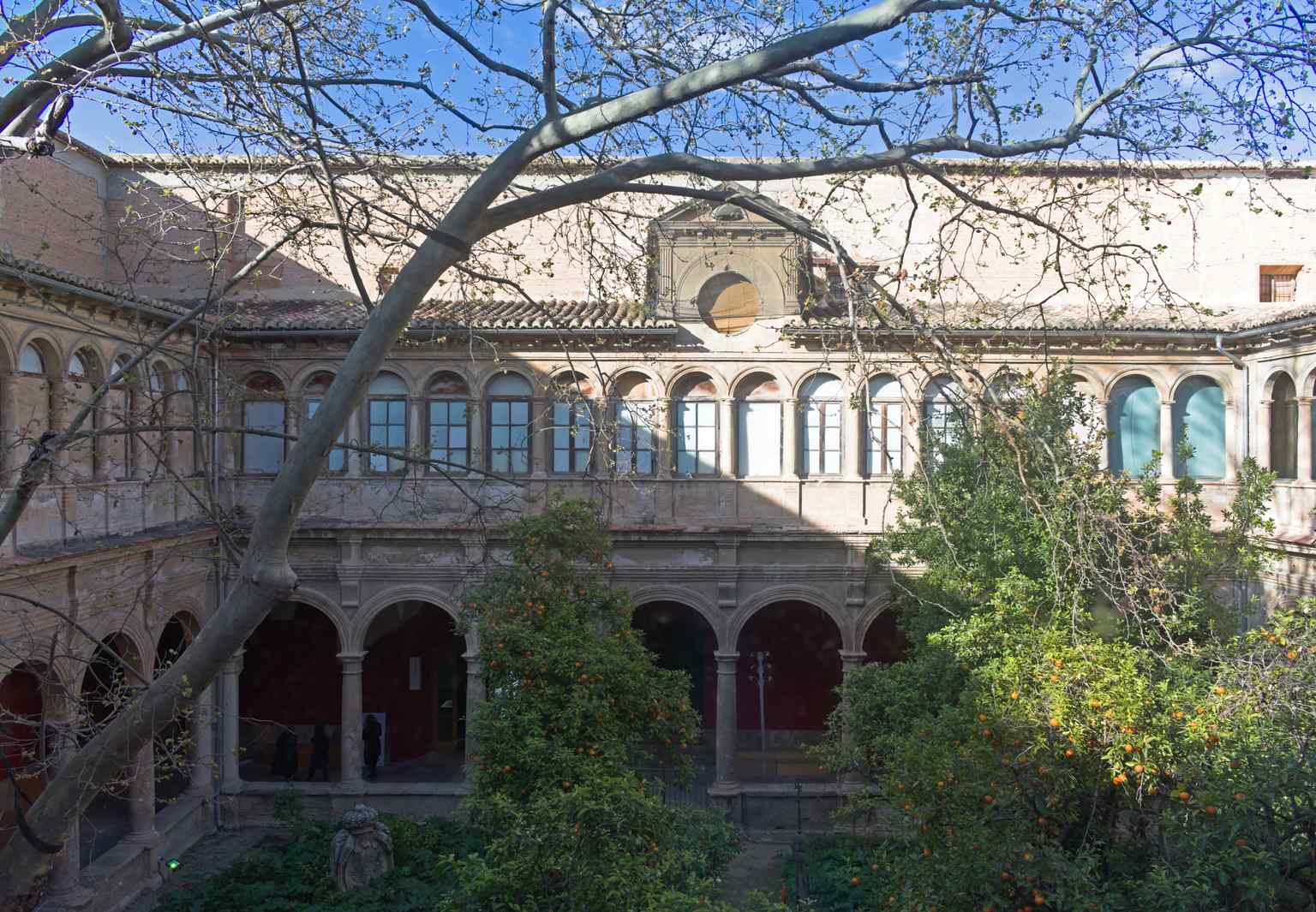
But the drama did not end in the twentieth century. In 2017, the space was rebranded as the Centre del Carme Cultura Contemporania, aiming to push the boundaries of modern art. And push boundaries they did. In 2019, the museum authorized an artist duo to paint a massive, thousand square meter graffiti mural directly onto the walls of that historic Renaissance cloister.
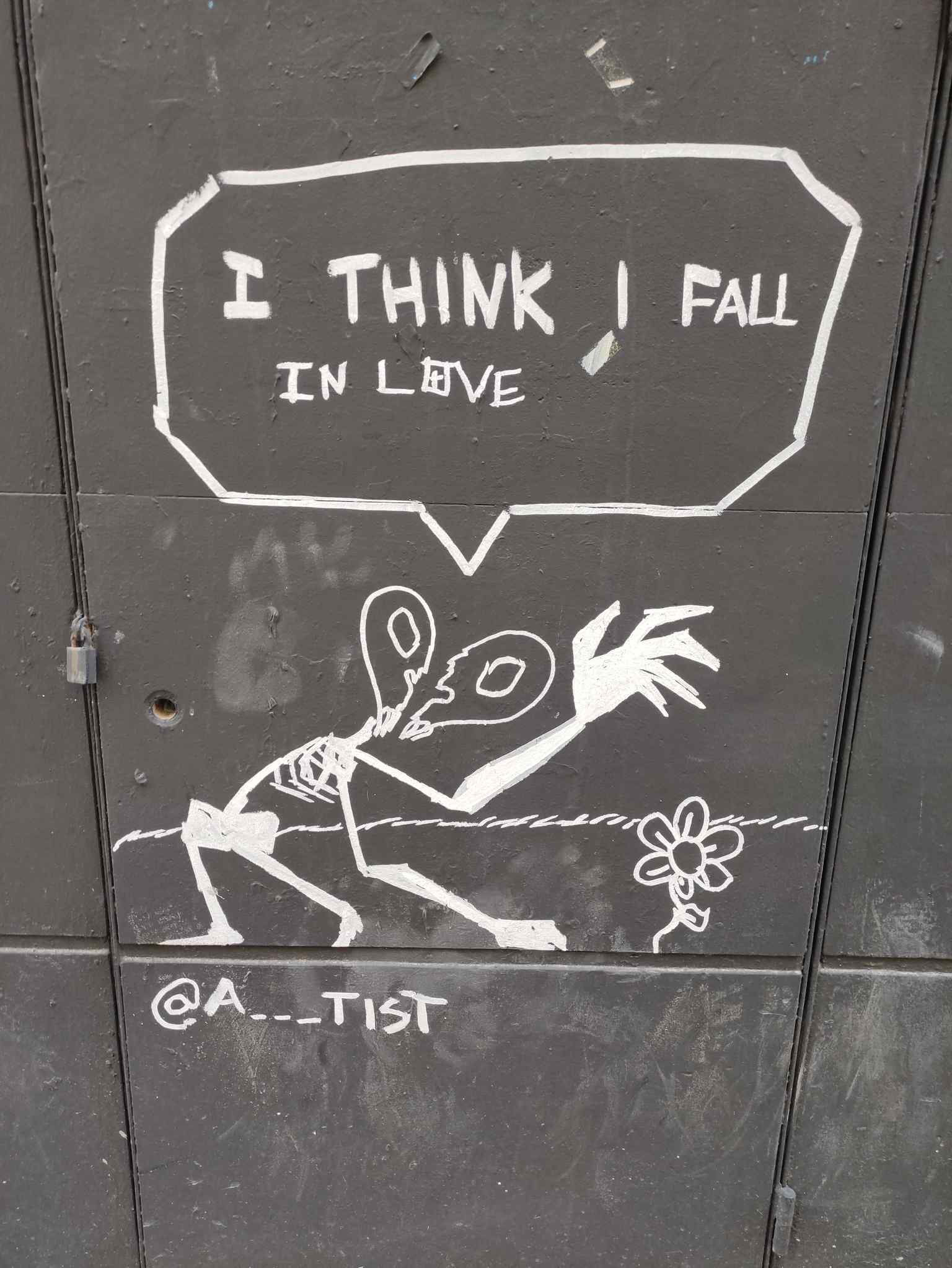
You can imagine the reaction. Cultural associations and art historians were absolutely furious. It sparked a massive legal battle over the protection of historical heritage. Ultimately, the museum's director was taken to court and convicted of reckless damage to the city's heritage, resulting in a fine of over a thousand euros. The mural was removed, and the director was later abruptly dismissed by a new political administration in 2023, causing yet another wave of public uproar.
Today, the museum remains proudly provocative and deeply rooted in social activism. It hosts projects like the VIHsibles festival, blending art and community to promote sexual health and HIV awareness. They also focus heavily on feminist art, hosting exhibitions that highlight the women's rights movement and the crucial role of rural women in Spanish society. It is a vibrant, living space where centuries old stone meets the sharpest edge of modern culture. The museum is open Tuesday through Sunday from 10 AM to 8 PM, if you want to explore the cloisters yourself. Take your time here, then we will take a short walk over to our next stop at Carmen Square.






