
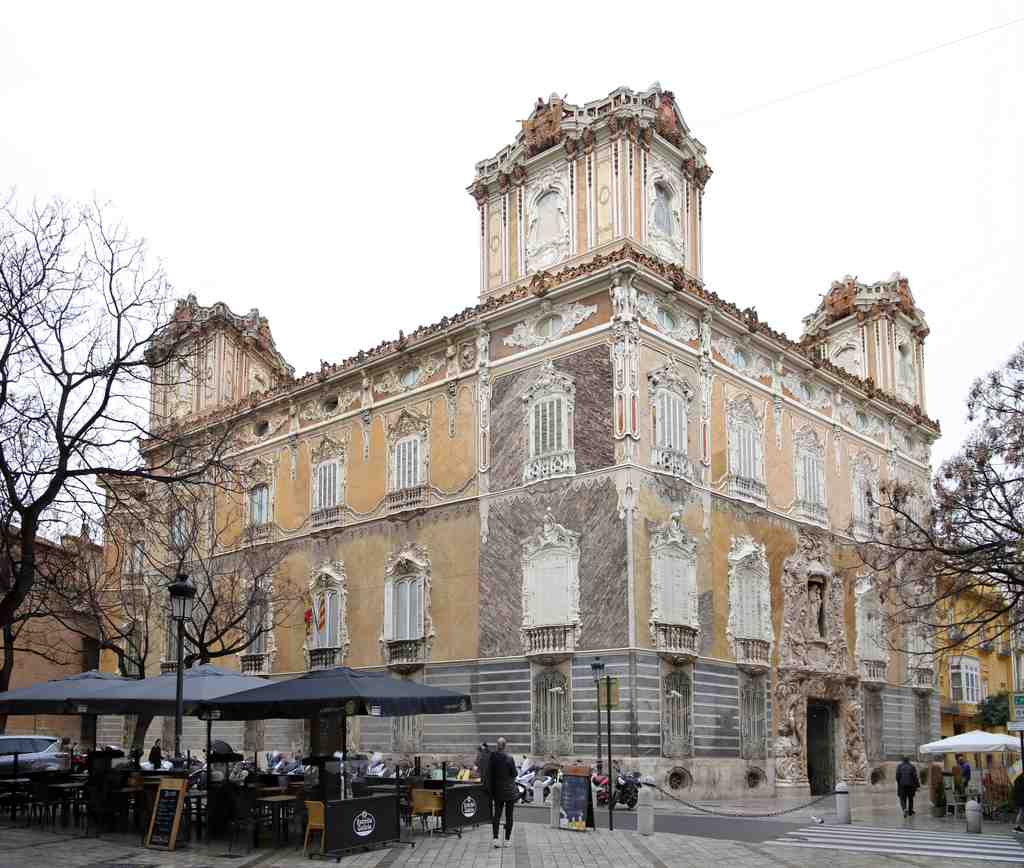
To spot the Palace of the Marqués de Dos Aguas, look for an ornate, peach-and-cream colored mansion with extravagantly decorated stucco facades and corner towers, standing proudly at the corner of the square with swirling carvings framing the main entrance.
Welcome, traveler! Prepare to have your breath stolen-don’t worry, only for a second-by this most theatrical of Valencian landmarks: the Palace of the Marqués de Dos Aguas. Before you stands a building so ornate and flamboyant, it makes most wedding cakes look downright underdressed. But don’t just admire it from afar. Step closer. Imagine the swirl of carriages in the square, the velvet rustle of noble cloaks, and the echo of whispered secrets filtering through those gilded walls.
The story of this palace is, frankly, the kind of tale that would make even a telenovela jealous. Long ago, a knight named Don Francisco Perellós swept a rich heiress named Joanna Perellós off her feet. (Ah, love-and strategic marriages!) Their descendants took on both their names, forming the proud Rabassa de Perellós dynasty. You’d think marrying well would be enough, but this family was as ambitious as they come. They acquired the barony of Dos Aguas and, thanks to a royal favor in 1699, became marquises. Add a little wealth from savvy business deals and more alliances than you can shake a stick at, and voilà-you’ve got the crown jewel of Valencia's aristocracy.
Originally, this site was perhaps a Roman necropolis-yes, you heard me right. Coffins, not comfort, likely dominated this address centuries ago! By the 15th century, the Rabassa de Perellós family built a Gothic palace here, with towers, crenellations, and even a courtyard. But ambition, as it tends to, demanded more-so in the dazzling 18th century, the marquises decided to turn up the glamour to an eleven. They called in the best: painter Hipólito Rovira, sculptor Ignacio Vergara, and decorator Luis Domingo. Together, they transformed this gloomy medieval pile into a Rococo spectacle, with facades swirling with allegorical creatures, cherubs, and enough mythological gods and goddesses to make Mount Olympus jealous.
Let’s talk about that entrance. Does it seem a little... over the top? Well, that's the point. In 1745, Ignacio Vergara crafted the grand portal from alabaster-a creamy stone that practically glows at dusk. Notice the muscled, nearly-naked river gods pouring water: they’re the personifications of the Turia and Júcar rivers, a nod (or maybe a flex) to the title “Dos Aguas.” Crocodile heads, reclining lions, quivers of arrows, fruit, urns-if you can name it, it’s probably worked into this portal. Look up to spot the Virgin of the Rosary, surrounded by allegories of Agriculture and Justice, flanked by mermaids with wings, no less. Talk about security detail! If the marquises were at home, the Virgin would be on display. If not-she was hidden from view. A medieval out-of-office notice, you might say.
Walk around to the side and you’ll find the carriage entrance, less showy but still sporting wooden doors studded with Greek masks and the initials “MD.” Imagine the crunch of hooves, the clatter of wheels, arrivals for a masked ball, a diplomatic dinner, or perhaps just another day in Spain’s most decorative family home.
Look up at those facades-every level tells a story. You’ll spot Minerva, Ceres, Jupiter, Mercury, mermaids, lions, even a torch-wielding goddess named Aurora who’s in charge of lighting up the world every morning (and presumably, keeping everyone on schedule). There are balustraded balconies, pink and gray stucco pretending to be marble, and a riot of decorative busts, shields, eagles, masks, and cherubs. Some details are even an ode to silk and agriculture: after all, there’s no harm in showing off the source of the family fortune.
Step inside-if you get the chance, since now it houses the National Museum of Ceramics and Decorative Arts-and the splendor only multiplies. Floors of colored tiles depicting epic tales, walls covered in damask, and grand marble staircases flanked by goddesses. Imagine the waltz of musicians, the din of laughter, and the swirl of silk at a 19th-century ball. Rooms have far-flung styles: a Far East tearoom with Mongol-inspired corners and Japanese vases; a riotous ballroom; a lobby watched over by a marble Flora; even a secret oratory where images of Mary preside over silent prayers.
Oh, and here's a detail for your next pub quiz: they say the marble for that stucco was quarried from the very lands that gave the marquises their name, Dos Aguas. Now, if you hear any whisper of ghosts, well-when you’ve had Roman necropolises, centuries of noble drama, and masked balls, someone’s bound to linger. So take a moment and soak in the drama, the artistry, the sheer love of spectacle. Who knows? Maybe you’ll leave with a little rococo flair in your step.
And with that, our tour comes to a close by the wildest, most splendid palace in all of Valencia. Thanks for exploring with me-you’ve officially walked in the footsteps of nobility, if not walked away with their fortune! Safe travels, adventurer.


