
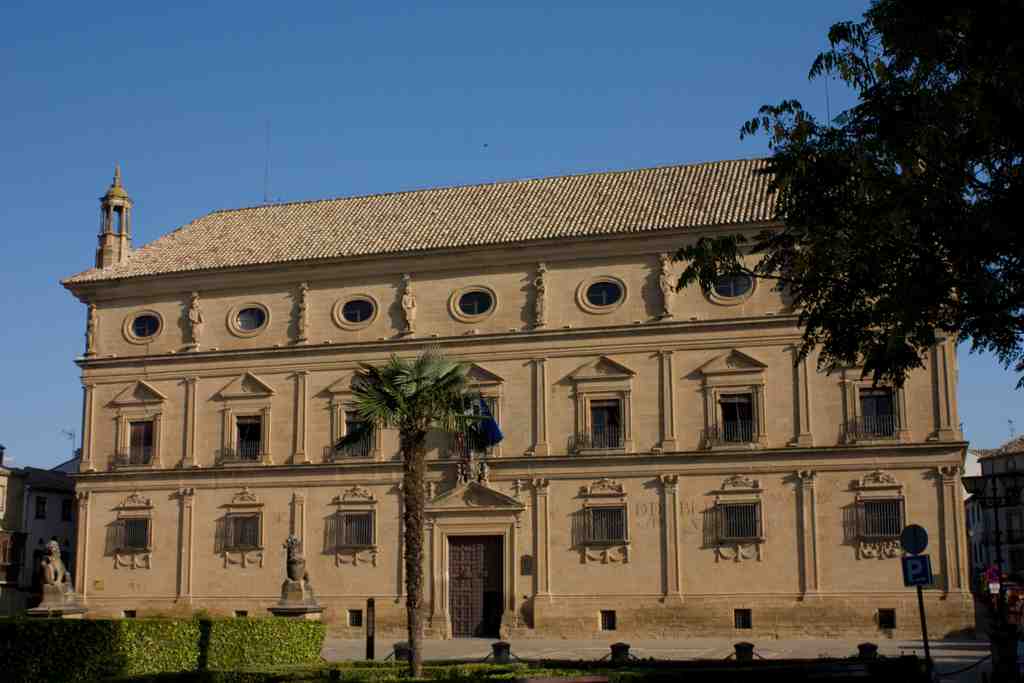
If you’re looking for the Vázquez de Molina Palace, just look for the grand sandstone building ahead that looks like it should have its own dramatic soundtrack. You’ll know it by its straight lines, perfectly balanced windows with triangular tops, and-if you look up-those round, porthole-style windows and statues standing proudly above them. The entrance is crowned with a peaked stone, and the building itself looks like a very fancy wedding cake-just, well, much harder to eat.
As you’re standing here in front, imagine the clatter of horses’ hooves echoing on these stones. This is one of Spain’s greatest Renaissance treasures-built by Juan Vázquez de Molina himself, the right-hand man to King Philip II. The architect, Andrés de Vandelvira, must have loved geometry, because this palace is a perfect quadrilateral, elegantly squared and split into seven neat sections on its front.
But it hasn’t always been about power and politics. After Vázquez de Molina passed away, the palace filled with a different kind of hush-the footsteps of Dominican nuns, their soft voices whispering prayers among the grand halls. For a while, this stately home became a convent, and even today, if you went inside, you could see mural paintings that tell stories from those peaceful days.
Of course, like a twist in a telenovela, the building was taken over in the 1800s and became the city hall. You can almost hear the shuffle of official papers and the earnest discussions about city affairs.
As you look up at the roof, spot the lanterns at the corners-like little crowns marking the palace’s edge. And don’t forget the caryatids-those stone ladies on the second floor, always standing guard. So, whether you imagine this place teeming with power, filled with quiet devotion, or bustling with city business, the walls here have seen more drama than a soap opera marathon. And to think, it all started with a secretary who wanted an office with a view!


