
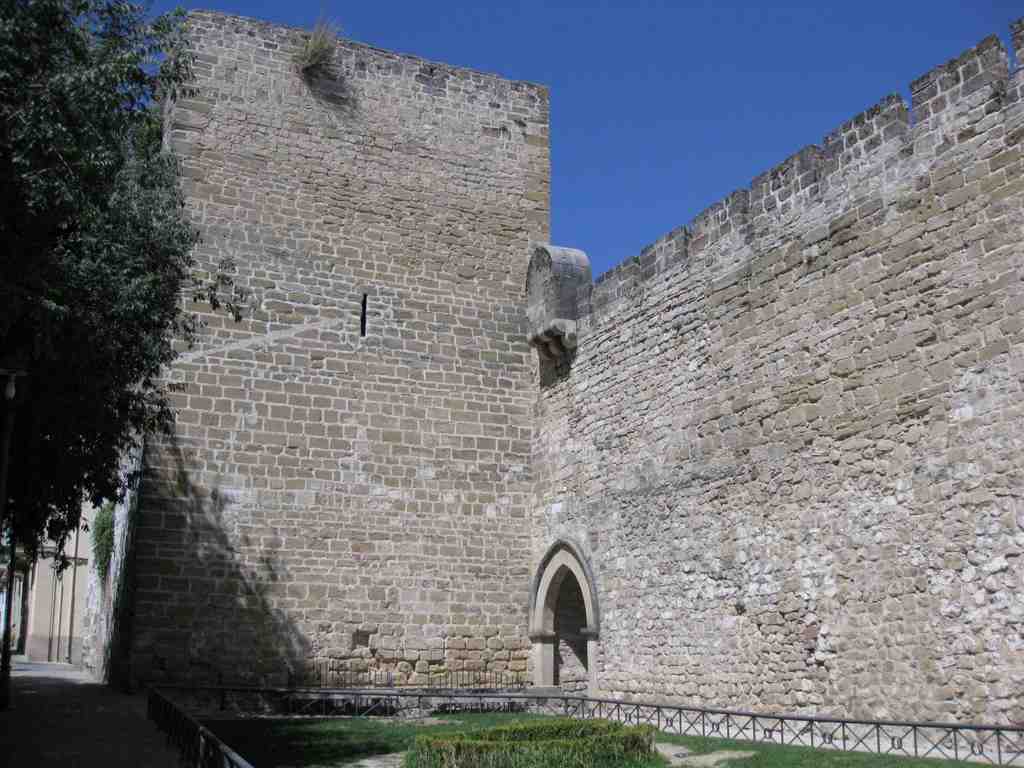
As you approach, look ahead and to your right-see that enormous stone wall rising up, built with chunky blocks of weathered, sandy brown stone? Notice how it stretches along the street with tall towers and jagged, tooth-like crenellations at the top. There’s a shadowy old archway in the base, just waiting for someone to imagine knights stepping out from its shadows. That’s the Úbeda Wall, and if you listen closely, maybe you’ll hear an echo from the city’s past.
You’re standing in front of a wall that’s seen more history than your favorite ancient history podcast. Built mostly back in the 10th century, these thick ramparts once wrapped all around Úbeda’s old city. Picture this place centuries ago-a grand defense system, bristling with towers, echoing with the calls of heralds and the distant beat of war drums. Argote de Molina, an old-time historian, said Úbeda was “fenced by very strong walls, beautifully towered, giving it much majesty and splendor.”
Long ago, this wall held back invaders, protected citizens, and watched as kings and conquerors passed through its mighty gates. Imagine the thundering hooves outside as the armies from the Battle of Las Navas de Tolosa rumbled by, while locals hurried to the safety of the mosque inside these very walls. The drama!
The city’s wall wasn’t just for fighting. The towers were home to noble knights, each with their own family crest. Heralds would stand at the top, shouting big news for all the city to hear-births, marriages, sometimes even royal visits or, less happily, invasions.
Over time, houses crept up and pressed against the stones. Bit by bit, some parts of the wall vanished as people broke through to make more space-probably the medieval version of knocking out a wall for a bigger kitchen. Huge gates like the Puerta de Toledo, once grand enough for an emperor to swear loyalty beneath, were lost. Still, many sections-like what’s looming right here-stand proud.
If you look closely, you’ll spot hints of the wall’s secrets: arches, ancient towers, even the old Mudéjar-style Puerta del Losal, with its horseshoe arches built in the Muslim tradition. And here’s a mysterious tradition for you: if you can eat a whole pomegranate in front of the Puerta de Granada, without dropping a single seed, legend says a treasure will appear at your feet. No pressure!
So as you stand before these monumental stones, take a moment. Run your hand over the rough, ancient surface if you can. These walls have seen centuries of stories, and if you listen, maybe you’ll catch a whisper from the medieval winds. Onward, explorer-the next adventure awaits!


