
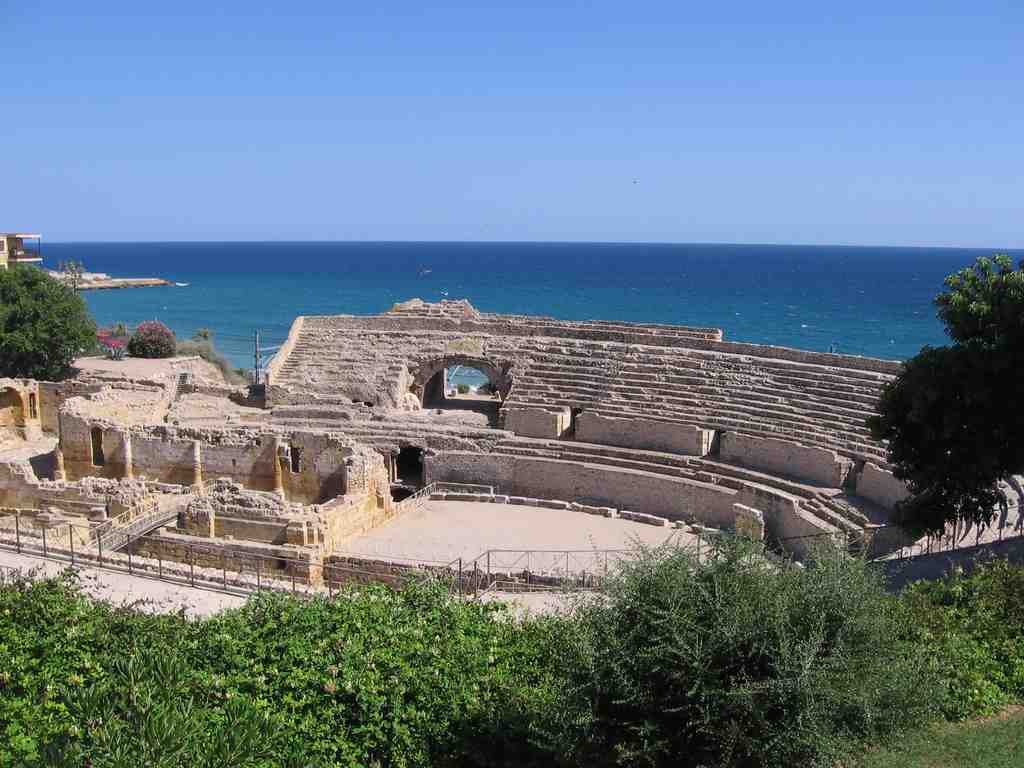
If you look towards the sparkling blue sea, you can’t miss the giant oval-shaped stone structure nestled just behind the city walls-that’s the Tarraco Amphitheatre, where stone steps curve down toward a sunlit arena, almost as if they’re inviting you into an ancient spectacle.
Now, close your eyes for a moment and imagine the smell of salty sea air mixing with the dust from centuries-old stones beneath your feet. Right where you’re standing, thousands of Romans once gathered for the ultimate showtime. This amphitheatre sprang to life at the end of the 2nd century AD, in the heyday of Roman Tarraco-back then, the city was a true power player, the capital of the province Hispania Citerior Tarraconensis. Romans really knew how to party: think 14,000 people packed into these stone seats, all buzzing with excitement, waiting to see gladiators and wild beasts burst into action.
Picture it: the crowd roars as doors beneath the arena creak open. Behind the scenes, there were pulleys, winches, and cages hiding beneath your feet, ready to whisk animals or gladiators up into the sunlight. Sometimes, they even stretched a giant canopy-called a velum-over the audience, shielding them from the sizzling Spanish sun. If you were a VIP, you got the best seat; if not, well, hope you enjoyed your view from the nosebleeds!
The amphitheatre wasn’t just about entertainment, though. In 259 AD, during a dark time for Christians, the city’s bishop Fructuoso and his two brave deacons, Augurio and Eulogio, met a fiery fate right here on the sand, condemned by Emperor Valerian’s orders. Imagine the hush falling over the crowd, the heat from the flames, and the somber realization that sometimes, the show was all too real.
As centuries rolled on, the amphitheatre’s glory faded but its spirit stayed alive. With the coming of Christianity, it lost its bloodthirsty moments, and clever builders pinched its giant stones to raise a basilica on this very spot. Where fights and fate once decided winners and losers, prayers now echoed within church walls. By the 5th century, the arena had another role: it became a resting place for the faithful, with tombs and mausoleums snuggling the church.
But history had more transformations in store! When the city faced the Islamic invasion, the site stood silent for ages-until the 12th century, when a brand-new church rose, dedicated to Santa Maria del Milagro. (Although, funnily enough, even that church couldn’t outlast history! It survived till only 1915.) If you look closely, you’ll still spot clues from every era: massive stone blocks that used to support roaring crowds, a basilica’s old outline, and silent tombs, all stacked like time’s layered cake.
So next time you see a wild arena on TV, remember: the specials effects had nothing on the real roaring lions, gladiators, and drama right here by the sea. Welcome to the original blockbuster-minus the popcorn!




