
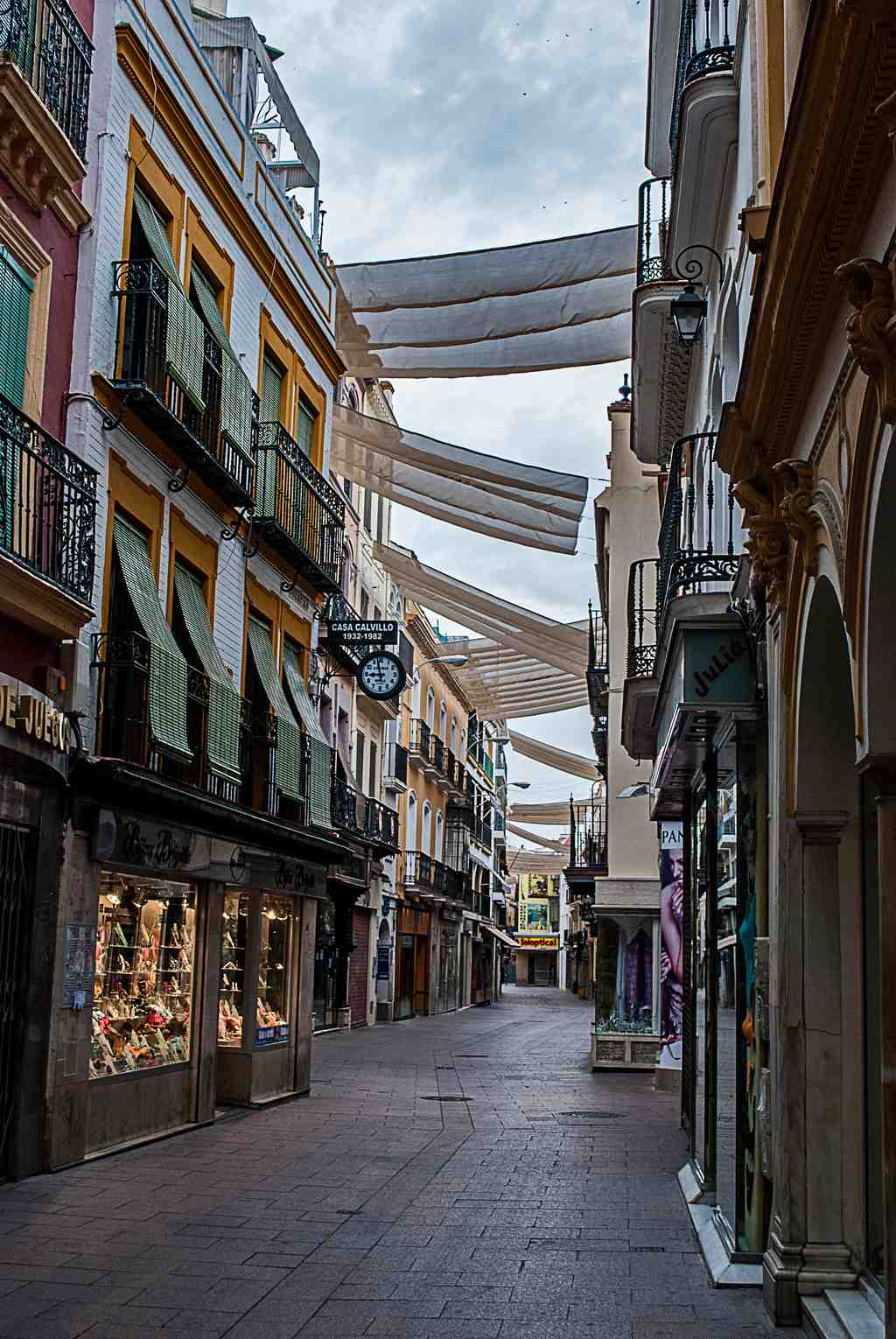
Just ahead of you, you'll notice Sierpes Street-an inviting, narrow pedestrian lane lined with colorful old buildings, plenty of balconies, and noticeable fabric shades stretched above to block out the sun.
Ah, welcome to Calle Sierpes, possibly Seville’s most famous street-and definitely the most mysterious! Stand right here and soak in the buzz: the polished cobblestones, the cheerful shop windows, and the fluttering awnings overhead, put in place every summer to shield pedestrians from the sizzling Andalusian sun.
Close your eyes and imagine yourself here back in the Middle Ages. Instead of a lively shopping street, this was once the ancient course of the Guadalquivir River! Not the best place to forget your umbrella-people used to complain bitterly in the 1700s when the rains came and the street would flood, especially after they removed a wooden walkway that helped people cross.
But Sierpes isn’t just a street; it’s a labyrinth of stories. It all begins with a legend fit for a Hollywood thriller. The name “Sierpes” means “serpents”-and no, it’s not because the street is twisty (despite what some say, it’s always been fairly straight). The most famous legend tells of a time in the 15th century when children began to disappear from the city. Rumors swirled, fingers were pointed at everyone-from mysterious foreign merchants to local rivalries. The city was in uproar, parents afraid to let their children outside.
Enter Melchor, a clever outsider who claimed he could solve the mystery-if only the city would pardon his old crimes. He led the local authorities on a daring trek through the old Roman sewers. Deep underground, they came face-to-face with the monster: a six-meter-long serpent, its jaws stuffed with human bones! Melchor claimed to have slain the beast, and its body was dragged through the streets and put on show for all to see. For months, Sierpes was the talk of the town-children were safe once more, and Melchor got a royal pardon…and the boss’s daughter as a reward. Quite a fairytale ending!
The real story as to why it’s called Sierpes? Well, historians love to keep us guessing. The legend stuck around, and the street’s previous names-like Espaderos, after sword makers-vanished as quickly as the snake ended up in the museum. And look, there’s more than legend lurking in these buildings: over the centuries, Sierpes has been home to monasteries, libraries, even the Royal Prison of Seville at its end. Rumor has it writers like Miguel de Cervantes did time here. Maybe that’s why he was so great at writing adventure stories!
In the 19th century, Sierpes became the fashion district of Seville, chock full of charming old shops still surviving today. See that shop called “La Campana”? Its sweets have tempted locals since 1885-and trust me, the only thing dangerous nowadays is how addictive those pastries are.
From religious processions in Semana Santa to art deco cinemas and buzzing cafés, Sierpes is the living heart of Seville’s culture. And when shade sails overhead snap in the wind or the crowd’s laughter rolls down these walls, you’re hearing centuries of stories colliding in one straight, slender avenue.
So keep your eyes out for local legends and maybe treat yourself at one of these historic shops. Just watch your ankles… you never know when a “sierpe” might slither by!
Intrigued by the denomination, twinning or the traditional shops? Explore further by joining me in the chat section below.




