
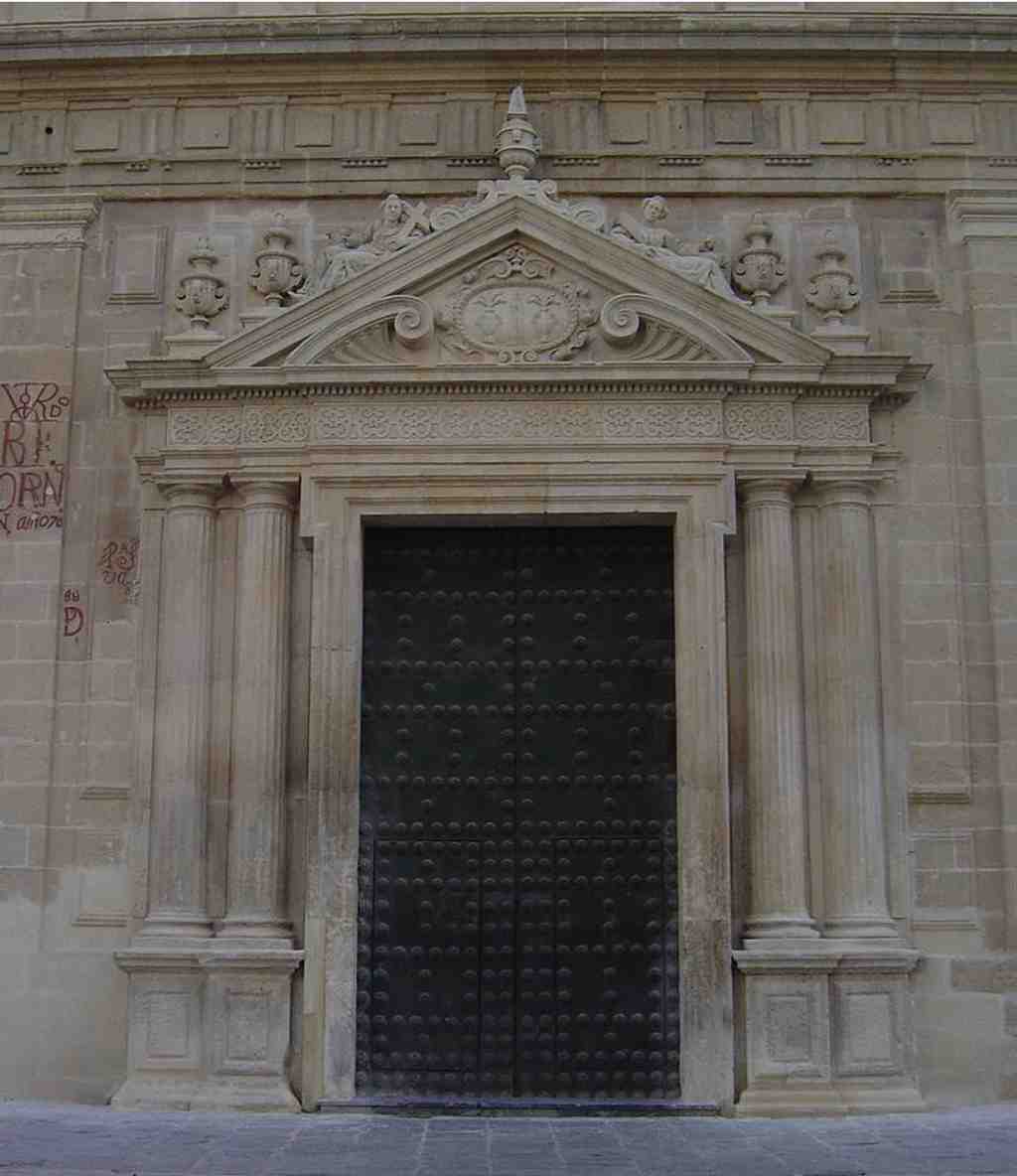
Right in front of you, you’ll see a sturdy, almost fortress-like stone building. To spot the entrance of the Church of the Tabernacle, look for a heavy, dark door with large metal studs, framed by thick columns. Above the door, there’s a triangle-shaped decoration with statues and fancy carvings-almost like this door is wearing a crown! The walls are a warm, sandy color and, compared to other churches you might have seen, its exterior is calm and unflashy-almost as if it’s quietly keeping secrets inside.
Now, imagine you’re standing here in the early 1600s, while the sound of chisels and hammers echo around you. The Church of the Tabernacle, or “El Sagrario,” began to rise right where you’re standing in 1618. It sprang up thanks to a handful of architects-imagine a relay race with building plans instead of batons! Miguel de Zumárraga started it, passed it on when he left this world, and finally Lorenzo Fernández Iglesias finished it off in 1662.
Why here? Well, things had to get dramatic! They cleared away the old remains of a mosque and even Christian chapels, plus a marble doorway, to make space for this new masterpiece. The church is built completely from stone, which caused trouble over the years: cracks, repairs, and headaches for people trying to keep it standing! The most recent “oops, it’s crumbling!” moment was just in 2017.
From the outside, this church doesn’t shout for attention. Its tall walls are divided into three sections by columns and, if you look closely, you’ll spot windows that are just there for show-you can’t peek through them! The real treat is the main doorway on the Avenida de la Constitución. Look above: there are statues of virtues and floral vases keeping watch, while paired columns hold up double set of leafy triangles (that’s two “frontons,” for the architecture fans). If you listen closely, maybe you’ll hear the statues whispering about all the visitors who’ve passed under their gaze through the centuries.
Step inside-in your mind for now-and you’d find yourself under a grand dome, flooded with sunlight slipping through windows high above. The ceiling’s decorated with detailed reliefs, almost like clouds made from stone, created by Pedro de Borja and his brothers. The main altar is a showstopper with a dramatic scene called La Piedad-imagine the emotion frozen in marble. Some of the sculptures had to play musical chairs over the centuries, moving from one church to another, sometimes sent to storage corners, patiently waiting to be rediscovered.
On either side of the main space, you’d find more marble, statues of saints, and stories quietly held in stone. There’s even a retablo, or altar screen, featuring a Crucified Christ and the Virgin of the Rosary, both by talented artists whose names still echo through Sevilla’s art world. Inside and out, El Sagrario is like a gentle giant-steady, solid, maybe a little mysterious, with secrets just waiting for anyone curious and brave enough to peek inside.
My advice? Take a deep breath, look up, and imagine all the hustle, art, drama, and emotion soaked into these stones. And don’t lean too hard on the columns-they’ve seen enough excitement for a few centuries already! Onward to the Plaza de San Francisco and more stories!




