
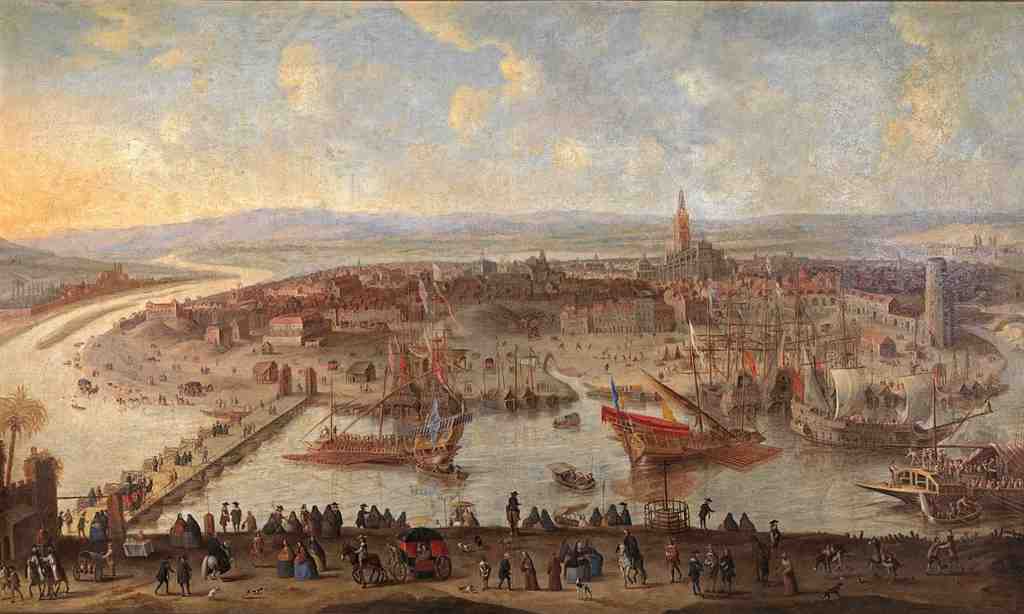
Take a look out in front of you, towards the water! You’ll notice a view just like in this old painting-a long, low bridge, almost floating over the river, stretching across the Guadalquivir, held up not by stone or steel, but by boats! The bridge almost looks like a row of large wooden boats tied together side by side, making a sort of snaking path just wide enough for people and carts. It’s low to the water, swarming with travelers, merchants, horses, and even a few adventurers who may or may not be lost. On both riverbanks, imagine the hustle and bustle-vendors calling out, nobles in carriages, sailors readying their ships, and kids hoping someone drops a tasty snack.
Now, here you are at the place of the legendary Boat Bridge of Seville! Believe it or not, this was the city’s very first bridge over the river, and it stood alone for nearly seven centuries. No pressure, right? Before this clever creation, Seville’s two sides were only joined by ferries, floating when the current allowed and leaving hopeful travelers waving their arms at the shore when it didn’t. The bridge was ordered up in 1171 by Abu Yaqub Yusuf, a caliph who seemed to think, “Why can’t we cross the river in style-and maybe avoid getting our socks wet for once?”
Since they couldn’t build a stone bridge-rivers and strong foundations do have a complicated relationship-the solution was pure genius: build a bridge out of boats! Iron chains held chunky boats in a line, and strong men laid wooden planks on top. Walking across in those days meant you could feel the bridge gently bobbing and creaking underfoot, especially if the river decided to throw a tantrum that day.
It became the lifeline connecting Seville to the bustling Triana district, the farmlands of Aljarafe, and beyond. But, oh, this bridge had drama! Floods, raiders, and storms put it to the test. Sometimes the river would rise in fury, unhooking the bridge, leaving everyone on one side debating if they really needed to get across after all. Picture sailors and townsfolk scrambling, covered in mud and calling for anchors, barrels, or maybe just a bit of luck.
The Bridge of Boats lived through battles and sieges, too. In fact, when Fernando III came to take the city in the 1200s, his admiral crashed two big ships right into the bridge to break it loose. Take that, traffic jam! Whether folks were running to market with fresh bread, or armies were marching in armor, this floating marvel was the stage for generations of Seville’s wildest stories. So next time you overhear someone complaining about waiting for a modern bridge to open, just smile and remember: at least it isn’t made out of boats!




