
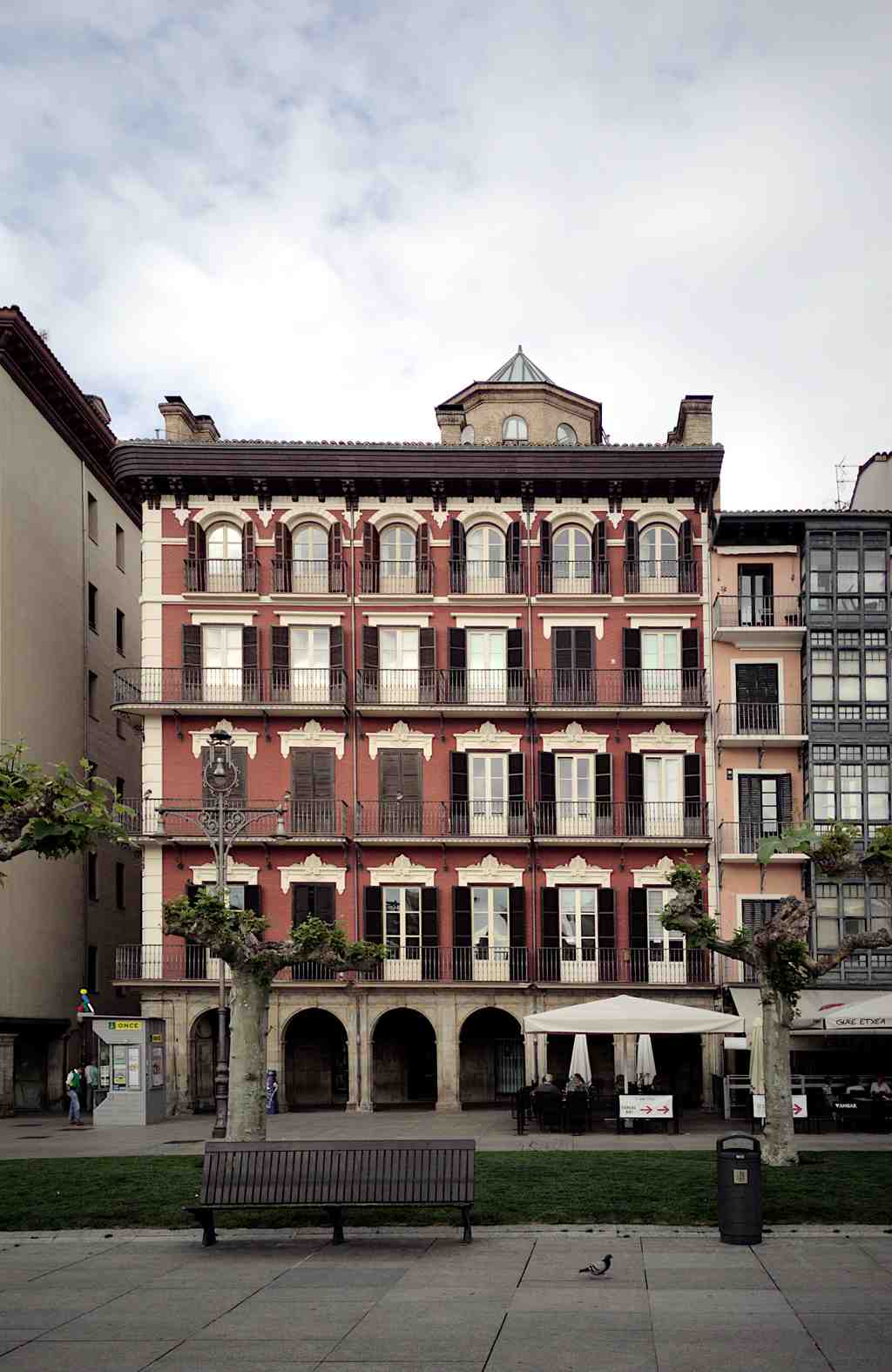
If you’re looking for the Goyeneche Palace, just look to the building right in front of you with its deep red brick and elegant white window frames. It stands out proudly from its neighbors, rising four stories high, with rows of tall windows and delicate black balconies. Along the ground floor, you can spot a row of wide stone arches-like a series of grand doorways leading into history! If you see lots of windows, elegant arches, and maybe even a few pigeons pacing in front, you’re in the right spot.
Now, picture yourself standing here a few centuries ago. You’d catch a whiff of new bricks, hear the distant hum of merchants bartering, and perhaps the clip-clop of horses pulling up to a grand doorway. This is the Goyeneche Palace, born in the hustle and bustle of 18th-century Pamplona, when the city was buzzing with opportunity and ambition.
Let me set the scene: Back in the 1700s, Pamplona was the heart of the Kingdom of Navarre. Imagine fancy carriages, nobles showing off, and the sound of hatching plans for bigger, better houses. The Goyeneche family, originally wool merchants from Baztán-yes, wool was the big business, sheep were basically the yuppies of their day-decided this was the place to build their legacy. Pedro Fermín Goyeneche, a man who knew how to seize opportunity (and evidently liked a good building project), raised this stately home right here.
The Goyeneche Palace has three facades, but the one facing you, opening onto the bustling Plaza del Castillo, stole the spotlight thanks to some fashionable upgrades in the 19th century. If you peek around the building, you’ll see more sides stretching down Estafeta Street (famous for the running of the bulls!), and toward Bajada de Javier. Look up for a moment-you’ll notice the windows, first straight-lined and proper, and above, graceful rounded arches. Some say those arches are like eyebrows raised in surprise, maybe still shocked by how fast this city changes.
Oh, and here’s a fun fact: the Goyeneche family wasn’t just about style. Thanks to a royal order, one of them got to run all the post offices and mail routes in these kingdoms. So if you’re waiting on a letter, you have these folks to thank-or blame for the delay!
Take a moment, look at the rich red brick, the carefully carved window frames, and imagine the flurry of activity that once swirled behind these walls-grand banquets, whispered deals, or maybe just someone cursing about lost mail. The past is very much alive here, all you need to do is listen.
Ready to carry on? There’s more Pamplona splendor right around the corner!




