
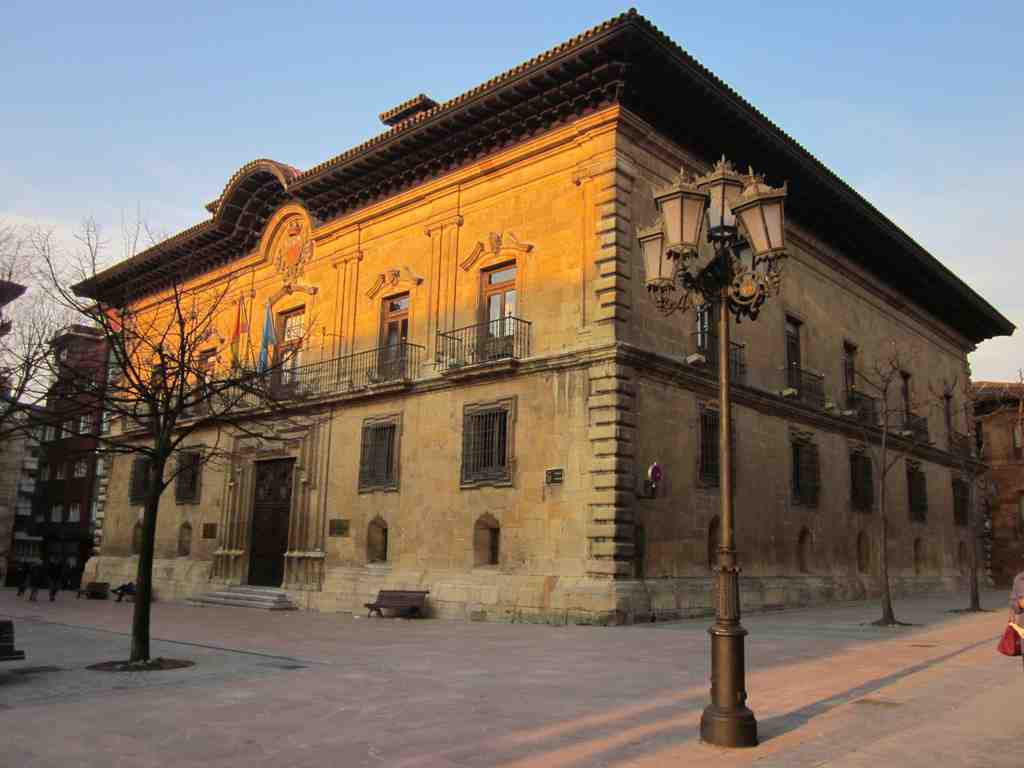
To spot the Palacio de Camposagrado, look for a big square stone building with golden sandstone walls, fancy cornerstones, and a dramatic balcony and doors facing the open plaza, right where the sunlight seems to dance.
Now, let’s travel back in time together. Imagine the sound of horses’ hooves echoing on cobblestones as the eighteenth century dawns in Oviedo, and the city’s most powerful aristocrats decide to build a palace so grand, locals would joke it needed its own weather forecast! The Palacio de Camposagrado rises up before you, designed by two rival architects who couldn’t agree if the building wanted to party with curvy, Baroque swagger or pose with elegant Neo-Classical calm. The lower floor, solid and proud, was started by Francisco de la Riva, all curves and flourishes; but blink and look up-see those stately Ionic columns and the crisp lines added years later by Pedro Antonio Menéndez? That’s the Neo-Classical flair, sneaking onto the stage!
But the story isn’t only about style-oh no! During the wild days of the Asturian miners' strike in 1934, shouts filled the streets, and the palace was burned, its stones turning from gold to gray with soot. Yet, like any dramatic hero, the building survived and was lovingly restored, earning its role today as the seat of the Regional Court. So as you gaze up at its sturdy walls, picture the whispers of nobles, the clatter of revolution, and maybe, just maybe, the soft sighs of the architects arguing about whose style really won. Welcome to the Palacio de Camposagrado, where every stone has a secret to tell!




