
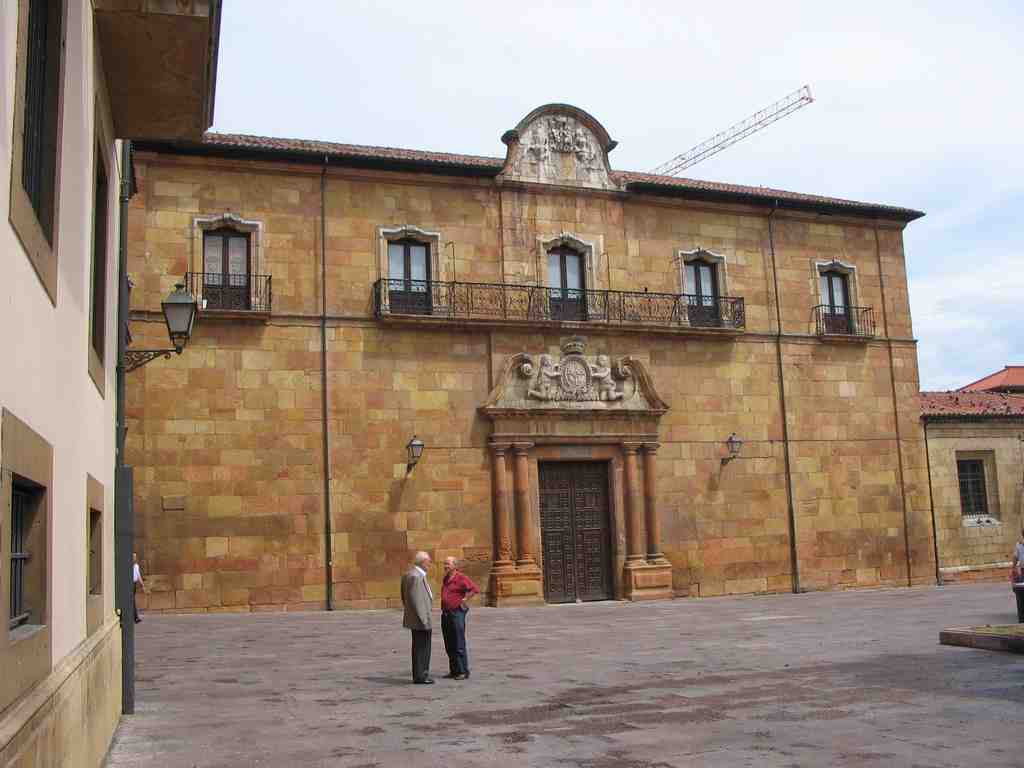
Directly in front of you, you’ll spot a grand stone building with a golden-brown façade that almost glows when the sunlight hits it-a bit like a giant toasted marshmallow, if you ask me! The main entrance has two strong columns and a richly decorated arch, crowned by a coat of arms and some very fancy carvings. There are tall windows with elegant balconies on the upper floor, and if you look up, you’ll see the details that set this Baroque part apart from the simpler lower walls. The museum is perched up on the top level of the cloister, right above the Gothic base, so all you need to do is glance slightly upward to admire the contrast between eras.
Now, let’s dive into the story behind this mysterious building. Imagine: it’s the heart of Oviedo, and you’re standing where centuries of history have stacked up like layers in a giant historical sandwich. The Museum of the Church of Oviedo was dreamt up by Archbishop Gabino Díaz Merchán in the 1980s and finally opened its doors in 1990. Not that long ago-so it’s sort of a youngster among its ancient surroundings!
Here’s the fun part: to enter, you use the side door of the Cathedral, called the Door of Forgiveness. Sounds pretty grand, right? As you step inside and up into the Baroque part of the cloister, keep your eyes peeled for whispers from the past. This museum isn’t your ordinary collection of dusty relics. Instead, it holds dazzling treasures from the cathedral and from over a hundred parishes around Asturias. Each piece traveled here for safekeeping, many with their own mysterious or legendary stories. Can you imagine the secrets they could tell if they started talking?
The highlight of your visit: you get to enter the Cámara Santa, the cathedral’s Holy Chamber. Here, under watchful eyes, are the two most famous crosses in Asturias-the Cross of Victory and the Cross of the Angels. One is the symbol of all Asturias, and the other of Oviedo itself. And if that isn’t enough sparkle for you, there’s also the Agate Box and the Holy Ark, packed with precious relics, including the Holy Shroud itself-yes, the very one believed to have wrapped Jesus after the crucifixion.
So stand quietly for a moment and imagine all those hands throughout history-priests, pilgrims, royalty-carrying these relics through wars, fires, and floods, all the way to this very spot. Now that’s a treasure hunt worthy of a museum, don’t you think?




