
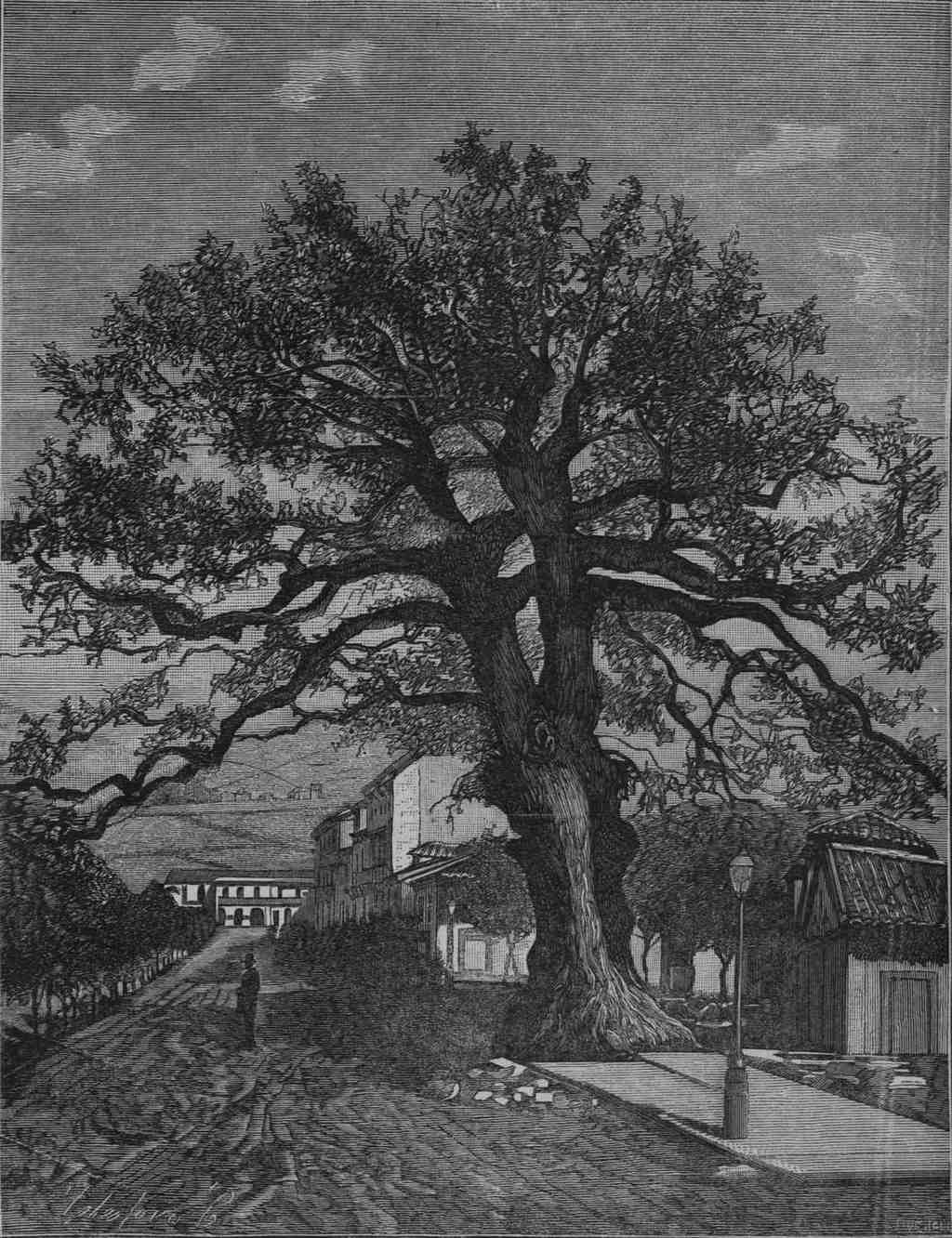
Just ahead, you’ll spot something unusual on your right-a spot marked with a commemorative plaque on the pavement. If you look for a small crowd or maybe just a bit of open space in the busy city street, you’re in the right place. Imagine a massive tree stretching across your view, its thick trunk almost wider than some cars, with heavy branches twisting above old lamp posts and cobblestone paths. That’s what this site once looked like, back when the legendary Carbayón stood tall right here.
Alright, let’s paint the scene: Imagine yourself in 19th-century Oviedo. The city is just starting to buzz with the energy of new trains, carriages, and city plans. But at the very edge of the Campo de San Francisco, there’s something that dwarfs all this excitement-a colossal oak tree, known as El Carbayón. Not just any tree-this old fellow had a trunk nine meters around, two main bodies shooting upward like huge towers, and a leafy crown that seemed to give shade to the whole street.
For centuries, El Carbayón was the pride and symbol of Oviedo, watching over the comings and goings of townsfolk, lovers, and plenty of street dogs looking for a cool spot. In fact, people from Oviedo still call themselves ‘carbayones’ thanks to this very tree. But, as with any good drama, change was coming. The city was growing, roads were being built, and the train station opened up. Suddenly, the great oak was… well, right in the middle of progress. It started to annoy the traffic on Calle de Uría. And to make things worse, poor Carbayón had grown old and infested with woodworms.
So, in 1879, the city was split! Should they keep their ancient guardian, or make way for a shiny new Oviedo? After heated debates, votes, and probably a few mustaches twirled in deep thought, it was decided-the tree must go. It took just 192 pesetas to pay for the job, and on a day people still remember, El Carbayón was felled. Imagine the tension in the air-some wept, some cheered, and some probably just grumbled about the traffic as usual.
Even though the old oak is gone, its legend lives on. There’s a plaque here, marking exactly where it once stood, and just nearby in the Campoamor Theater gardens, you can find El Carbayín, a young oak planted in memory of its mighty ancestor. So next time you hear someone from Oviedo called a ‘carbayón’, you’ll know they’re not being compared to an old oak tree… Or maybe they are, and that’s a pretty cool thing. Shall we carry on to our next stop? I promise, no trees will get in our way!




