
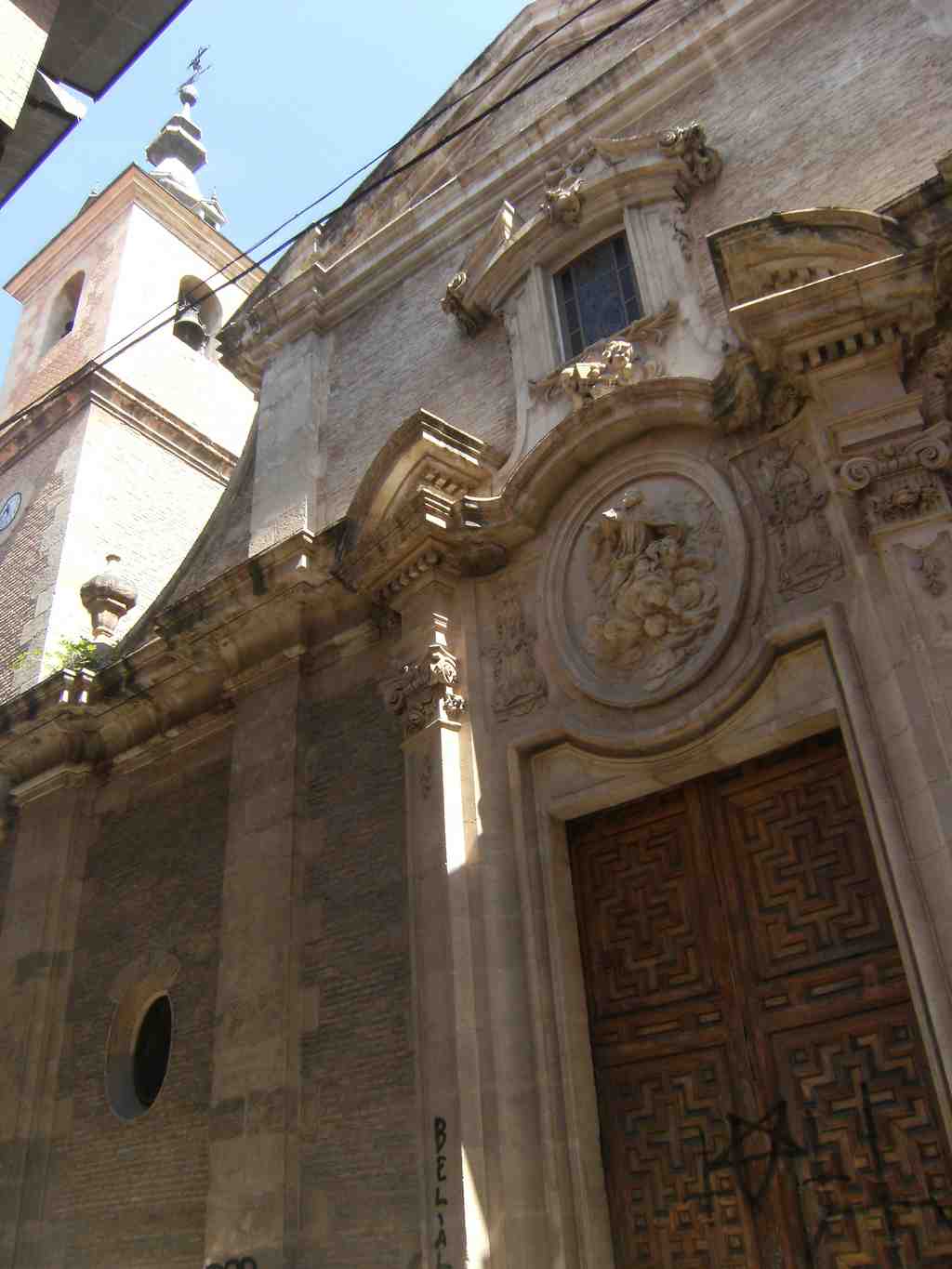
Just in front of you rises the Iglesia de San Nicolás de Bari. To spot it, look for a grand, sandy-colored facade, decorated with swirling Baroque stonework. The main entrance is framed by chunky columns and a massive wooden door with a geometric pattern, almost like a giant’s puzzle box. Above that, there’s a rounded window set in a dramatic, sculpted oval, crowned with ornate decorations. And off to the left, you’ll see the church’s tower, standing tall and topped with a quirky weather vane.
Now that you’re here, let’s imagine the clock has spun backward a few centuries. Picture this street bustling with townsfolk, the stones under your feet echoing footsteps from long ago. This very spot has deep roots - after Murcia was taken by Christian forces way back in 1266, the old mosque standing here was replaced by the first version of San Nicolás. That’s right, you’re standing where two worlds once collided, and where history literally changed its clothes.
The church you see now is a true Baroque beauty from the 1700s, a time when architecture got dramatic-think marble columns, dazzling curves, and enough flair to make anyone dizzy. But this wasn’t just for show. By the 1700s, the old church couldn’t handle any more rough times, so it was torn down and rebuilt with the help of a local hero: Diego Mateo Zapata, a doctor and philosopher who was always in trouble with the Inquisition. It seems he figured, “If life gives you lemons, sponsor a church!” He funded much of this place, and today he’s buried right inside, at the feet of the grand altar.
Speaking of secrets, did you know this building hides a treasure trove of art? Tucked away inside, you’d find statues by some of Spain’s most famous artists, including a few by the legendary Francisco Salzillo-though, like all good mysteries, experts still argue about who really made some of them.
Today, the church isn’t just about history. It’s alive every year with traditional Holy Week celebrations, with processions starting right here. The streets fill with emotion, music, and color as the community gathers in old Spanish style.
So, as you stand before these mighty doors, imagine all the weddings, secrets, and celebrations that have unfolded under its watchful eyes. If these walls could talk, they’d have some stories to confess-and probably a joke or two about the Inquisition’s sense of humor. Ready to wander on to our next adventure?
Seeking more information about the architecture, heritage or the image gallery? Ask away in the chat section and I'll fill you in.




