
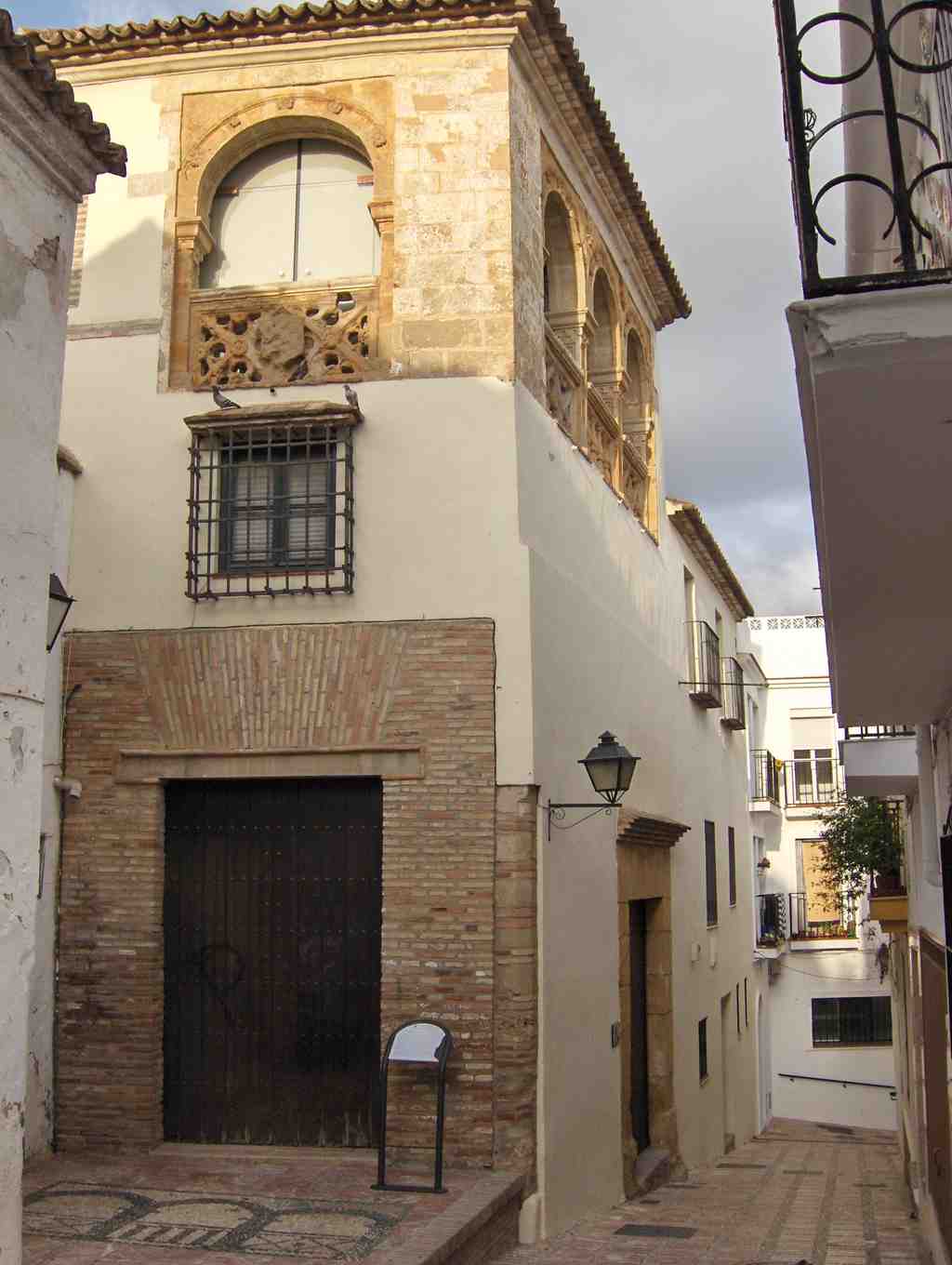
To spot Hospital Bazán, look up on your left for a striking square tower with arched windows framed in golden stone, sitting above whitewashed walls and a broad brick doorway at the corner of a peaceful narrow street.
Now that you’ve found it, let me whisk you back in time! Picture yourself in Marbella in the 1500s-narrow lanes, footsteps echoing on stone, and the fragrant sea breeze wafting in from the coast. Here stands the Hospital Bazán, commissioned by Don Alonso de Bazán, who was not only Marbella’s mayor but also the keeper of the grand castle. Imagine him, proud and mustachioed, strutting through town, eager to leave a legacy for the ages. Instead of building a giant statue of himself holding a churro, Don Alonso created this hospital to care for the people of Marbella.
Back then, the hospital was a lively place-not just for treating sniffles but serving as a shelter for the weary, the sick, and the poor. The building is an unusual patchwork, created by connecting two separate homes right here on this sloping ground. Step a little closer and you might catch a whisper of its old domestic charm, with Gothic, Mudéjar, and Renaissance details tangled together in a beautiful architectural dance. Every corner brings a change in level-watch your step if you ever get inside!
Right behind these front walls, a courtyard blooms with sunlight, wrapped on two sides by brick arches. Picture nuns bustling beneath these arches, carrying baskets, while a local cat eyes a crumb of bread with suspicious intensity. To the west, the hospital’s old chapel is tucked away-if only these walls could talk! This was the Bazán family’s own sacred space, and above the altar the family’s painted shields once glimmered under a fancy domed ceiling.
Move your eyes up to the southwest-do you see that tower with its ornate balcony? That’s the lookout post, built from sandstone, and it brags a solitary arch to the west with a carved Bazán family crest. In its prime, you’d hear the clatter of armor as guards and nobles came and went. The southern side of the tower features a gallery with elegant arches, perfect for watching sunsets-or maybe just the neighbors, if you were nosy.
As centuries rolled by, the hospital became less about healing and more about housing, taking on the quieter role of a residence, but never losing its noble flair. By the late 1900s, the building had grown weary, like an old man with a thousand stories, until it was lovingly restored in 1989. Today, the grand rooms serve as the Museum of Spanish Contemporary Engraving-a place brimming with edgy art, far removed from medieval illnesses, foggy elixirs, and clunky wooden cough syrup spoons.
Oh, and in case you’re wondering, this hospital is so special it’s officially classified as a Monument. You’re standing in front of a true celebrity in Marbella’s history-so go ahead, take a dramatic bow for discovering it!




