
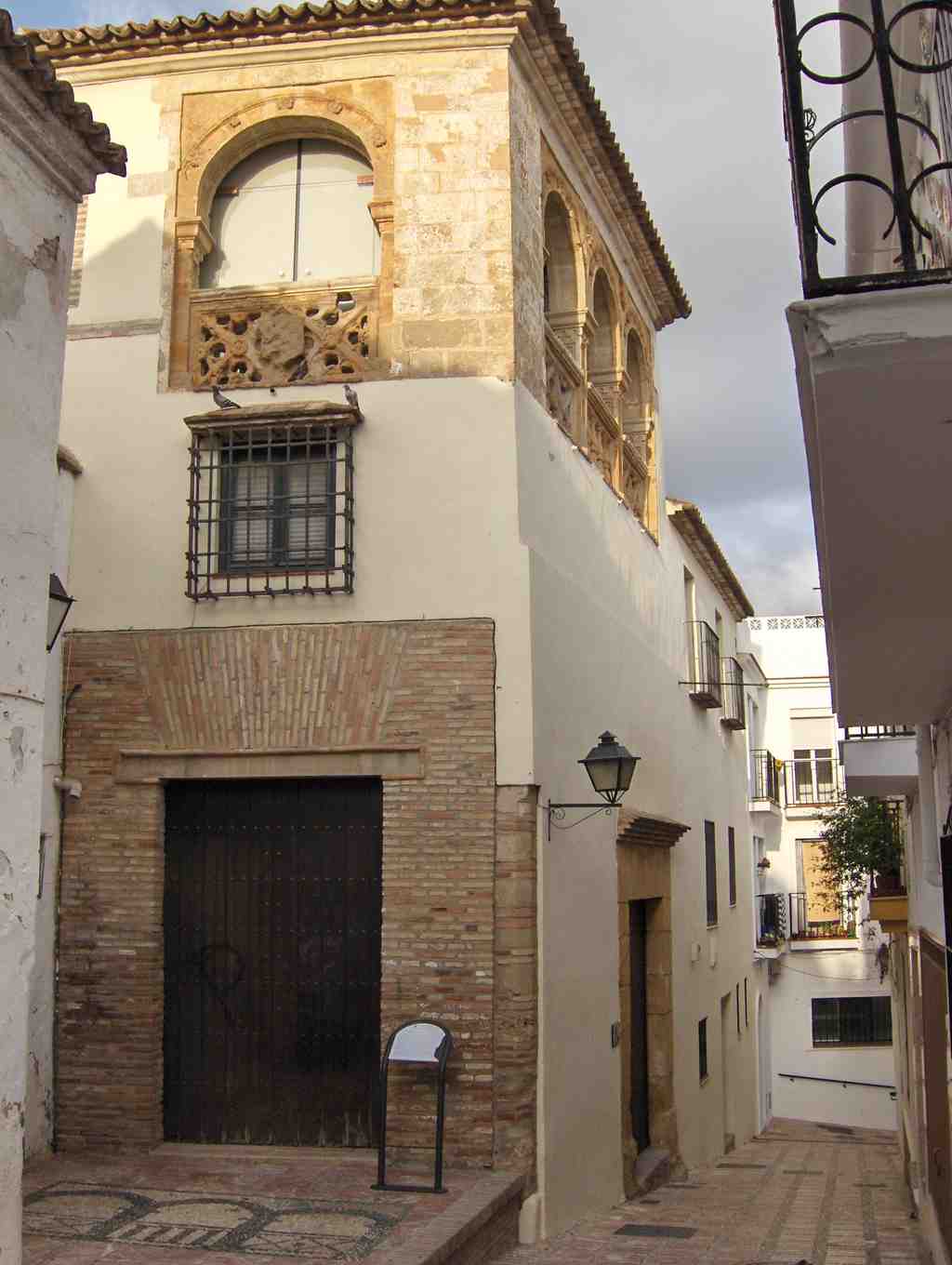
To spot Hospital Bazán, look for a striking corner building with white walls, exposed brickwork, and a unique stone tower topped by arched openings and a sculpted coat of arms-just at a narrow, tiled street bend.
As you stand here, take a deep breath-you're about to step into a time machine! Imagine the sounds of 16th-century Marbella: horses’ hooves echoing along steep, twisting streets, and the soft murmur of people exchanging news in the shade of whitewashed walls. The building before you, Hospital Bazán, might look peaceful now, but it’s seen centuries of secrets, hopes, and some seriously impressive fashion.
Long ago, a generous man named Alonso de Bazán-local bigwig, town governor, and castle warden-decided to leave a mark far more lasting than a selfie. He founded this hospital to help the needy, and his name has clung stubbornly to the stones ever since. Between the 17th and 19th centuries, Hospital Bazán wasn’t just a hospital-oh no, it was the beating heart of charity and care for Marbella’s poorest souls. Picture the hustle inside: doctors in flowing robes, nuns bustling between patients, and maybe just a hint of that mysterious “medieval medicine” smell.
But let's take a closer look at the building itself-it's like architectural tapas, serving a bit of everything: Gothic arches, Mudejar craftsmanship, and Renaissance details. The hospital rose from the union of two separate houses, built onto a serious slope. That’s why, if you sneak a peek inside, you’ll find floors that are always playing hide-and-seek with each other-a real-life game of “guess what level you're on now!”
The grand feature is that watchtower in the southwest corner. See the ornate stonework and the Bazán family coat of arms perched up there? That’s like the original penthouse with a view, and it once housed both a family chapel and their private resting place-talk about living and dying in style. Inside, you’d find a single-naved room, crowned by a dome painted with shields and decorated in plaster, complete with a square presbytery just to keep things interesting.
Journeying deeper, you’d stumble upon hidden wells in shady rooms below street level, wooden beams overhead showing off intricate “par y nudillo” roofs in true Mudejar style, and winding stairways leading to sun-filled galleries. During the 1800s, the hospital began to lose its caregiving purpose. Instead, it became just a swanky old house, echoing with stories of its noble past. More recently, though, it got the makeover of a lifetime: in 1989, it was restored and reimagined as the Contemporary Spanish Print Museum.
Today, its blank white walls and peeks of brickwork still whisper tales of illness and hope, faith and art. Declared a Cultural Interest Site in 2004, it now welcomes art lovers instead of patients. So, as you stand here, listen closely-you might still hear the laughter, prayers, or maybe even a startled nurse tripping over the stair levels!




