
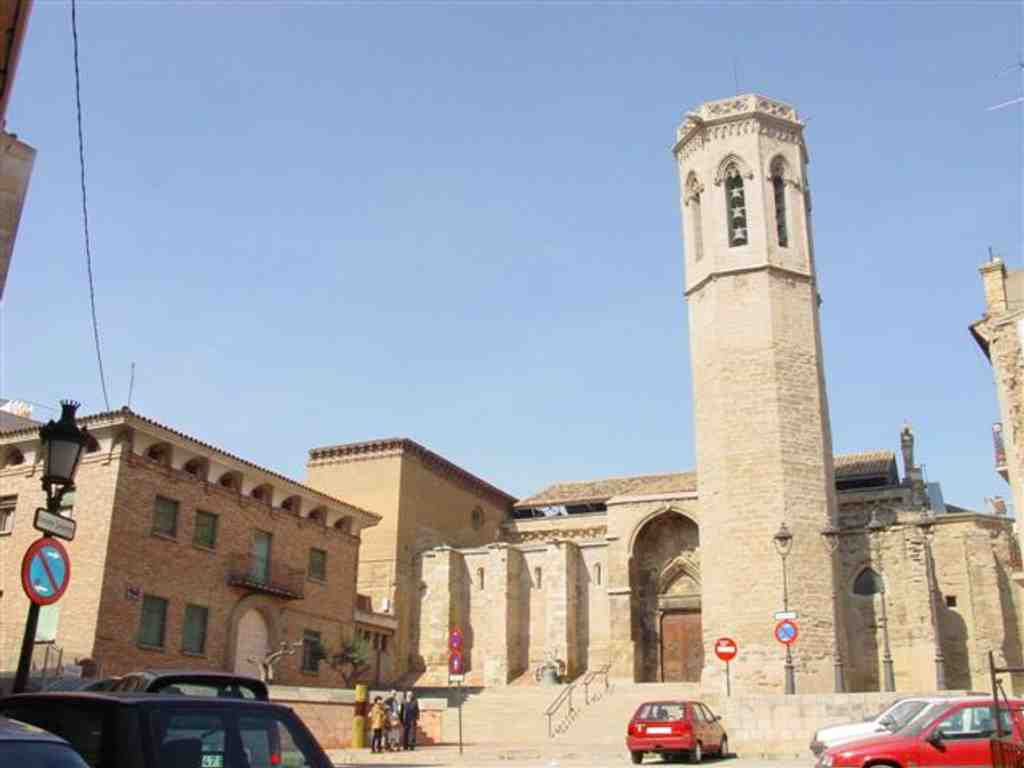
Okay, you’re almost face-to-face with the Church of Sant Llorenç! To spot it, look for a sturdy stone building stretched across the plaza, its walls carved from pale stone that’s seen centuries of sun and wind. The easiest way to recognize it is that striking octagonal bell tower-it soars above you, a bit off-center, like a quiet yet persistent guardian keeping watch. The main doors are up a short set of steps, and you’ll see beautifully weathered carvings and an array of gothic and Romanesque arches inviting you closer.
Now, take a deep breath and imagine it’s the late 1100s. The world here is all cobblestone, sandals, and the low hum of Gregorian chants swirling in the air. This is Sant Llorenç-old enough to have witnessed knights and merchants, bishops and bakers, and at least three separate fashion disasters.
Take a moment to soak in those strong Romanesque naves-they’re simple, solid, and as dependable as your grandma’s soup. The bell tower, though, wants a bit more attention: it’s a gothic addition from the 15th century, rising up in confident stone angles, giving you just a hint of drama against the sky.
You might notice the family crest of Berenguer de Gallart above one of the doors. No secret passwords needed to enter-you just need curious eyes.
Inside, four mighty altarpieces command the space. If you could peek in, you’d spot works for Saint Lawrence himself, Saint Ursula (whose altarpiece is so good, it’s rumored Jaume Cascalls tickled it to make it perfect), Saint Peter, and Saint Lucy. And, tucked among the old stones, there’s even a Gothic painting by Mateu Ferrer and a delicate sculpture of the Mare de Déu dels Fillols-she took a short vacation from the Seu Vella to settle here.
Just imagine this church in the Middle Ages: torches flickering, voices echoing through the stone, the smell of incense swirling around as secrets are whispered in dark corners. And now look, it’s just you, some history, and maybe a pigeon on the steps, waiting for the next eight centuries to pass.
Ready to keep wandering through Lleida’s stories?




