
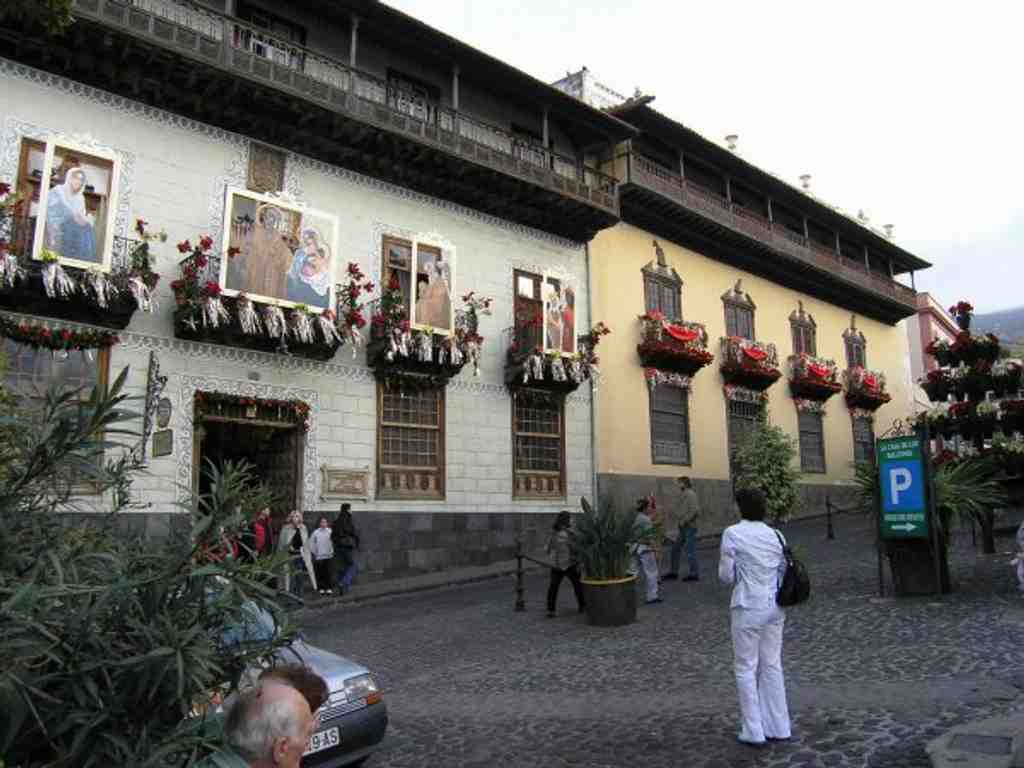
Right in front of you is a large three-story house with a pale façade, wide wooden balconies running along the top, and windows on the middle floor decorated with flowers and colorful artwork-just look for the long balcony crowded with wooden railings and vibrant blooms!
Now, imagine stepping back into 1632: the Casa de los Balcones, or the Fonseca House, is rising from the cobblestones, and carpenters are busy carving elaborate wood for the balconies and the now-famous inner courtyard. By 1675, the house stands proud, with its upper balcony stretching the full length, and five smaller balconies below, all made from Canarian pine, creaking ever so slightly in the breeze. Walk inside and you’d find a sun-soaked courtyard bursting with green, almost like nature’s living room.
But this is no ordinary house. For centuries, the Casa de los Balcones has been the heartbeat of Canarian craft: intricate lacework, basket weaving, embroidery, and more. Picture friendly artisans chatting as they pass thread through their fingers, surrounded by the spicy scent of fresh wood. The house is alive every day-not just a museum, but a living workshop and school, where generations learn and keep alive the traditional crafts of the Canaries.
You’ll spot displays from the famous workshop of Eladia Machado, where dexterous hands have been turning thread into treasures since 1932. Today, thousands come here to browse embroidered cloth, handwoven baskets, colorful ceramics, and even traditional costumes. It’s hard not to fall under the spell-whether you’re here for the culture, the crafts, or just to see if the balcony can really hold that many people at Carnival time!




