
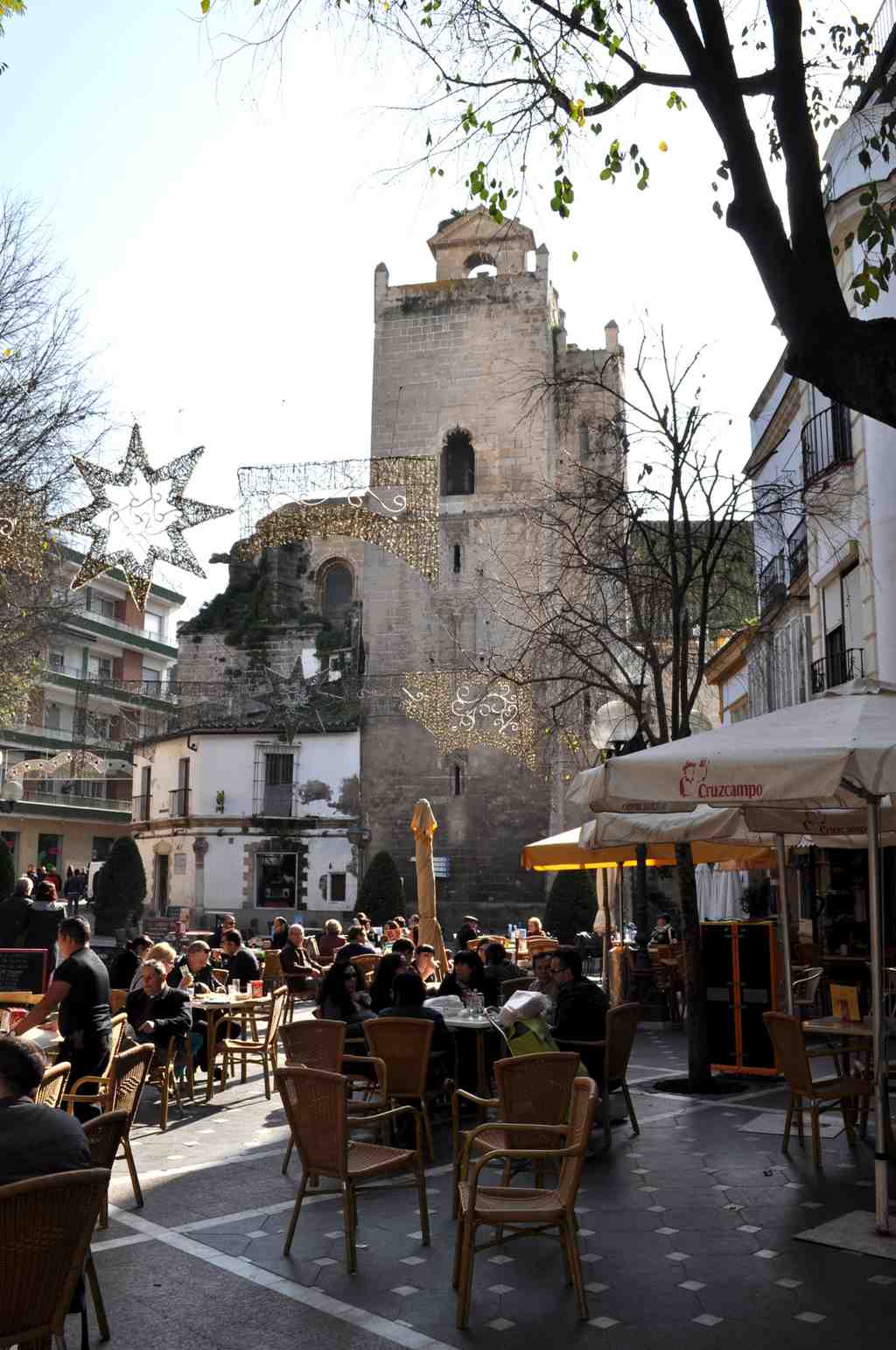
You’re just about to step into Plaza Plateros. To spot it, look for an open, lively square framed by cafe terraces and a scattering of sunlit tables, with the sturdy medieval tower-the Torre de la Atalaya-rising up at the far end, looking like it’s just keeping an eye on things. Above you, in winter, you might catch some glittering festive lights stretched across the square. There’s plenty of shade from the tall trees, and the chatter of people blends with the clinking of glasses.
Now, imagine you’re back several hundred years. Plaza Plateros has always been a busy meeting spot. In the days of city walls and winding narrow streets, this square was the crossroads for traders, merchants, and townsfolk. You can still sense the energy of all those deals being struck: bread, vegetables, silver goods (that’s how it got its name-the plateros were the silversmiths!), and even some not-so-legal trading now and then. Honestly, the only thing that’s changed is that now, you buy your cerveza instead of sheep.
Keep your eyes on that tower-Torre de la Atalaya. They also call it Torre del Reloj, the Clock Tower. Legend has it that, on the night Alfonso X conquered Jerez, the bell at the top rang by itself to welcome the king. Must have been a loud party! This bell has a name too-la campana cascada-and it once warned everyone when danger was near. Built way back in 1012 and patched up in later centuries, the tower is one of the oldest witnesses to all the hustle, bustle, and secrets of the square.
And don’t miss the red-painted Cervecería El Gorila-its chunky stone corners and elegant balconies make it easy to spot. The building dates back to the 1800s, perfect for a side of history with your snack.
Imagine centuries ago, women selling bread and vegetables called out to passersby, while soldiers kept a watchful eye from the nearby Plaza del Arenal. The plaza has changed its name about as often as it’s changed its shoes-Plaza del Pan when it was known for bread sellers, Plaza de las Vendedoras for all the women vendors, and Plaza de los Mercaderes, because, well, there were so many merchants. But of all the names, “Plateros” stuck, thanks to those skilled silversmiths who polished their wares and probably their stories right here.
So, as you stand in the middle of the plaza, let yourself soak up the atmosphere: the taste of strong coffee in the air, the clatter of cups, and the feeling that you’re part of a living history that’s always been about coming together, trading tales and treasures. Not bad for what started as just another shortcut between city gates, right? If only the tower could talk… Or maybe it still does, whenever the bell rings.
For a more comprehensive understanding of the origin, featured buildings or the names of plaza plateros, engage with me in the chat section below.




