
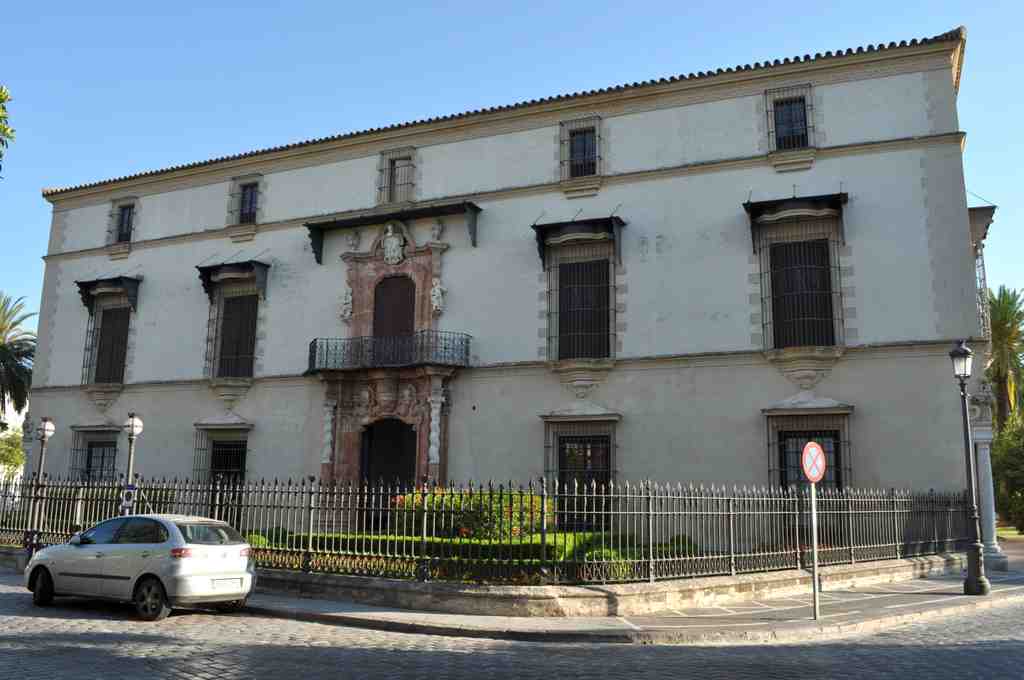
To spot the Palace of the Marquis of Montana, look for a grand building with pale, cream-colored walls and tall, iron-barred windows standing behind a pointed iron fence. The main entrance grabs your attention right in the center, framed with swirls of pink stone that almost look like they’re melting in the heat, and topped by a balcony with a dark iron railing. Two floors of big, dramatic windows face the street, topped off by a row of smaller windows at the very top. The whole palace sits apart from other buildings, hugged by a neat garden and a spacious cobblestone square. If you see a noble-looking house with a flourish of Baroque personality and a neat, formal garden in front, you’ve found it!
Listen to this: Imagine standing here in the late 1700s. Horse-drawn carriages rattle along cobblestones. The shiny, fresh palace rises in front of you, its pale walls catching the sunlight, while the gardens are fragrant with flowers. The first Marquis of Montana, Antonio Cabezas de Aranda, wanted a place that would turn heads - and, judging by all the folks who still stop to stare, he got his wish!
For nearly two centuries, this palace was known as the home of the famous Domecq family - yes, the same Domecqs who are royal in the world of sherry. But this all began when the Marquis, feeling rather grand, hired architect Juan Díaz de la Guerra to build a home fit for parties, politics, and the occasional siesta. The building feels almost symmetrical, with that sturdy, almost boxy shape. Step closer to the main door: Can you see the carved faces staring out above the entrance, watching over visitors through centuries of Jerez history?
Here’s a twist for you: just three years after he moved in, the Marquis died - and the palace’s life became a whirlwind of change, filled with customs offices, royal taxes, and eventually, new owners whose fortunes rose and fell faster than a waiter carrying too many tapas. In fact, for a while, it was even part of a big American company, until a local entrepreneur took it over and gave it some stylish TLC.
Today, after a dazzling restoration, the palace is a star venue for glitzy events, but still stands as a beacon of Jerez’s baroque elegance. In the old days, nothing but open countryside stretched out ahead, and the palace ruled over what’s now the busy square, the Alameda Cristina, and the Plaza del Mamelón. As you stand here, try picturing winds whistling through empty lanes and the sound of horse hooves echoing off the palace walls. If these old stones could talk, they’d probably spill brilliant stories of masquerade balls, city secrets, and the occasional spilled sherry - but for now, they’ll have to settle for impressing us!




