
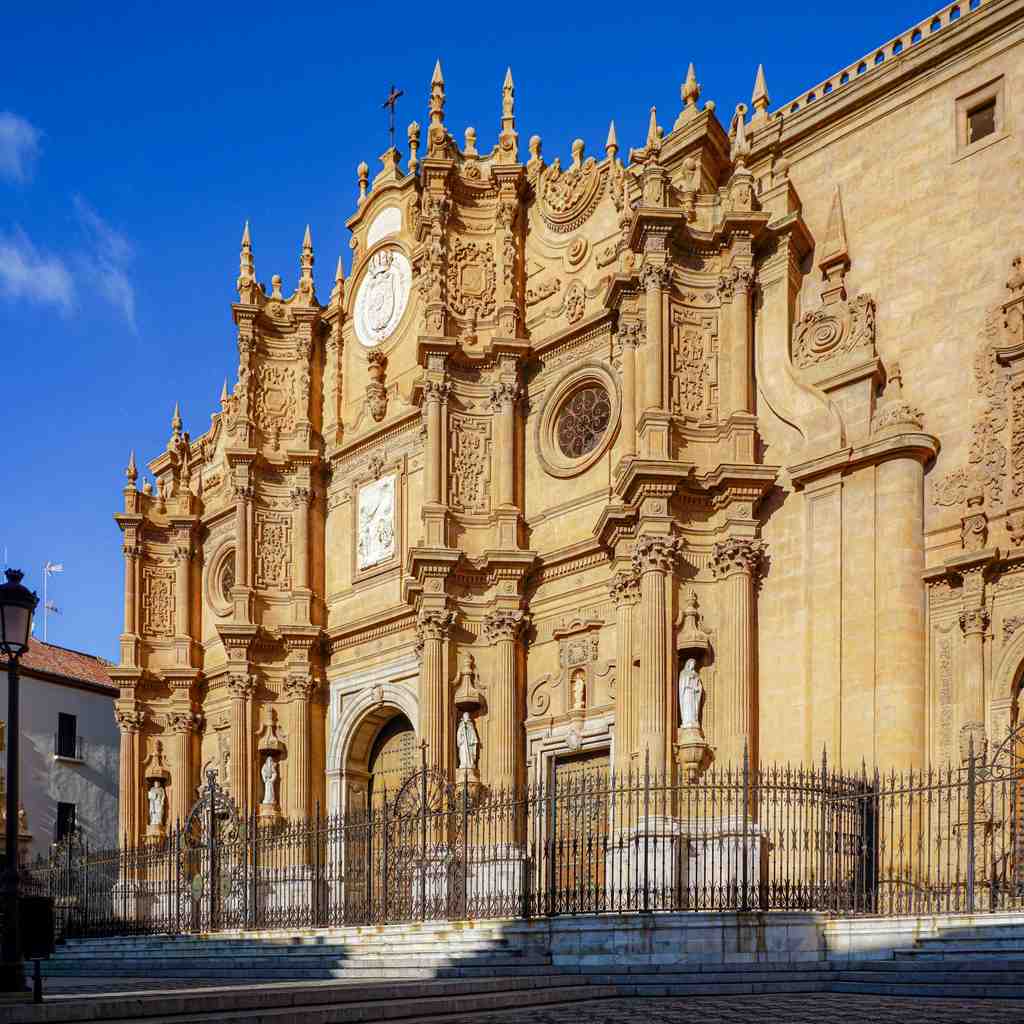
To spot the Guadix Cathedral, look for a towering golden sandstone façade with elaborate carvings, grand columns, and a dramatic set of steps rising just beyond the ornate black iron fence-definitely hard to miss as you approach the square!
Now, step right up and take a good look-because you’re standing in front of one of the most extraordinary cathedrals in all of Andalusia! The Guadix Cathedral, or Cathedral of the Incarnation, bursts out of the square with such a theatrical flair, you’d almost expect it to start singing an opera. Built over nearly two centuries, this colossal structure is really the city’s time machine. Imagine the scene around the year 1500: Guadix was freshly reclaimed by Christian forces, triumphantly celebrating the end of Islamic rule. The air is filled with the clang of hammers, chisels scraping stone, and maybe even a few arguments over the best style for a front door.
But this isn’t just any cathedral. Underneath your feet lies the site of a much older church, where local legend says Saint Torquatus-one of the very first Christian missionaries to Spain-preached to crowds all the way back in the first century. Now, that’s old school! Through conflagrations, conquests, and changes in fashion, Guadix remained a diocese, passed from Visigoths to Islamic rulers, and back to Christians. For a while, the sacred site even served as a mosque, echoing with calls to prayer before Christian monks returned, dusted things off, and got to work.
When construction started, everyone thought, “Let’s go Gothic-it’s all the rage!” But by the time they mixed the mortar, gothic was out and the Renaissance had sashayed into town. Diego de Siloé, a master architect, was called in to blend the best new styles. He created a wonder of curves and columns, played with classical lines, and filled the spaces with dazzling detail-making the place so ornate you half expect cherubs to leap off the walls. And while Siloé kicked things off, a parade of architects followed: some added towers, some swirled in Baroque touches, some ran short on money and left it half-finished (it’s tough being creative on a budget, right?).
Funding woes hit in the late 1500s, causing hammers to fall silent across the site. But you can’t keep a grand idea down for long! Later bishops begged, borrowed, and convinced kings to pony up, reigniting a wave of construction that gave us the grand, layered, and utterly theatrical Baroque façade you see now. Look closely at the front-those swirling curves and impressive columns weren’t just there for show. They were meant to give Guadix a sense of identity so bold, even Granada’s architects turned green with envy.
Step inside the imagination for a second: candlelight flickering over marble saints, incense coiling under the soaring dome, and organ music echoing beneath Renaissance arches. Don’t miss the apse and sacristy-the stonework here is so clever you’d think Italian masters had just popped by for espresso!
Now, glance up at the bell tower, built square and proud. At 30 meters tall, it offers the best views in town (if you’re game for 160 dizzying steps, that is). And up there, since 1945, there’s been a colossal statue of the Sacred Heart-his chest glowing red after dusk, slowly rotating like the world’s holiest disco ball. The mechanism had stopped for years, but as of 2022, he once again watches over Guadix, spinning his heart as night falls.
So, as you stand in this sunlit plaza, feel the layers of history humming around you. If these stones could talk, they’d have centuries of secrets-though, let’s be honest, they’d probably argue over the best architectural style. Now there’s a debate even time can’t settle!




