
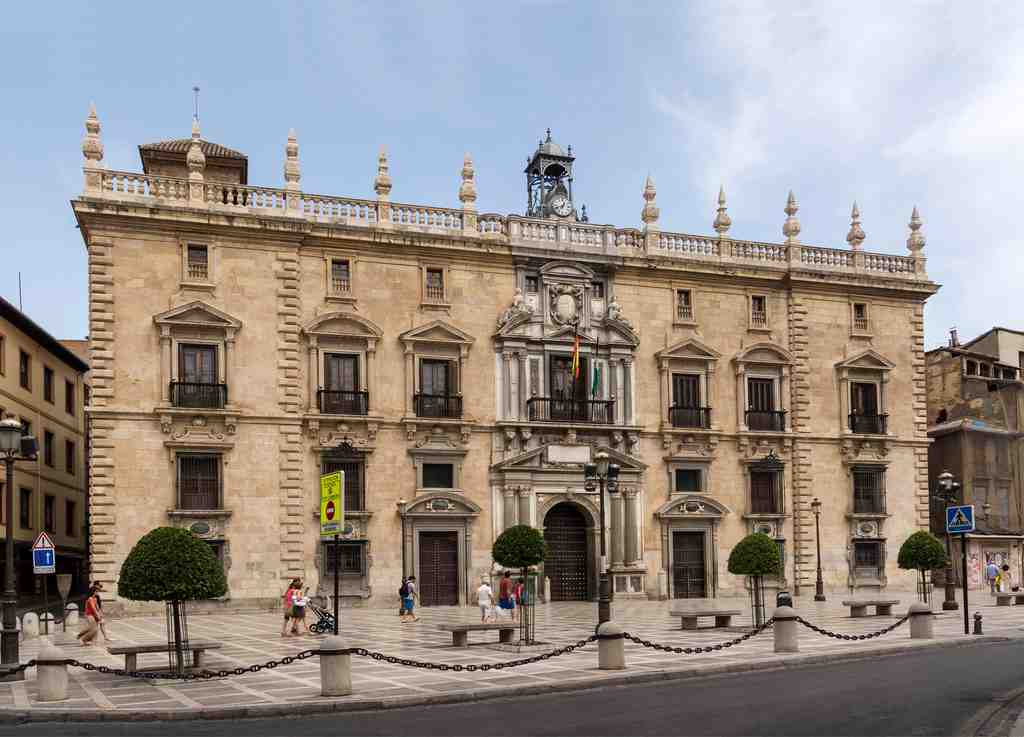
Take a look across Plaza Nueva-spot the grand, light stone palace with perfectly lined-up windows, ornate iron balconies, a majestic main entrance topped by flags, and a small old clock perched on top; that’s your landmark!
Welcome to the Royal Chancery of Granada, where justice wore a ruffled collar and powdered wig-though not, sadly, on the same day as flamenco night! Imagine yourself in late 15th-century Granada, just after the Catholic Monarchs reclaimed the city. The air hums with the excitement of a new era and new laws, as officials bustle in and out, ready to bring order to the southern territories of Spain.
This very spot was chosen by the mighty Isabella I, one half of the legendary duo Ferdinand and Isabella-we’re talking royal power couple goals. After their conquest of Granada, they decided justice needed a new stage fit for kings and queens. At first, the Real Audiencia ruled from Ciudad Real, but then someone thought, “Why commute when you can rule from sunny Granada?” So, by 1505, the full court made its move, and Granada buzzed with the drama of real life trials, disputes, and sentences.
The palace you’re gazing at was no quick build. Construction began in 1531 under orders from King Charles I, who decided he wanted the fanciest justice house in all of Spain. It took fifty-six years to finish-now that’s bureaucracy! Imagine the clang of chisels, the whiff of fresh mortar, and architect Francisco del Castillo pacing in the dusty courtyard, grumbling about missed deadlines and “those artistic touches” like the glorious patio, which some say was designed by the famous Diego de Siloé himself.
By the time it was finally completed in 1587, with King Philip II giving his royal nod, the Chancery stood proud, glowing in the Andalusian sun. Its façade shouts “Renaissance!” with all the drama and flair you’d expect from the most iconic Mannerist masterpiece in Granada.
Inside, the Real Chancillería wasn’t just for show-it ran a whole legal circus. Picture this: a president at the top, sixteen judges called oidores (which literally means “listeners”-not a bad gig, unless the complaints got loud), four Court mayors, lawyers, scores of clerks and runners. In each courtroom, the fate of southern Spain was debated-from Granada down to Malaga and over to Almería and Jaén.
But even mighty Chancillerías can run out of luck. Over the centuries, reform was in the air. By the 18th century, new officials called intendants started snatching away its powers, and with Spain’s brief experiment with the 1812 Constitution, people started to wonder if these old royal courts belonged in the past. When liberalism finally took hold and the Decrees of Nueva Planta rolled out in 1834, the Chancillería was officially shut down-no more kings, no more wigs, just progress. Its records and wisdom, however, live on upstairs in the historic archive.
Today, if you’re lucky, you might catch local judges bustling in and out-they definitely don’t wear ruffs anymore, but I wouldn’t rule out some dramatic gavel-banging. Still, the air here is thick with centuries of heated debate, whispered secrets, and a dash of royal intrigue. So, as you stand here, imagine the swirl of capes, the echo of voices inside, and the long, patient wait for justice under this timeless Spanish sky.




