
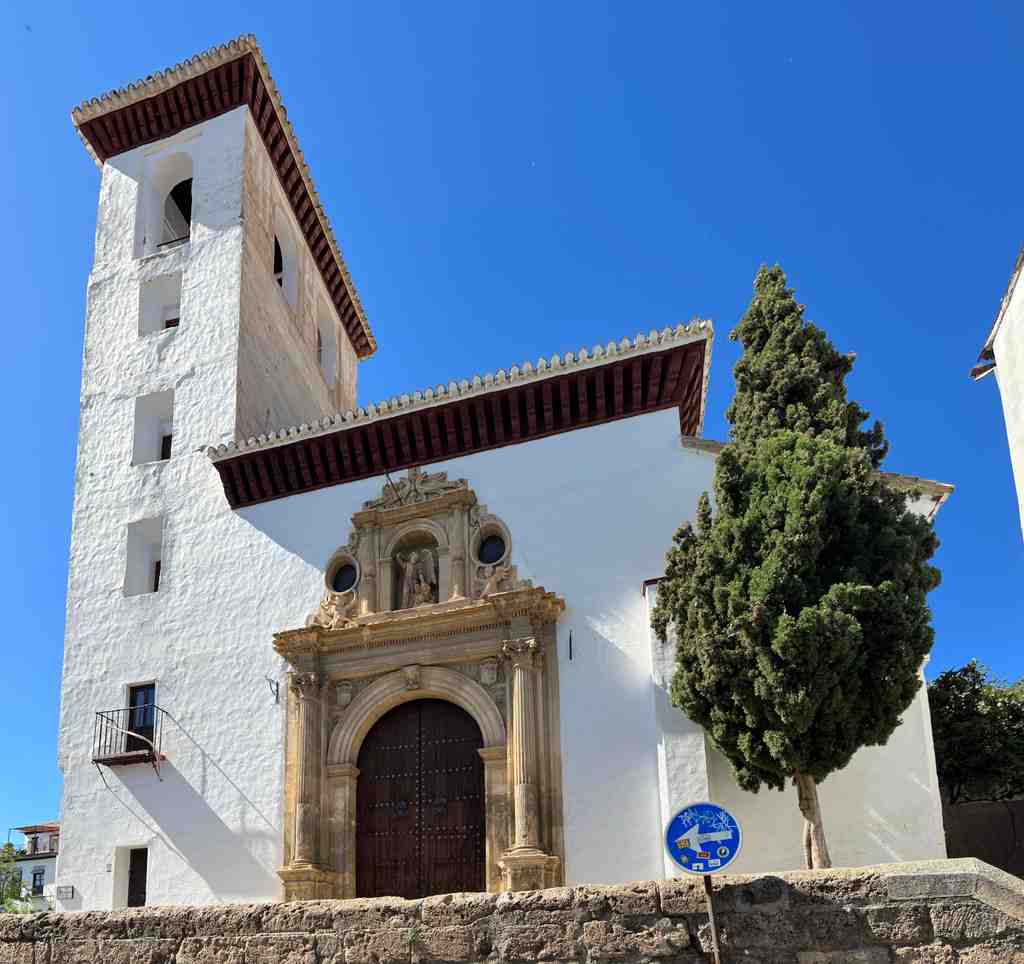
To spot the Church of San Miguel Bajo, look for a sturdy building with brick and stone walls, covered in white plaster, and a prominent bell tower that hints at its Islamic past-a true blend of tradition and tranquility right in the Placeta de San Miguel Bajo.
Now that you’re standing before this peaceful church, let’s turn back the clock-way, way back. Imagine this square echoing with the sounds of the old Albaicín, the heart of Granada’s labyrinthine historic neighborhood. Right here, you’d have found the al-Qaṣaba al-Qadīma, the grand palace of Zirid emir Badis. The palace grounds stretched out beneath your feet, alive with courtiers, whispers of power, and the fragrance of orange blossom from palace gardens. Little did anyone know, the world was about to change… Dark-eyed guards stood at the entrances, their armor clinking-probably grumbling about the odds of being replaced by a new palace, the someday-to-be-famous Alhambra.
But that palace faded, and its mosque became the new soul of this spot. In the 13th century, the square buzzed with the faithful, who ducked inside for daily prayers, drawing water from a deep cistern in the mosque’s wall. (Look close at the church façade facing the square-you’ll still spot that very cistern, a survivor from those times. If stones could tell secrets, that one would probably have quite the stories!)
Fast forward to 1492: imagine the victorious Catholic Monarchs marching through Granada and, despite the shaking knees of the mosque’s caretakers, it lived a little longer as a mosque for the city’s Mudéjar population. But history had other plans. By 1501, after the forced conversions post-Rebellion of the Alpujarras, Cardinal Cisneros and a decree from on high turned this once-Muslim sanctuary into one of the city's 23 brand-new parishes. The stones of the old mosque (except the ever-stubborn cistern) were knocked down, and brick by brick, from 1528 to 1577, the church as you see it now rose up-a harmony of Mudéjar woodwork and later Renaissance design.
Even centuries later, San Miguel Bajo wasn’t finished with its plot twists. The congregation shrank so much by the 1800s the doors closed-though the church never lost its dignity or its ghostly charm. These days, it’s home to the brotherhood La Aurora. Services are rare, but if you visit on a Sunday, the scent of incense drifts into the square once again. If you glance up at the bell tower, you might spot pigeons gossiping, but also imagine the view: Granada sparkling under the Andalusian sun.
A little bonus: across the square stands the baroque Cross of Christ. That cross once hugged the church but was relocated after the Spanish Civil War-yet another layer of history waiting for you right at your feet.




