
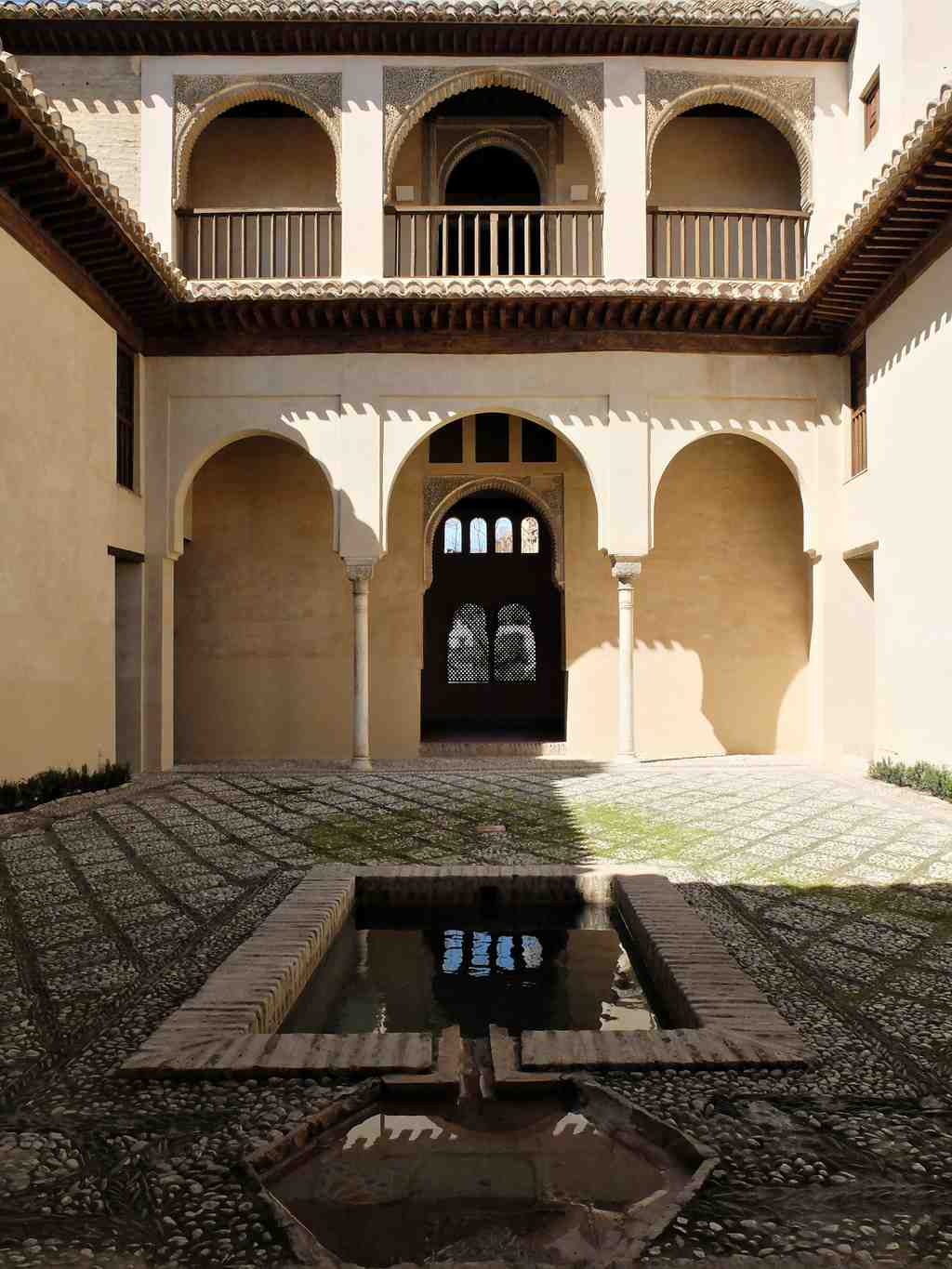
As you wander through the palace, you'll discover the fascinating history it holds. It was once the residence of Aisha al-Horra, the wife of Sultan Abu'l-Hasan Ali and mother of the last Nasrid sultan, Muhammad XII. The name "Dar al-Horra" translates to "House of the Free Woman" and pays homage to Aisha's connection to the palace.
Perched atop the Albaicín hill, Dar al-Horra offers sweeping views of the surrounding neighborhood, which was once home to the Alcazaba al-Qadima, the palace and citadel of the Zirid rulers. Some believe that Dar al-Horra may have originally been part of this ancient palace, although concrete evidence is yet to be found.
After the fall of Granada and the end of the Reconquista in 1492, the property was given to Hernando de Zafra, secretary of the Catholic Monarchs. It later became a Franciscan convent for nuns, as part of the Monastery of Santa Isabel la Real, under the rule of Queen Isabel. As a result, the palace underwent some modifications to suit its new purpose.
The architecture of Dar al-Horra beautifully showcases the characteristics of Nasrid and Moorish design. The two-story building surrounds a central rectangular courtyard with a charming small pool, creating a serene atmosphere. The courtyard served as a cloister for the nuns, contributing to its excellent state of preservation.
Venturing inside, you'll find the main rooms arranged behind a two-story portico on the northern side of the courtyard, as well as a one-story portico on the southern side. Some of these rooms and hallways still display remnants of intricate Nasrid-era decoration in carved stucco, serving as a testament to the palace's rich history.
The southern side of the courtyard features a grand chamber, which once served as a chapel until the construction of the Church of Santa Isabel la Real nearby. The northern side houses several rooms spread across two floors, including a mirador (lookout) room that protrudes from the building, offering panoramic views of the ancient Zirid walls and the neighborhoods beyond.
Lastly, don't miss the tower-like section in the northeast corner of the building, which rises to a third floor. From here, you can enjoy a unique perspective of the surroundings.
Dar al-Horra is a truly captivating landmark that showcases the grandeur of Nasrid architecture and offers a glimpse into Granada's rich cultural heritage. Take your time to explore and soak in the beauty of this historic palace.




