
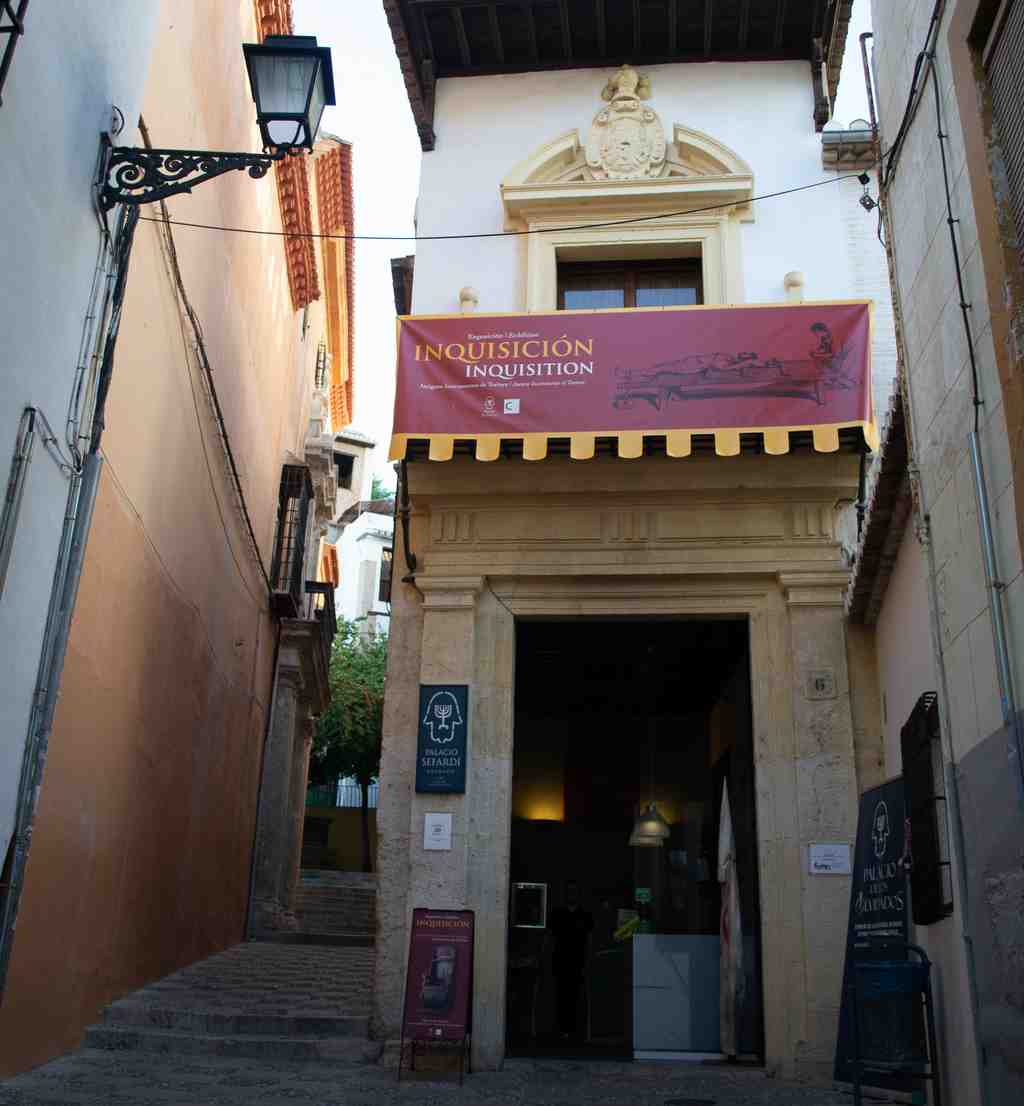
Located in the beautiful Albaicín neighborhood, which is a declared World Heritage Site by UNESCO, the museum is housed in the symbolic Casa-Palacio de Santa Inés, a restored 16th-century building of great cultural significance. As you approach the museum, you'll notice an unidentified coat of arms on its façade, suggesting the history of a converted Jew who wished to showcase their purity of blood.
Inside, you'll discover over 7534 square feet (700 square meters) of exhibition space spread across two floors and unique grand halls. From the museum's terraces, you can also enjoy breathtaking views of the Alhambra and the Albaicín, providing a perfect backdrop for your visit.
The Palace of the Forgotten opened its doors in 2014 and has since been offering fascinating guided tours by appointment. Through its carefully curated exhibitions, the museum aims to shed light on the Sephardic culture of Granada, a community that was largely forgotten after their expulsion during the Inquisition.
One of the permanent exhibitions here is called "Inquisition: Ancient Instruments of Torture." Step into this eerie yet captivating space and witness over 70 instruments of torture used during the Inquisition. It's a chilling reminder of the dark period in Spanish history when the Catholic Monarchs sought to purify Spain and instill Catholicism.
On the other hand, the museum also hosts the "Interactive Flamenco" exhibition on the first floor. Experience the vibrant and soul-stirring world of flamenco through interactive multimedia applications. This exhibition allows you to immerse yourself in the rhythms, beats, and types of voices that make up the rich tapestry of flamenco.
Throughout your tour, you'll also encounter various objects from private collections, including the renowned Crespo López Family collection. These pieces provide glimpses into the lives of converted Jews, religious symbols, liturgical and ritual objects, as well as festivities. The museum places a strong emphasis on highlighting the role of women in Sephardic culture and showcasing famous figures from the Jewish community.
In a dedicated room, you'll find a recreation of the ritual bath (Mikveh) of the Water Synagogue in Úbeda, Jaén. This serves as a reminder of the relevance of the Inquisition in the daily lives of Granada's Jews.
As you navigate through the Palace of the Forgotten, you'll witness the chilling juxtaposition of instruments of torture alongside symbols of Sephardic culture. Gallows with views of the Alhambra, guillotines, and "torture masks" share space with sundials and astrophysical advancements, representing the light and shadow of this period in both Jewish and Spanish history.
The Spanish Inquisition lasted for a staggering 350 years until its de facto abolition in 1834. The museum's aim is to showcase the impact and consequences of this historical period, creating a space for reflection and remembrance.
So, prepare to be intrigued, moved, and captivated as you explore the Palace of the Forgotten. This museum offers a deep dive into the complex and intertwined histories of the Spanish Inquisition, Jewish culture, and Granada's rich heritage. Enjoy your visit, and if you have any questions, feel free to ask!




