
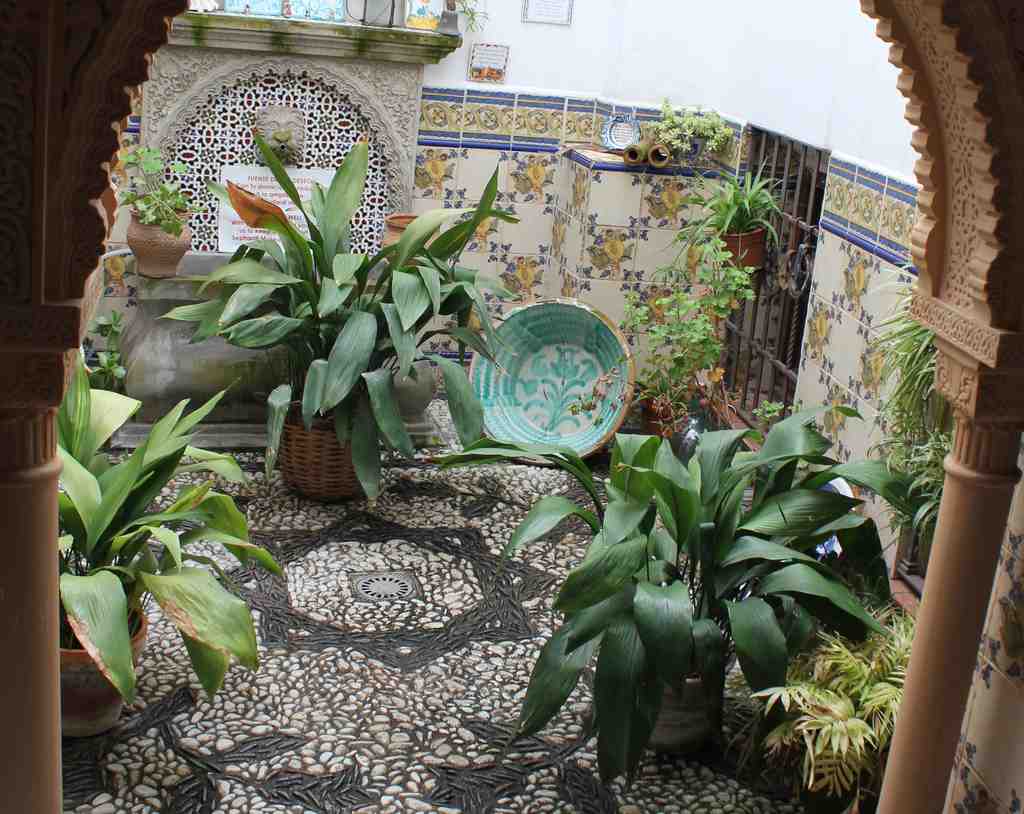
You’re getting close now. To spot the Sephardic Museum, look for a cozy, humble house nestled into the Realejo district, which is Granada’s old Jewish quarter. As you approach, you’ll notice Moorish arches framing a small entry, decorated with Spanish tiles, and right inside there’s a hidden courtyard garden full of leafy plants, patterned tilework, and an old stone fountain-a scene so peaceful, you might think you’ve wandered into someone’s secret oasis. The museum is tucked right here, behind unassuming doors, so keep your eyes open for a little spot that invites you to step away from the bustling street and into a piece of living history.
Alright, take a deep breath and stand still for just a moment. Listen carefully-can you imagine the gentle music of water trickling from an ancient fountain? The sound would have echoed through these very streets centuries ago, where the Sephardic Jews of Granada built their community. This isn’t just a museum-it's a miniature time machine, trying its best to keep a whole culture alive between its four walls.
Inside, it feels like you’ve stepped into someone’s home, not a grand palace or fortress, but the kind of place where families gathered to share stories, cook together, and celebrate what made their lives unique. Everyday objects fill the rooms: candlesticks, kitchen pots, woven baskets, even delicate books-each one humming quietly with stories of faith, resilience, and daily life. Look for maps that show how Jewish Granada once bloomed here, with its shops, trades, and places of worship all woven into the city’s fabric.
Granada’s Jewish community gave the city some of its brightest minds. Samuel Ibn Naghrillah, for instance, wasn’t just a scholar-he designed public baths, proving you can truly change the world one good soak at a time! And there’s Judah ibn Tibbon, who must have been the ultimate multitasker: poet, politician, doctor, translator… The man probably made a mean cup of coffee, too.
But it wasn’t all easy-there’s a thread of tension here, too. Picture it: in 1492, the Catholic Monarchs signed the decree expelling Jews right here in their hometown. Centuries of laughter, learning, and hope-and yet, the spirit of this community never fully left Granada. Fast forward to 2013, when this museum first opened, just as Spain decided to welcome the descendants of expelled Sephardic Jews back with citizenship. Talk about a homecoming.
Before you leave, check out the “ceramic kitchen”-it’s like the Spanish version of a celebrity chef’s set, except everything is made from rich, hand-painted ceramics. And don’t miss the tiny courtyard, alive with plants and warmth, waiting for you to take it all in.
So, ready to time travel? Step inside and let each object, and each corner, whisper its stories to you. And who knows-maybe you’ll even find the quietest spot in Granada, right here in the heart of the old Jewish quarter.


