
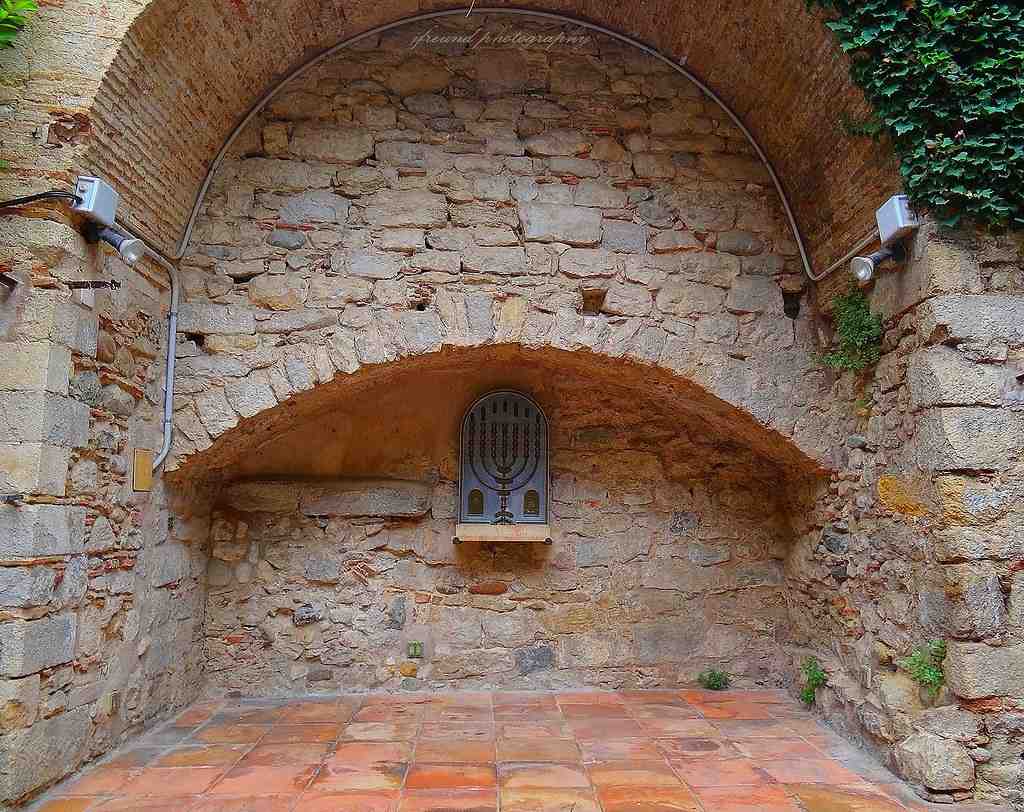
As you approach, look for an old stone wall with a gentle arch over a small recess. Right in the center, you’ll spot a metal grating with a menorah design. The wall is made from pale, weathered stones that almost seem to tell their own story, with a few vines creeping in from the corner. The ground is covered with reddish tiles, making the whole spot feel cozy and a bit hidden, like a secret tucked away from the busy city.
Now, standing here, imagine yourself back in the twisting streets of medieval Girona. This was once the heart of the city’s vibrant Jewish community-a place filled with lively chatter, the scratch of quills writing prayers, and the faint scent of parchment and old stone. You’re right in front of what was once the Girona Synagogue, built back in the 1200s, when stories weren’t just passed around, they were being written right here by scholars like Nachmanides-a man so wise, even his beard probably had something to say.
This wasn’t just a place for prayer; it was a center for Kabbalah, the mystical side of Judaism. Imagine scholars huddled under flickering candlelight, piecing together riddles of the universe, and maybe arguing about who got the last olive at dinner. But history hasn’t always been kind. The synagogue saw turmoil-a brutal massacre, moments of restoration, and finally, with the Alhambra Decree in 1492, it was sold off, ending centuries of Jewish life in Girona. Can you feel the echoes, the mix of learning and loss in these old stones? There’s a kind of hush here, as if the walls themselves are holding their breath, remembering.
Today, this place is part of the Bonastruc Museum. Instead of prayers, you’ll find stories-fragments of pottery, old tombstones, and letters that survived the ages. It’s no longer a secret, but a window back into a once-thriving world. And you, my friend, get to stand right at the threshold of history. Not bad for a day’s walk, right?




