
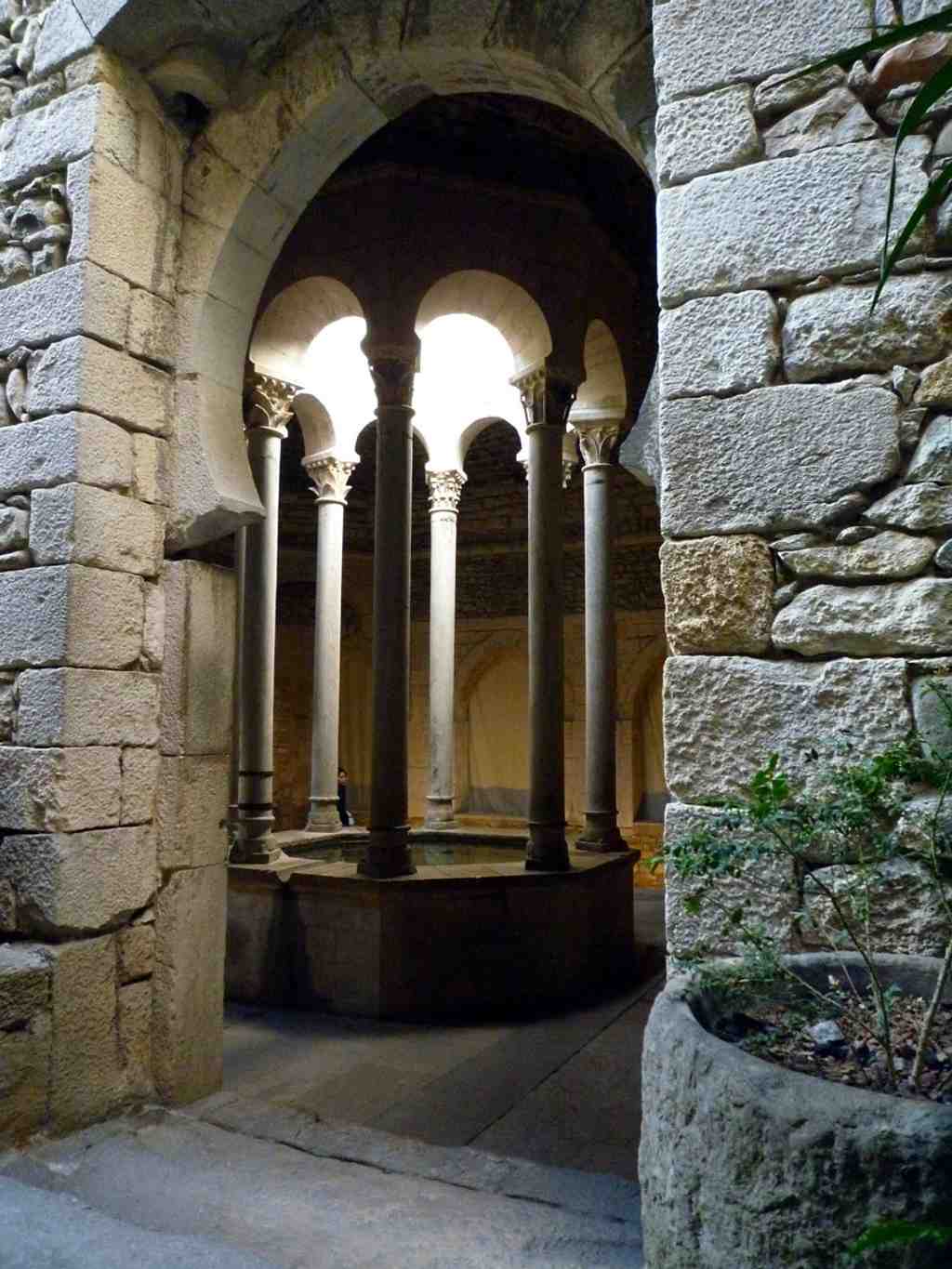
To spot the Arab Baths, just glance through the large stone archway ahead. Look for a circle of elegant columns rising out of the shadows, surrounding a quiet central pool, all framed by rough, ancient stone walls. If you see sunlight streaming down from above and a sense of hidden mystery, you’re in the right place.
Now, you’re standing in front of Girona’s famous Arab Baths-though, spoiler alert, they’re not quite as “Arab” as their name suggests. Built back in 1194, these Romanesque baths were actually crafted by Christians, but they cleverly copied the style of North African Muslim bathhouses. It’s almost like they were the medieval version of a “theme restaurant,” and who doesn’t love a bit of historical cosplay?
Imagine the scene here centuries ago: the hustle and bustle of bathers, chatting and laughing, steam curling into the air from warm pools. You’d start your visit in the changing room, stashing your tunic in one of the niches along the wall-hopefully remembering where you left it. Next stop: the cold room, with its fancy octagonal pool right in the middle, under a small dome that lets sunlight pour in like a golden spotlight. Eight slender columns rise up around the pool, holding up the dome, and topping it off is some lively decoration-think leaves and even the odd animal.
Once you’d braved the chilly plunge, you’d move to the tepid room, where warmth seeps into your bones. Then, finally, you’d head into the hot, steamy chamber, heated from below just like the Roman baths-imagine the sound of bubbling water and the shuffling of feet on hot stone. All this relaxation was suddenly disrupted one day in 1285, when a siege by outside forces badly damaged the building. But Girona folk are nothing if not practical-a local noble restored the baths, and people kept soaking until the 1400s.
Later, a group of Capuchin nuns moved in. Their idea of luxury? Using this exotic bathhouse as a kitchen, a pantry, and-here’s a twist-even a laundry room. It wasn’t until the 1800s that the “Arab Baths” name caught on, making it sound way more mysterious and exotic than “Medieval Giant Laundry Room.” Finally, the baths became public in 1929 and were restored, so what you’re seeing today is a rare slice of medieval daily life, preserved in stone.
So take a deep breath, soak up the cool, echoing calm of this place, and imagine Girona’s people through the centuries, chasing both comfort and clean feet in these ancient walls. Now, ready to towel off and head to the next stop?




