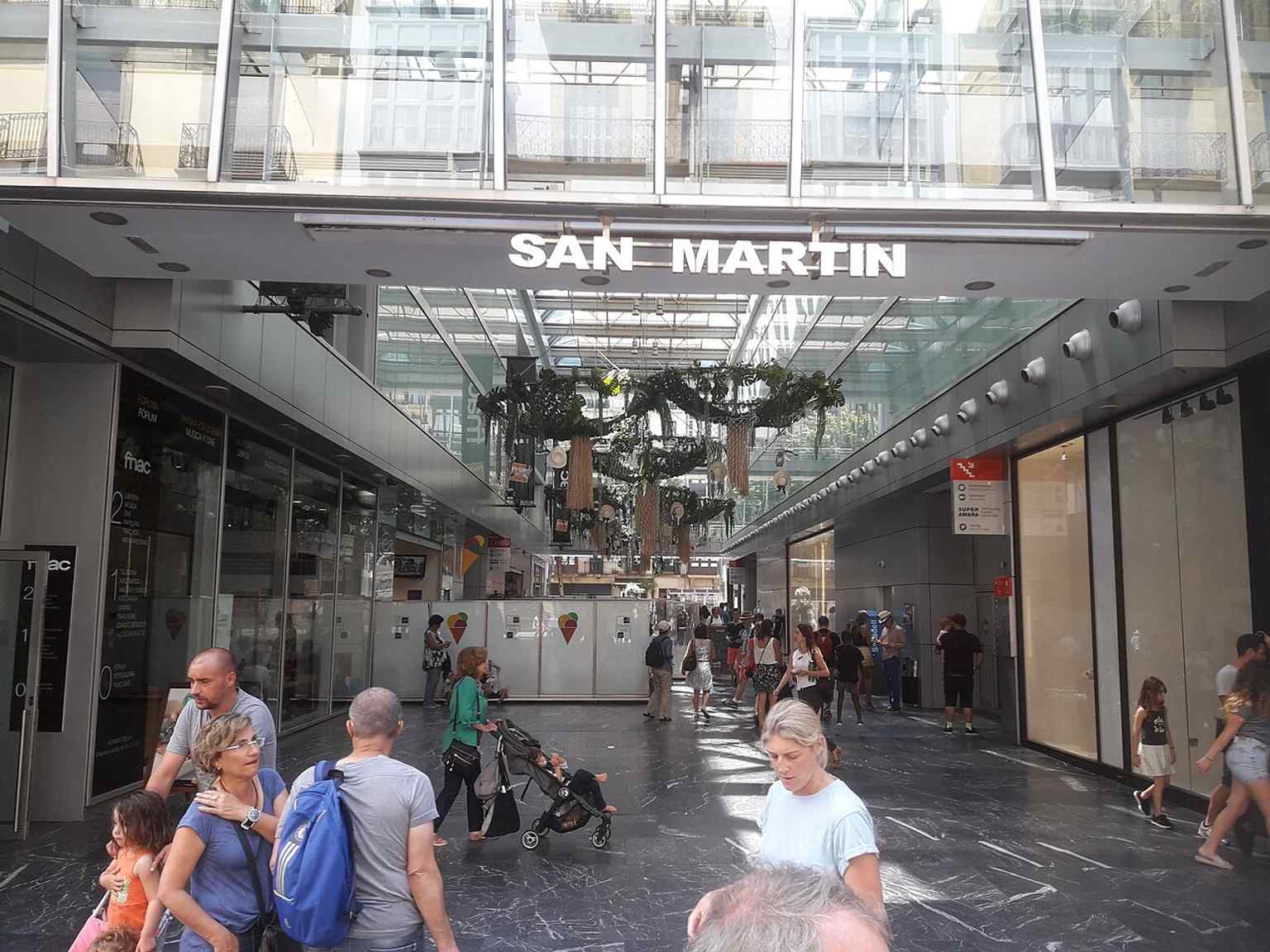
On your right, San Martín Market looks like a broad glass-fronted block framed in pale stone, with a long rectangular facade and a wide covered passage opening through its centre.
This site is one of the city’s great memory-palaces of ordinary life. Long before this polished shell appeared, people came here for fish, vegetables, gossip, bargains, and the small rituals that make a city feel inhabited rather than merely admired. Even the ground seems to remember footsteps.
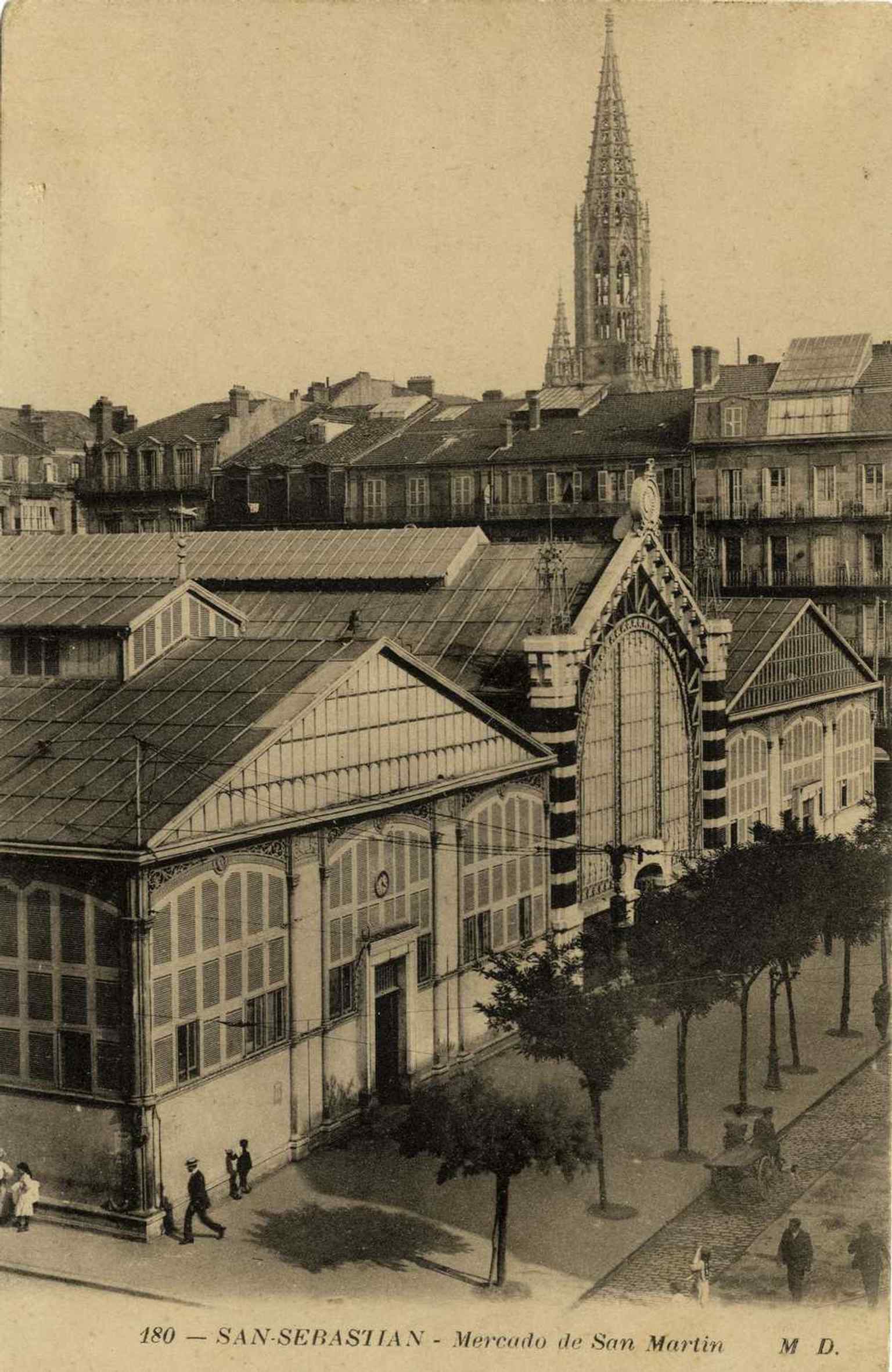
In eighteen eighty-four, the architect José Goicoa gave San Sebastián a proper municipal market here, taking his cue from the iron-and-market tradition of Les Halles in Bayonne. He raised two pavilions. Then, in nineteen oh seven, the municipal architect Juan R. Alday stepped in and did something clever: he joined those two buildings with a structure over the street between them, creating a third pavilion and turning San Martín into the city’s most important food market. Commerce, in other words, did not simply fill this place; it shaped it.
And yet trade was not its only role. Before the Cathedral of the Good Shepherd was ready, this very plot even hosted a provisional wooden parish in March of eighteen eighty-eight, the Sacred Heart of Jesus. For a time, the market ground doubled as an emergency church for the neighbourhood. That is a very San Sebastián habit: one urban stage, several acts.
If you glance at the before-and-after image, you can see just how completely this place changed from open market sheds to the enclosed hall before you now. That instinct to adapt did not come gently. At the end of nineteen ninety-nine, Mayor Odón Elorza broke a long, tacit consensus when he argued publicly that the old building should come down, saying its facades held nothing worth protecting. The council then set up a mixed commission with stallholders, political parties, the Chamber of Commerce, merchant groups, and baserritarras - farmers from the Basque farmsteads - to negotiate a reform and avoid repeating mistakes made at La Bretxa. It was a row about heritage, certainly, but also about who a city centre is really for.
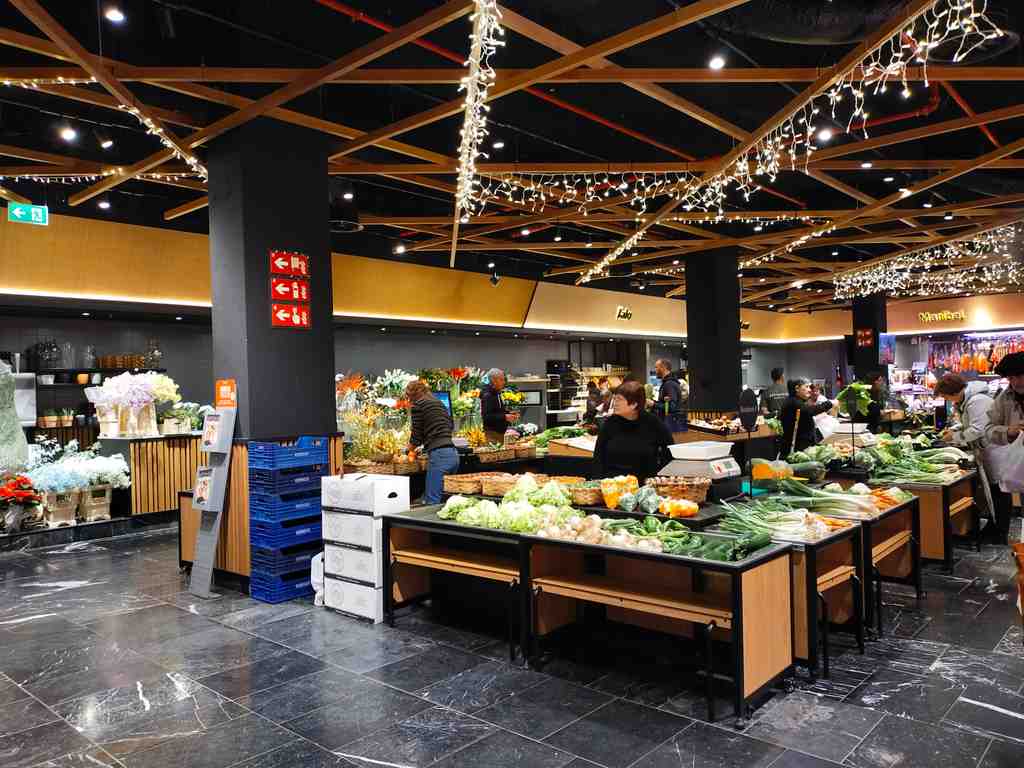
In two thousand and five, after demolition and two years of unusually complex works, Luis Uzcanga’s new market opened. He kept one important idea from the older place: a broad covered central street, now turned into a pedestrian spine, with large expanses of glass to hold a visual link to the past. Around it came three pedestrianised streets and a six-hundred-space underground car park. Within a year, San Martín drew seven million visits; in two thousand and six, it even won a national award for integrated retail. Not everything ran perfectly - a dilatation joint, that is, a gap that lets a building expand and contract safely, shifted in two thousand and twelve and lifted floor tiles, forcing a brief evacuation - but the market reopened the same morning.
Now the local pulse beats behind that glass, while the city’s more polished face waits ahead. We’ll head next to Hotel Continental, where San Sebastián turns everyday energy into refined welcome. If you want to return later, San Martín generally opens from early morning until late evening, with shorter hours on Sundays.