
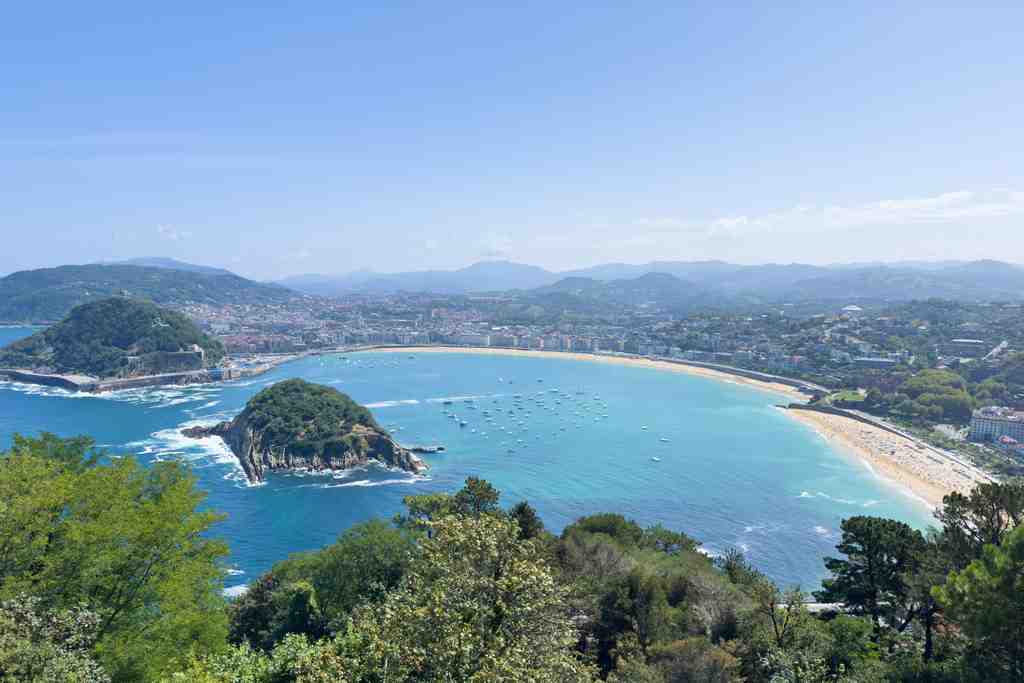
Look ahead to the vast stretch of golden sand curving in a perfect crescent - that’s the Beach of La Concha, unfolding gracefully along the edge of the sparkling blue bay.
Take a deep breath and let the sea air awaken your imagination. You’re standing at the edge of one of Europe’s most famous urban beaches, known for its elegantly curved shoreline - imagine a giant scallop shell made out of sand, kissed by waves and sunlight. In the late 1800s, this place buzzed with the laughter and chatter of high society folks in top hats and fancy dresses, all eager to stroll along the newly fashionable seaside. They brought parasols instead of beach towels, and instead of sandcastles, they enjoyed gossip and grand orchestras drifting on the salty breeze.
But La Concha hasn’t just been a playground for the glamorous. In May of 1945, as Allied forces swept across Europe, a notorious Nazi collaborator named Léon Degrelle crash-landed his plane right here in the bay, leaving behind a trail of wartime secrets and whispers. You can almost picture the tense scene: the hush of the waves, a shadowy figure scrambling from the surf, hoping to disappear into San Sebastián’s crowds.
If those stories aren’t enough, even Ernest Hemingway couldn’t resist La Concha’s charm. In his novel "The Sun Also Rises," the main character, Jake Barnes, cools off with a dip in these very waters - proof that this stretch of sand isn’t just for building sandcastles, but for making history.


