
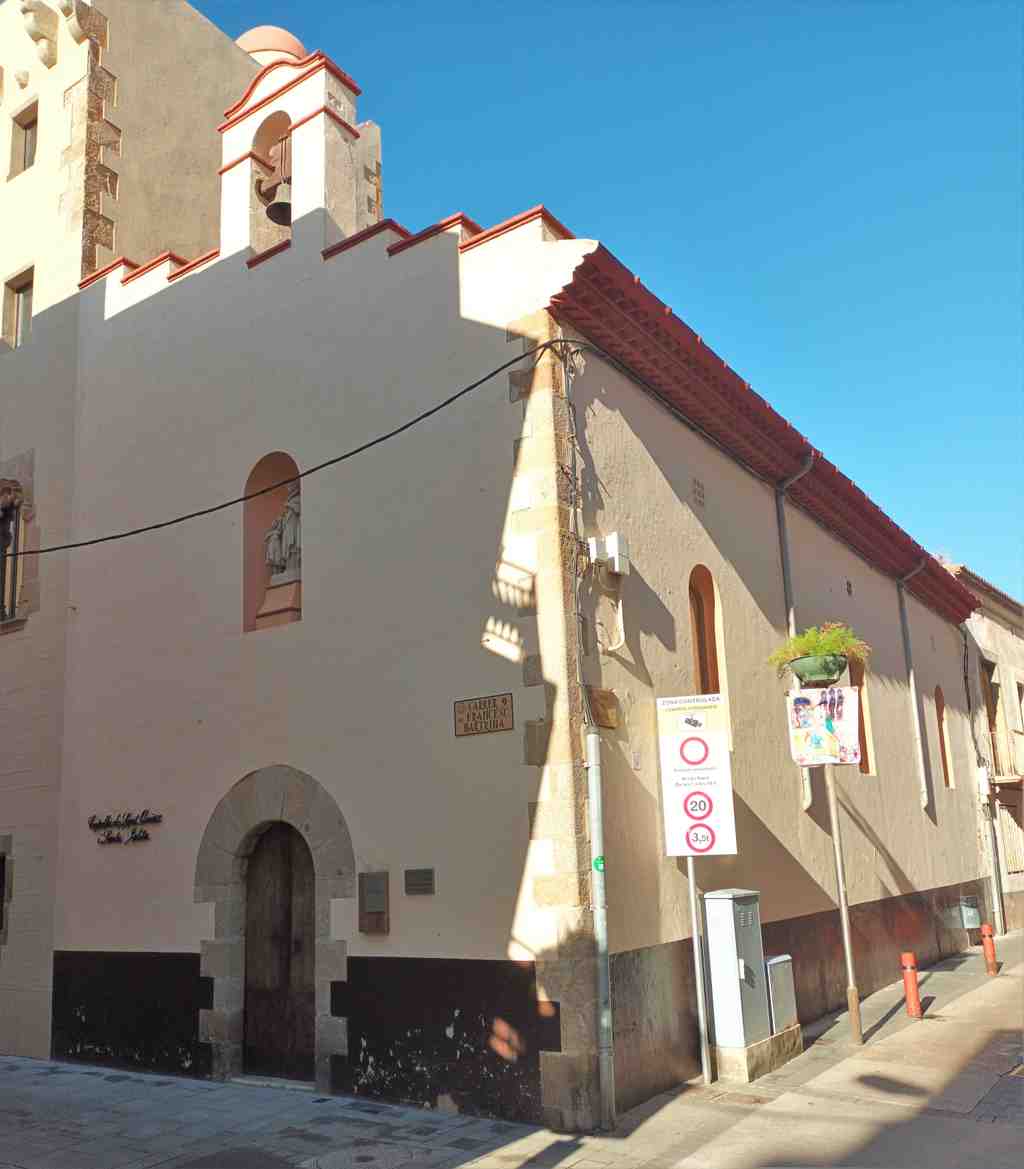
To spot the Chapel of San Quirce and Santa Julita, look for a simple, sand-colored building with a perfectly smooth facade, a small arched stone doorway on one side, and a bell atop a modest tower right above an alcove holding a statue-you can’t miss the little bell watching over the street like a sleepy sentry!
Now, picture yourself standing right where fishermen and townsfolk used to gather long, long ago-before smartphones, before street signs, before even the potato reached Europe! This humble chapel has survived countless storms, both from the wild Mediterranean sea and the ever-changing tides of history. Originally built even before the 15th century-imagine that, over 600 years ago-the building’s thick stone walls and rectangular shape promised safety when things got rough.
And rough they did get! The chapel hugs the town’s old edge, partly thanks to some very superstitious fishermen. Worried about angry waves and sudden tempests, they built it next to the sea as a sort of “divine insurance policy.” Forget seat belts-back then, saints were the best security you could get! The fishermen were especially fond of San Telmo, the protector of sailors. The air here was once thick with salt, seaweed, and prayers for safe returns, as locals huddled inside, candlelight flickering across the stone pillars that divide the single open nave into three sturdy sections.
But the uses didn’t stop at faith. At times, this chapel became the town’s “plan B” for emergencies: it’s been a temporary parish, a warehouse for the University’s goods, and even a makeshift school. You could say this little chapel has more job titles than a modern freelancer.
Eventually, the church was dedicated to Saints Quirce and Julita, after the original chapel of the town’s patron saints disappeared. Don’t forget to peek at those three modern windows on the side letting sunlight flood the peaceful interior-once the only warmth during cold winter prayers. So as you stand here, think of the stories that were whispered behind these ancient, silent walls and imagine the laughter, fears, and hopes that filled this street for centuries.




