
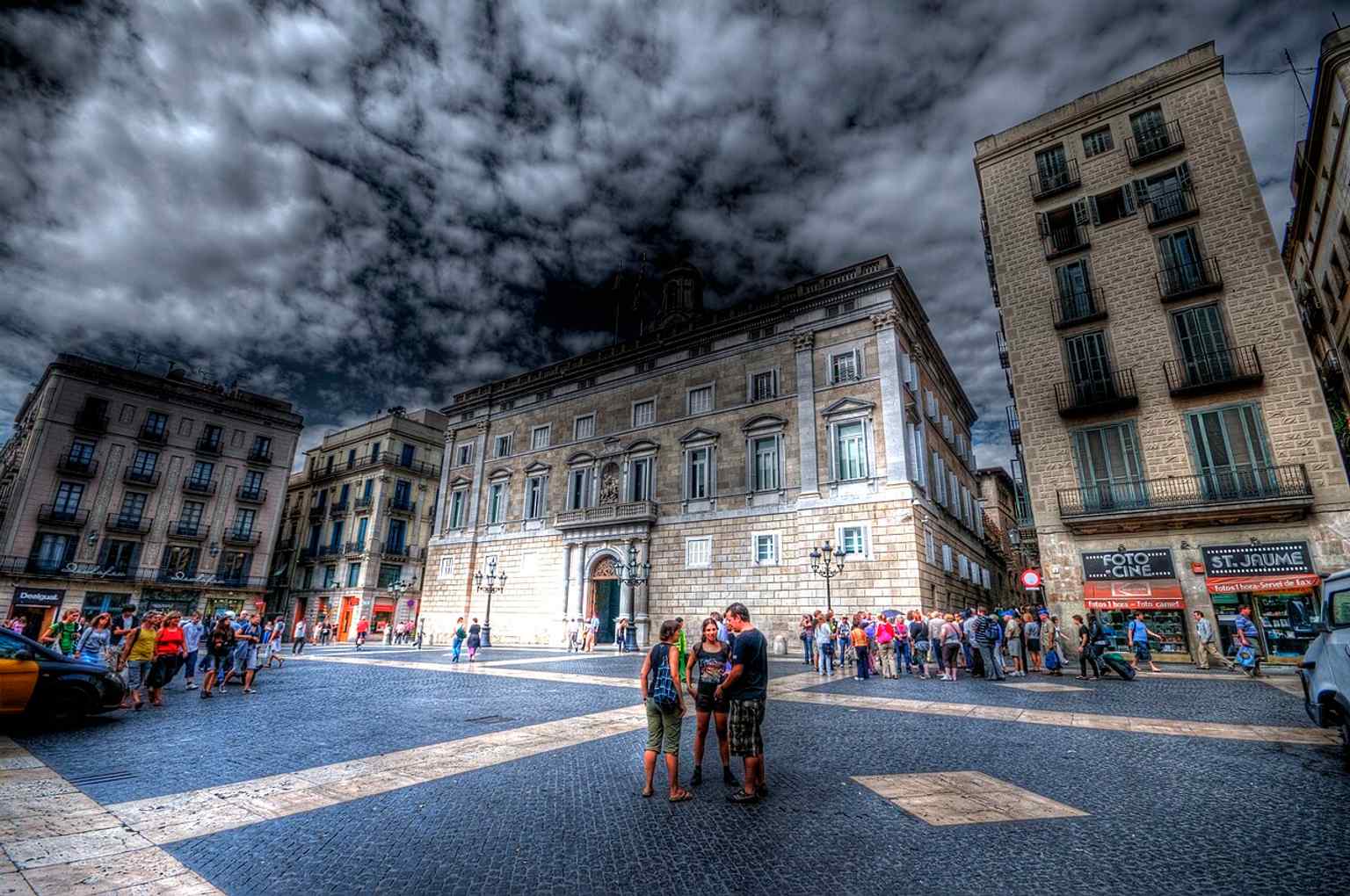
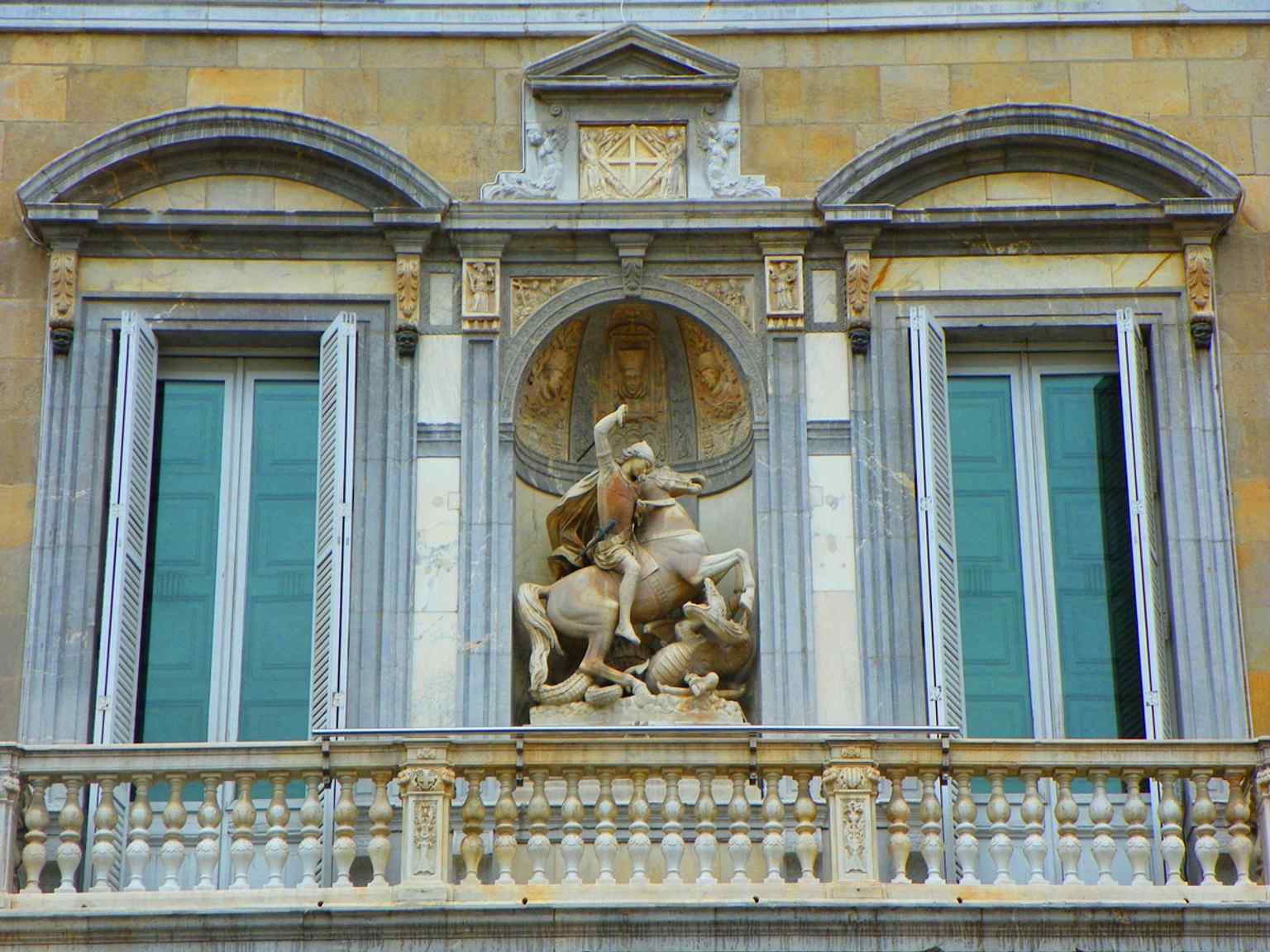
Notice the grand Renaissance facade made of smooth stone on your left, featuring four sturdy columns flanking the main door and a statue of a knight in a niche just above the central balcony. This is the Palau de la Generalitat.
We were just at the Ancient Synagogue a couple of minutes ago, and the origins of this building are actually tied to that neighborhood. Before it was a seat of power, these houses belonged to wealthy members of the Jewish quarter. But after a brutal pogrom, an organized massacre of the Jewish population in 1391, the properties were confiscated and eventually bought by the government in 1400.
Catalan self-governance is not just a modern political talking point. It is a deep, ancient tradition rooted in medieval pacts where kings actually had to negotiate with their subjects. That fierce sense of cultural pride and autonomy has survived centuries of empires trying to stamp it out. The Generalitat, the institutional government housed right here, was born in the thirteen hundreds to collect taxes and represent the people, making this one of the oldest continuous seats of government in Europe still operating in its original medieval home.
But that independence was violently shattered during the War of the Spanish Succession. In 1714, Barcelona fell to the forces of King Philip the Fifth, who immediately abolished the Generalitat and stripped away Catalonia's ancient institutions. The building was taken over and handed to the royal courts.
Despite the loss of power, the building itself held onto some incredible secrets. Take a closer look at those four gray columns flanking the main entrance. They look like standard Renaissance architecture, but they are actually Roman. They were carved in the second century from granite quarried near the ancient, mythical city of Troy. Originally part of a Roman temple down the coast in Tarragona, they were hauled here by boat in 1598. The architect simply trimmed them down to fit his new door.

The balcony right above those ancient columns has been the stage for some intense modern drama. In October 1934, the Catalan president Lluís Companys stepped out there and declared an independent Catalan State. The response was immediate and harsh. The Spanish army bombarded the palace with artillery. After a night of fighting that left over seventy people dead in the city, the Catalan government surrendered, waving a white flag from that very balcony. Companys was arrested and later executed.
Yet, the institution survived. In 1977, after nearly four decades of dictatorship under Francisco Franco, an exiled Catalan president returned to that same balcony to greet a euphoric crowd, proving that you can conquer a government, but you cannot easily erase an identity.
Let us keep walking. Head toward the Plaza del Rey. Our next stop is the Royal Palace, which is just about a three minute walk away.






%2C_el_balc%C3%B3_per_Sant_Jordi.jpg)
