
Just a short walk from the Castle of the Three Dragons, you will see Parc de la Ciutadella opening up on your left. Go ahead and find a spot near the entrance. Welcome to our final stop.
It is hard to imagine a more peaceful place. Today, this is the green heart of Barcelona, filled with rowing boats, a monumental fountain, and people relaxing on the grass. But the ground you are standing on holds the memory of a much darker chapter in the city's history. What you are looking at is the ultimate revenge of the people of Barcelona.
To understand why, we have to look back to the Fall of Barcelona in 1714. After a brutal fourteen-month siege, King Philip the Fifth took the city. To ensure the rebellious locals never rose up against him again, he ordered the construction of a massive citadel, a sprawling star-shaped military fortress. To clear the space and create a wide open firing zone, the military demolished a huge chunk of the La Ribera neighborhood. Over one thousand homes were destroyed, and about four thousand five hundred people were evicted without a single coin of compensation. Adding insult to injury, many of those destitute families were forced to tear down their own homes with their bare hands, before being left to live in makeshift shacks on the beach.
For over a century, the Citadel was a symbol of terror. It was a place of political imprisonment, torture, and executions, commanded by ruthless figures like the military governor known as the Tiger of Catalonia. He had a nasty habit of executing political rivals without trial. His despotic rule made him so many enemies that he was eventually assassinated by his own bodyguards, who tied a stone to his neck and threw him in a river. Probably not the retirement he had planned.
But the story of this city is one of constant reinvention.

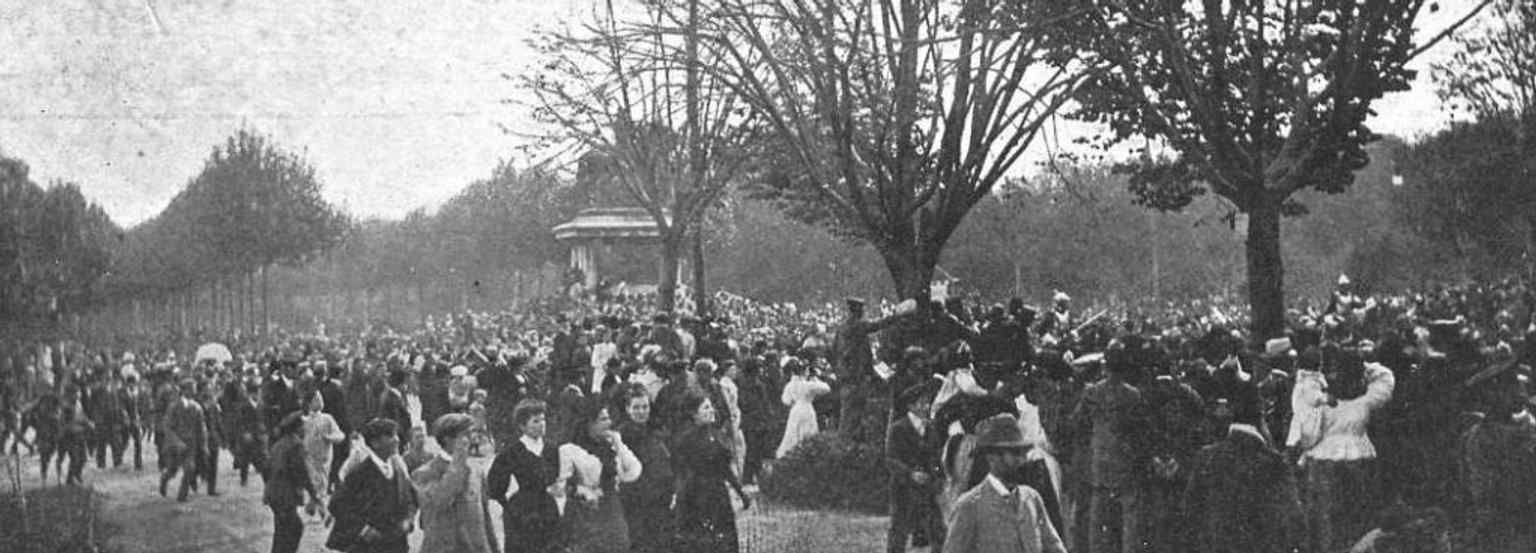
In 1869, the tides of politics shifted, and the fortress was finally handed over to the city. The locals did not hesitate. They tore down the hated walls. Out of that trauma, they decided to build something for the people. A public park.
This transformation reached its absolute peak when the city hosted the 1888 Universal Exposition. The former military execution grounds became a dazzling showcase of art, science, and modern architecture. Master builder Josep Fontserè was brought in to design lush romantic gardens and a monumental waterfall, a project that even included hydraulic work by a young, unknown assistant named Antoni Gaudí.

A few buildings from the fortress survived, including the old military arsenal, which now serves appropriately as the Parliament of Catalonia. But the cannons and prison cells are long gone, replaced by museums, a zoo, and a giant concrete mammoth statue.
This feels like the perfect place to end our journey. Find a comfortable spot on the grass or a bench under the trees. Think about the incredible transformation of this city, from a suppressed, walled-in town to a thriving, open metropolis. Thank you for walking with me today. It has been an absolute pleasure. Enjoy the park, and enjoy Barcelona.






.JPG)
.jpg)