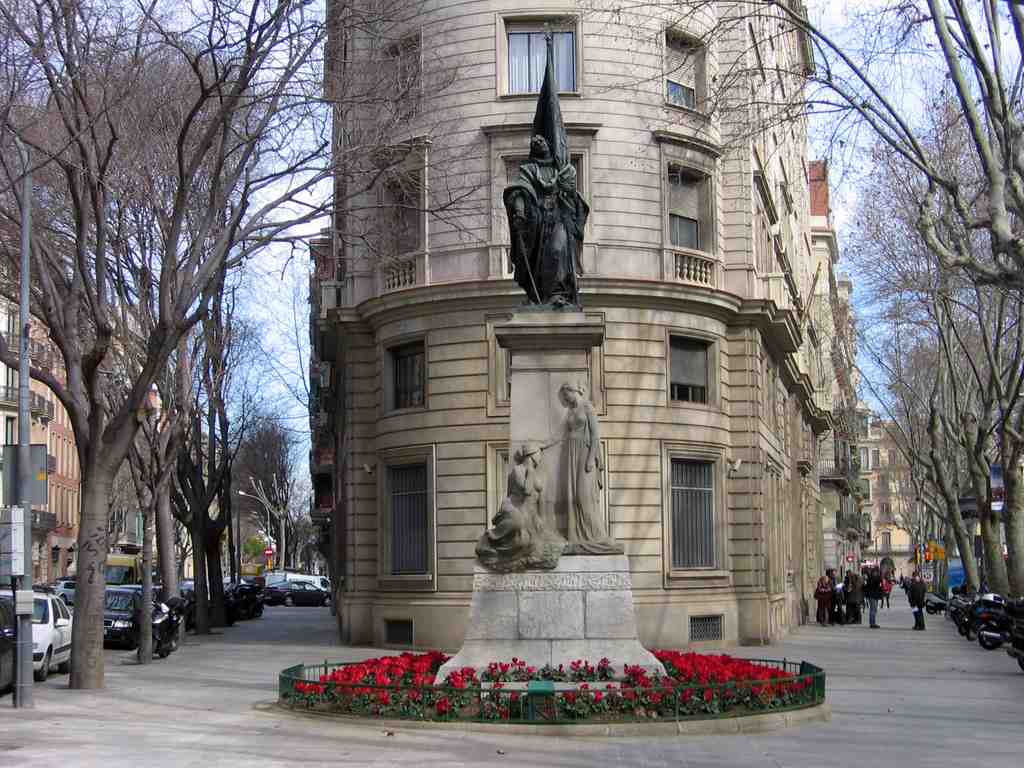
Look for the towering stone pedestal on your left, adorned with carved female figures, topped by a dark bronze statue of a man clutching a tall flag.
In September 1714, Barcelona was enduring a catastrophic siege by Bourbon troops, and right here on this exact spot, Chief Minister Rafael Casanova made his final stand. With the city's defenses crumbling, he grabbed the flag of Saint Eulalia and rallied a militia of exhausted citizens, only to be shot in the thigh as the city fell.
Take a look at the detail shot in your app. Notice how the sculptor, Rossend Nobas, did not carve a triumphant victor, but a vulnerable man leaning on his sword in pain. And that flag he is holding? The banner of Saint Eulalia, the city's co-patron saint, was a sacred relic only brought out in moments of extreme peril to the city's survival.
Casanova actually survived. He was smuggled into a hospital, disguised himself as a friar, and lived out his days under a fake name until he was quietly pardoned years later. But the memory of his stand became a powerful phantom that later authorities tried desperately to erase.
In 1939, the new authoritarian regime ordered this statue to be melted down into raw bronze to wipe the slate clean. But in a quiet act of rebellion, the city's own mayor secretly ignored the order. He had the bronze figure carefully dismantled and hidden away in a dusty warehouse on Wellington Street.
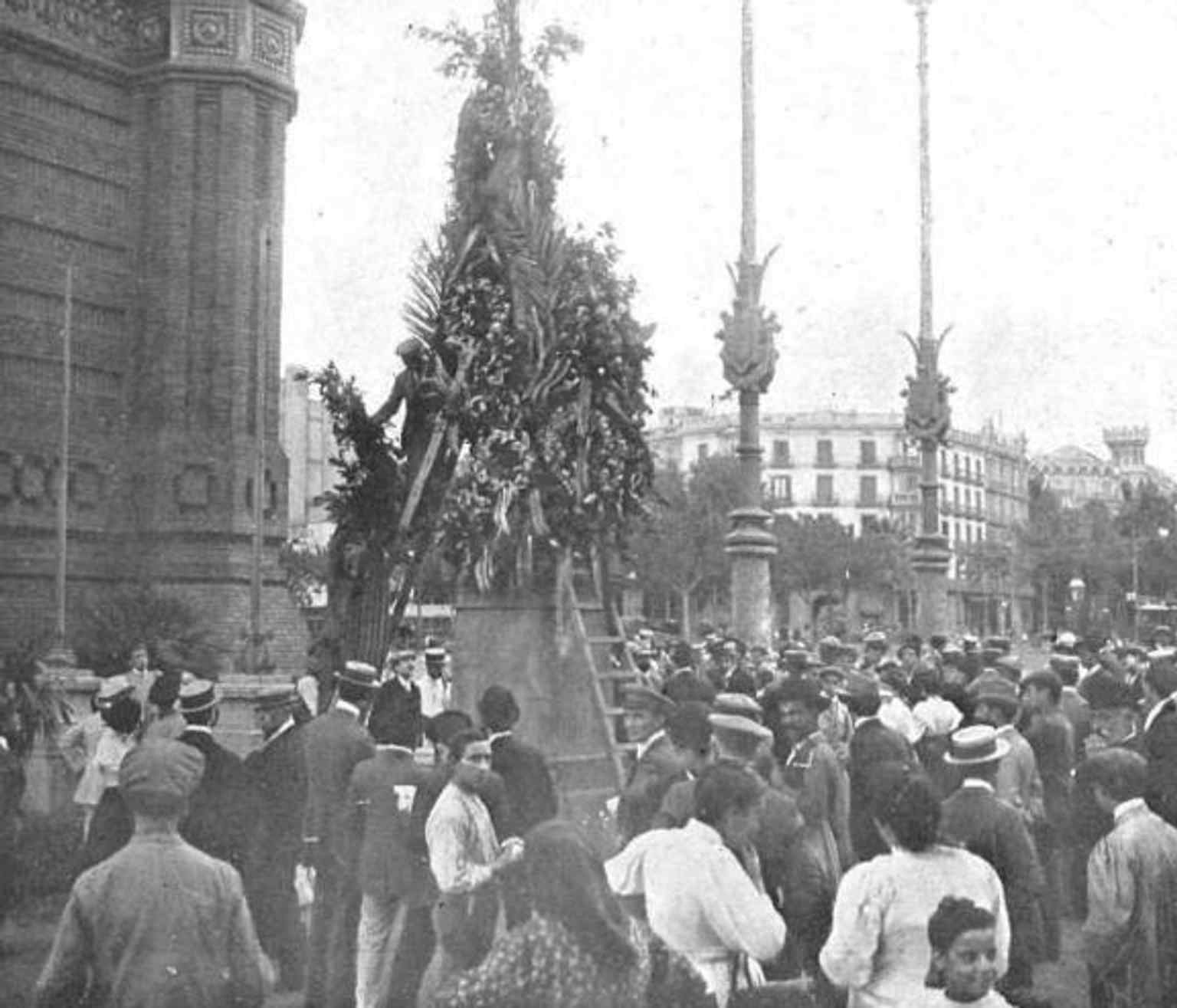
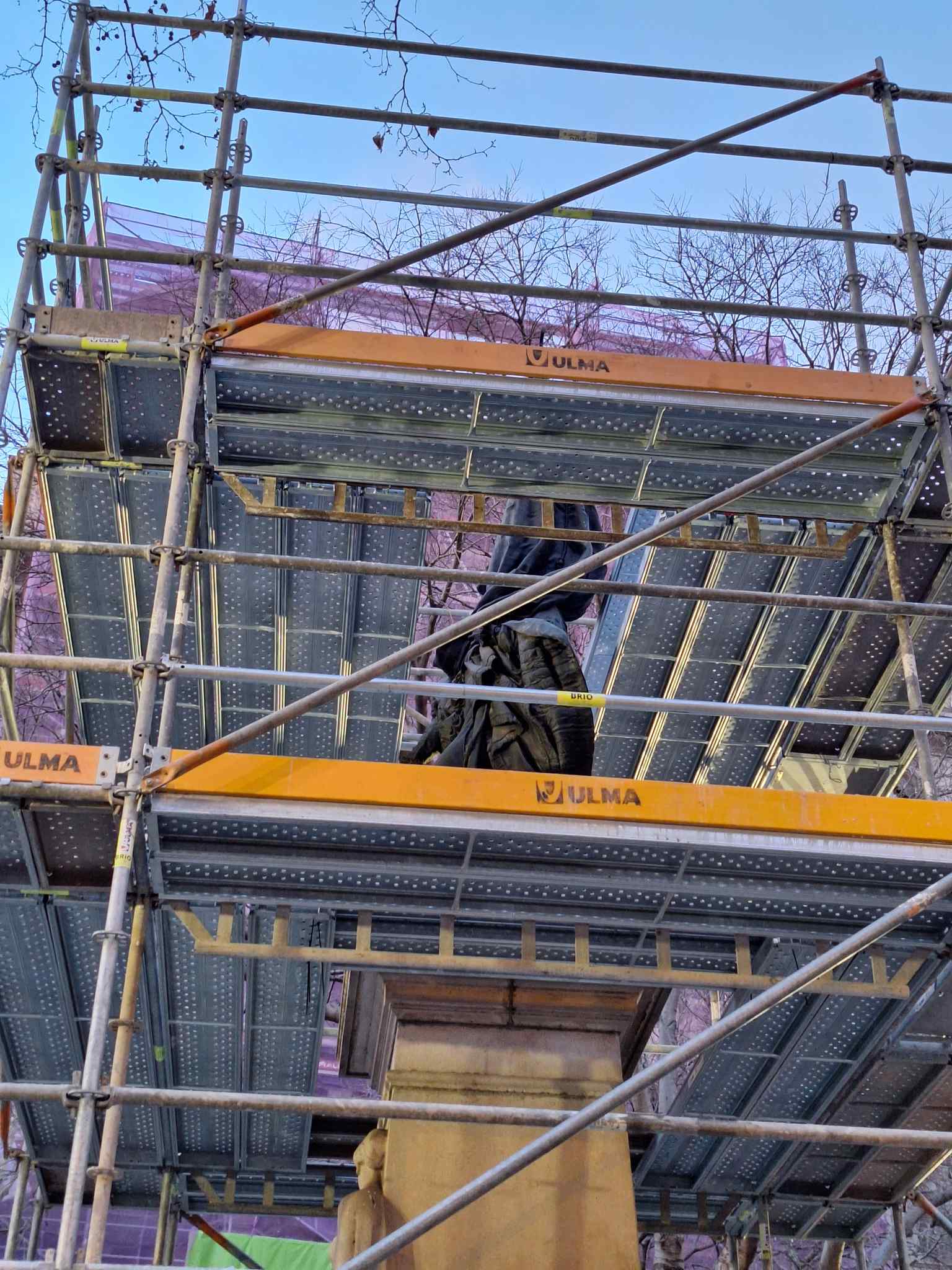
For nearly forty years, this fallen hero sat in the dark, a relic of a painful past waiting out the tide of history while visions of a modernized city took shape above him. He was finally brought back into the light in 1977 during Spain's transition to democracy. If you want to see how this space has evolved over the century, check out the before and after slider on your screen. It shows a massive memorial gathering right here in 1908, compared to recent careful restoration efforts. It is a testament to how the deepest wounds of history are carried forward, quietly wrestling with the push toward tomorrow.
As you look up at him, consider what you would do if your city was surrounded and falling... Would you stand your ground?
Since it is a public space, this monument is open twenty-four hours a day. Now, let's walk toward the grand entryway of the modern era, as we make our way to the Arc de Triomf.