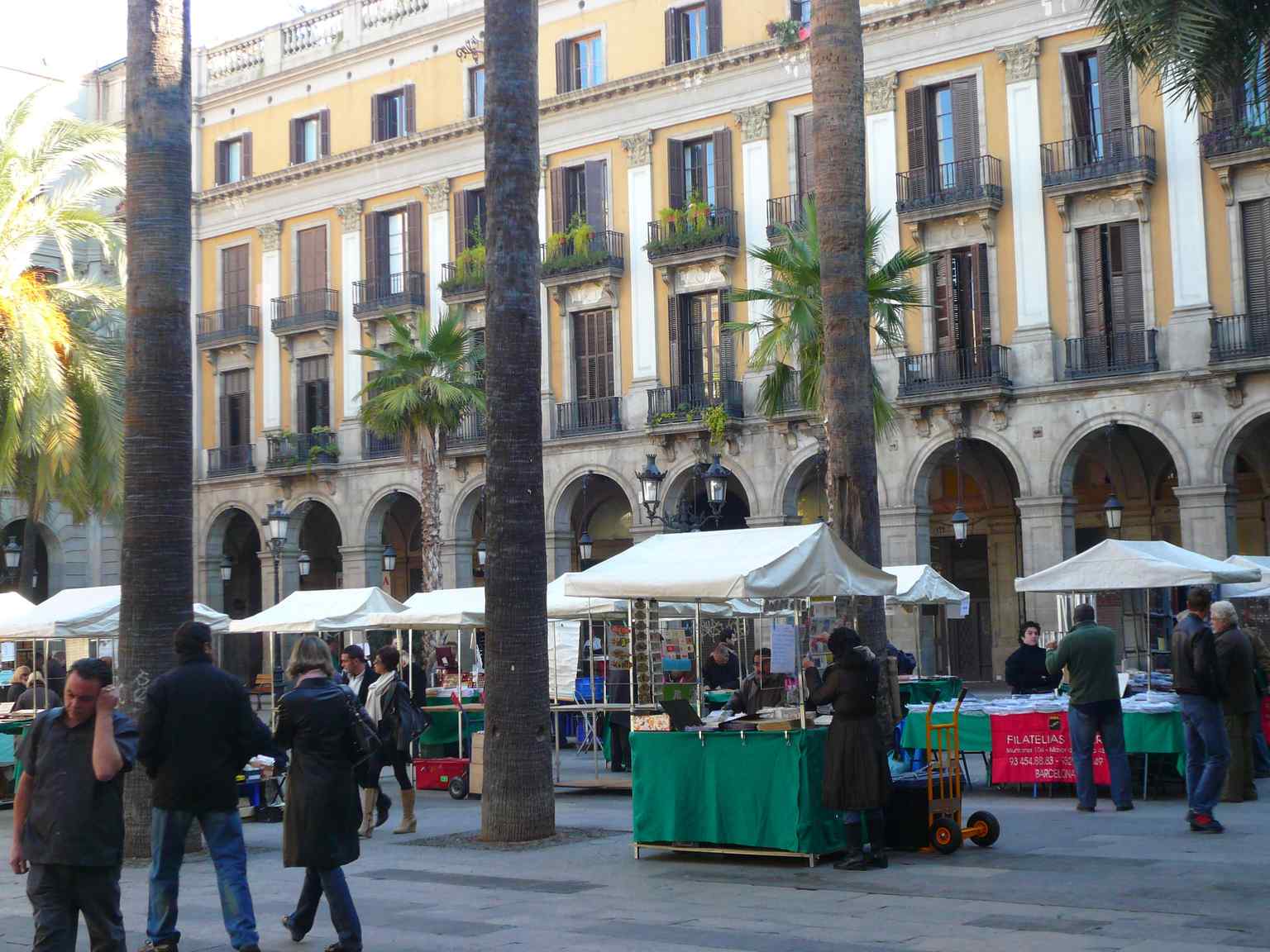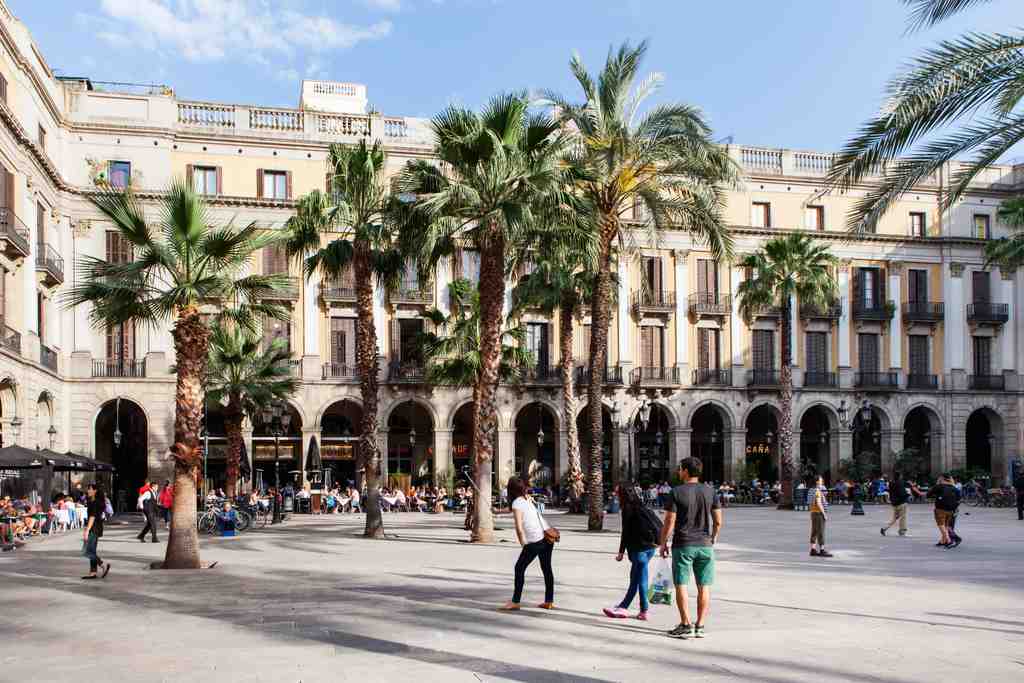
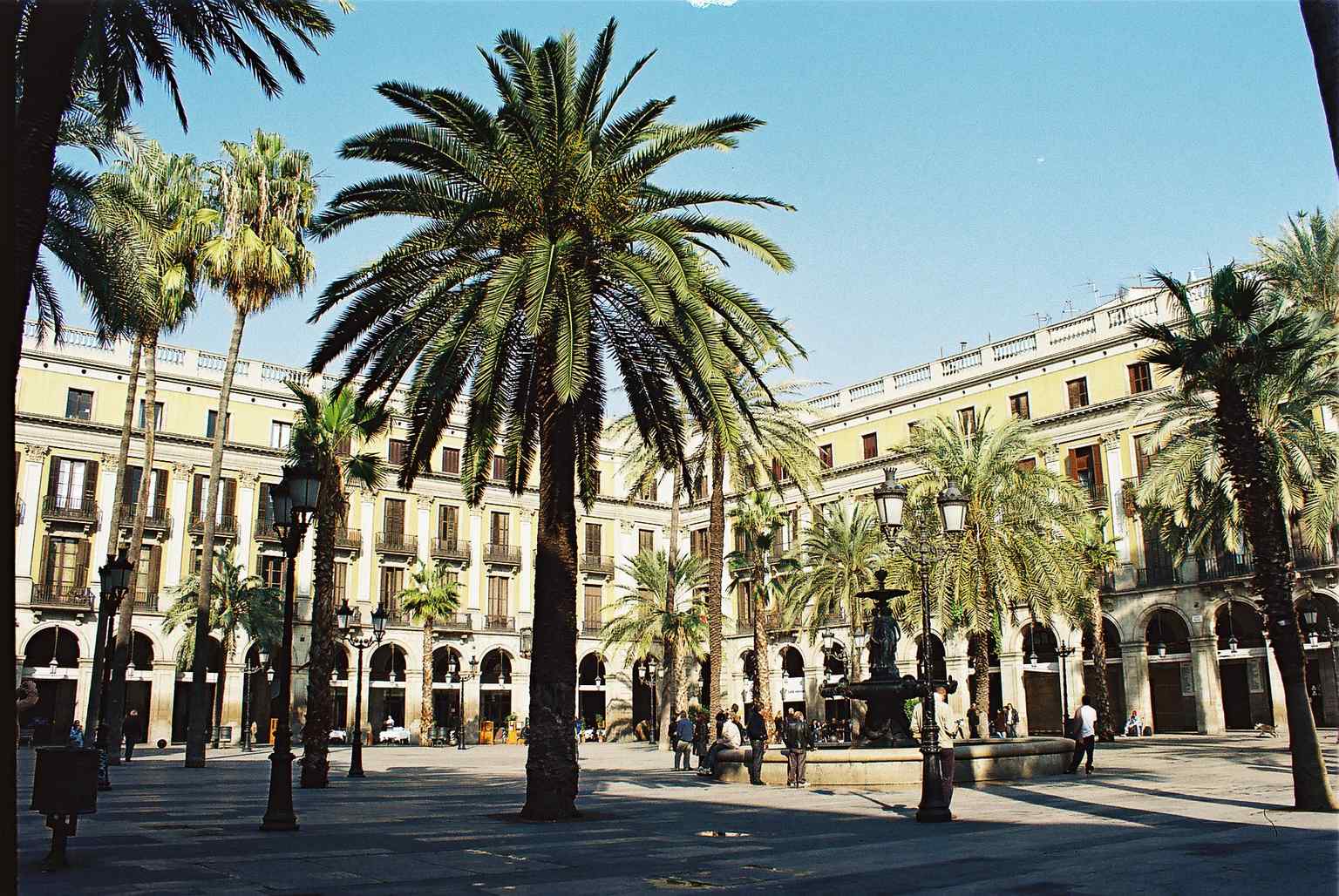
Take in this rectangular plaza bordered by uniform facades of pale stone, anchored by a continuous arcade of ground floor arches and tall ornamental columns called pilasters that stretch across the upper levels. Plaça Reial was designed in 1850 by Francisco Daniel Molina as a vision of modern, neoclassical order for the city elite. He even played a clever architectural trick, slightly shifting the spacing between the columns to make the rectangular space feel perfectly square to the eye.
But beneath this calculated geometry lies a much older, chaotic foundation. This polished public space was built directly over the demolished ruins of a monastery for Capuchin monks. The clash between this pristine new vision and the buried history surfaced almost immediately. During construction in 1848, a night watchman stumbled upon a rather macabre scene. A group of homeless children were playing a game using the skull of a monk, which they had dug out of the convent ruins. The city wanted an elegant future, but the past was literally coming to the surface.
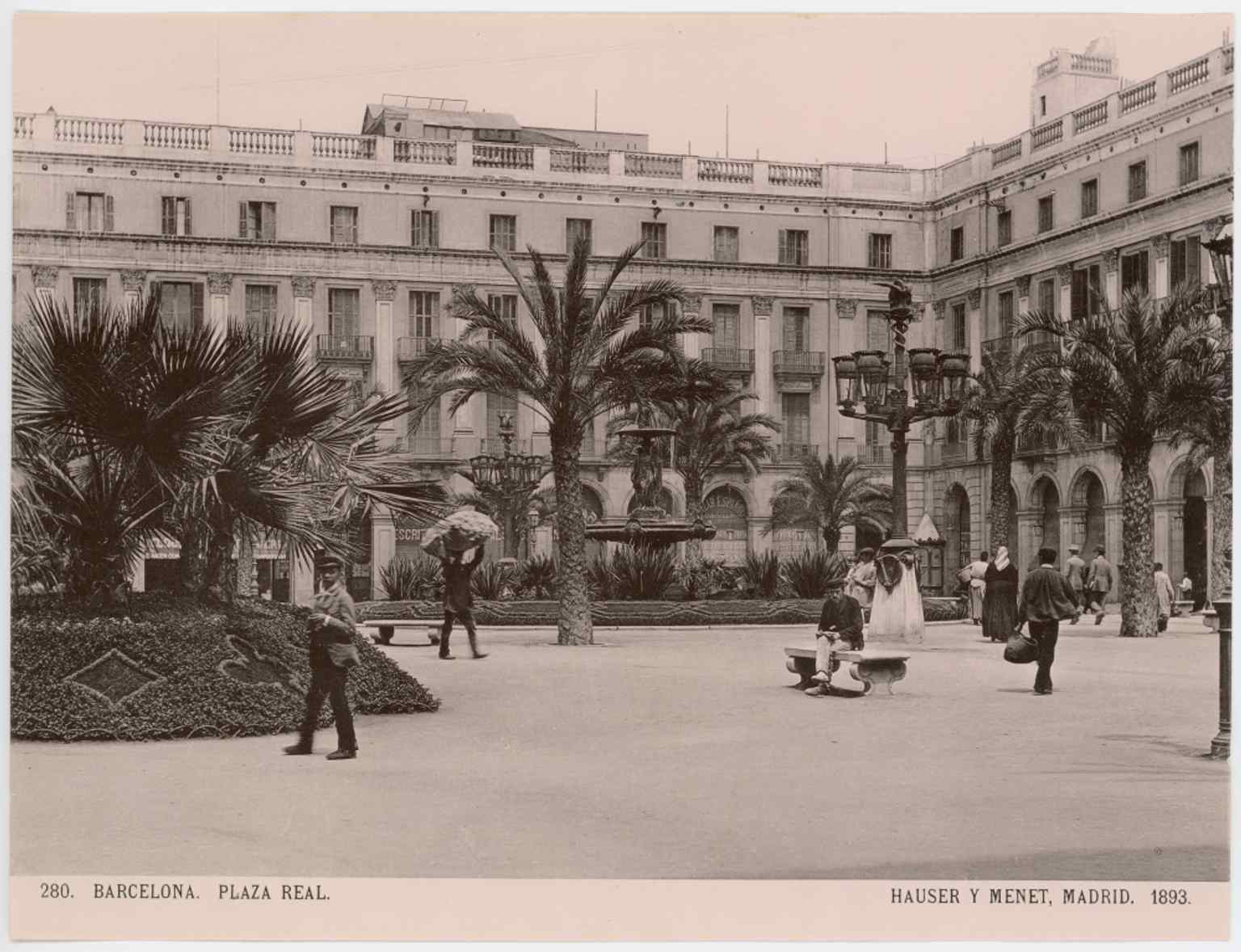
The struggle to impose order here rarely went smoothly. The city originally planned to put a grand statue of King Ferdinand in the center. During a royal visit in 1856, the bronze wasn't finished, so they awkwardly displayed a plaster model instead. The citizens detested it and promptly smashed it to pieces with stones. They eventually settled on the iron structure you see today, the Fountain of the Three Graces, which you can examine more closely in the app. To see how this space settled into its new identity a few decades later, take a glance at the old photograph on your screen.
By the twentieth century, the square's elegant veneer was hosting some delightfully eccentric characters. In 1919, a renowned taxidermy shop opened here, specializing in preserving and mounting animals. It attracted everyone from Hollywood star Ava Gardner to King Alfonso the Thirteenth, who had his favorite horse's leg preserved. Naturally, Salvador Dalí was a fan. In 1960, the surrealist painter posed right here in the center of the square on top of a stuffed Javanese rhinoceros, paying the movers twenty duros, roughly fifty dollars today, for their trouble. He also apparently walked out with a gorilla skeleton that he never paid for.
Before we leave, notice the elaborate iron lampposts. Look closely at the twisting snakes and the winged helmet of Mercury. Those were one of the very first municipal commissions given to a young Antoni Gaudí in 1879.
For all its attempts at royal dignity, Plaça Reial has always favored the rebels, the artists, and the outcasts who claimed it as their own. Let us head deeper into the labyrinthine streets of the Gothic Quarter, making our way toward the grand medieval walls of Santa Maria del Pi.