
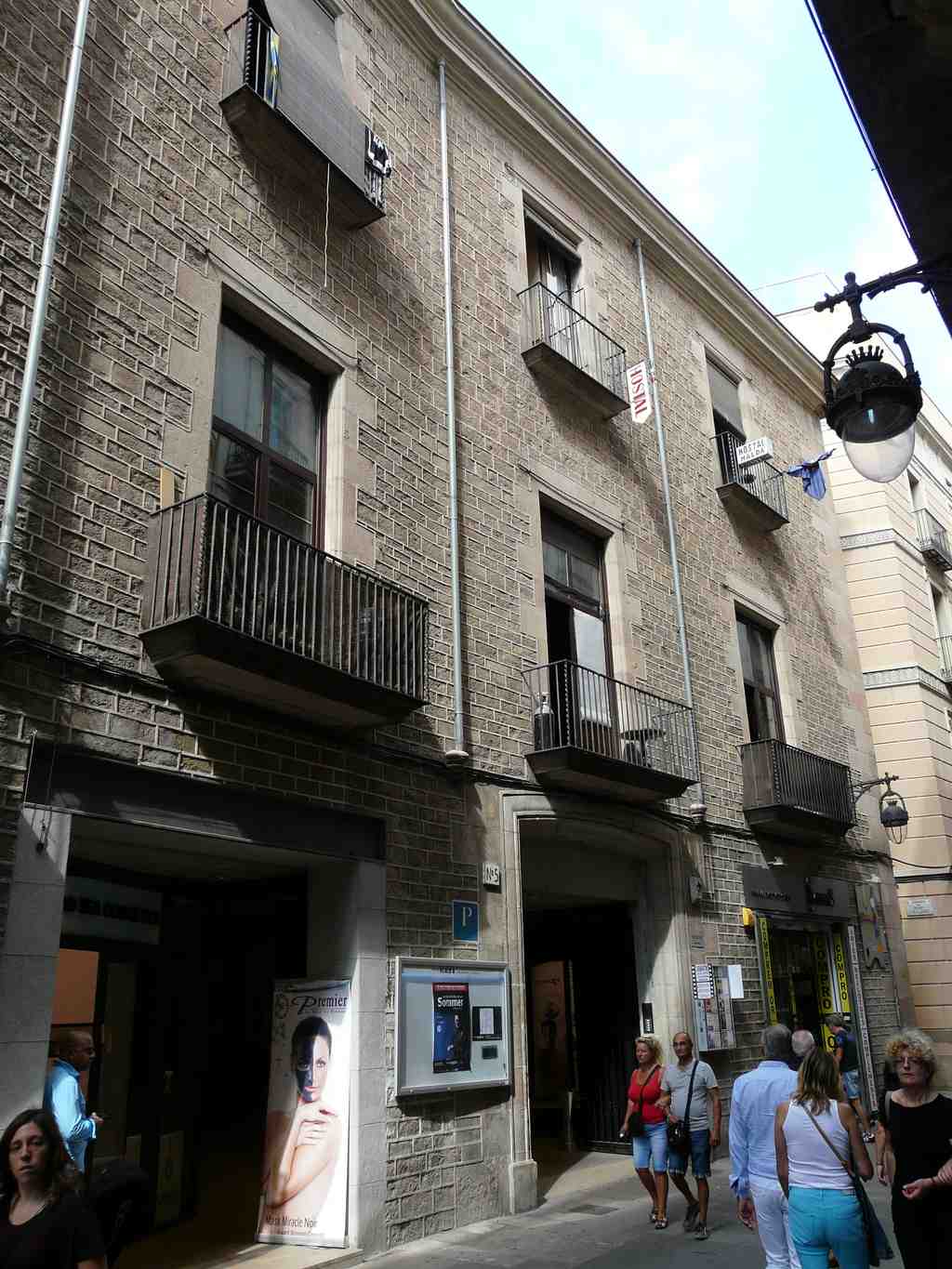
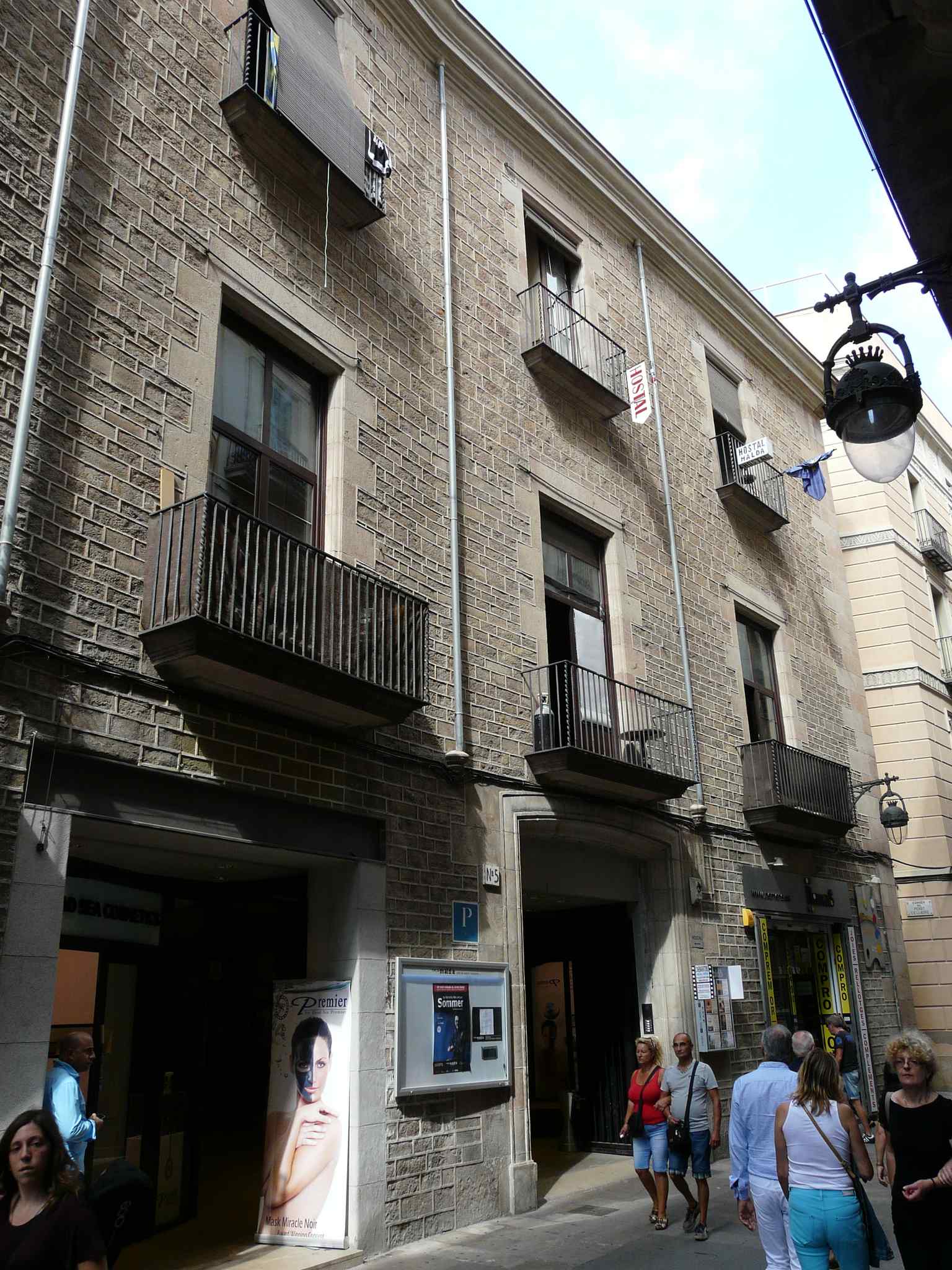
Observe the stone building on your left, characterized by its flat rectangular facade, orderly rows of wrought-iron balconies, and a large molded stone archway framing the main entrance. This is Palau Maldà. If you check the first image on your screen, you can get a good look at that archway, which originally led straight into the palace stables.
Back in the eighteenth century, this palace belonged to Rafael de Amat, the first Baron of Maldà. Rafael was an eccentric aristocrat whose main life's work was a fifty-volume personal diary. He was obsessed with what he called the sweet idleness of his life. Far from being a grand intellectual, the Baron wrote entirely for his own amusement, filling his pages with detailed, almost obsessive accounts of his extravagant meals. He fiercely defended his right to just eat well and drink better, and he absolutely refused to write in Castilian Spanish, which he dismissed as the language of the tax collector.
But that comfortable, frivolous aristocratic bubble popped in 1808. When the French invaded during the War of Independence, the terrified Baron was forced to flee his beloved palace. He spent his final years as a wealthy fugitive, wandering from town to town, furiously writing in his diary about how much he missed his cozy life back here.
Since then, this building has constantly tried to invent a new future for itself, only to be pulled back by its history. By 1942, the family had moved out, and the ground floor and gardens were transformed into the Galerías Maldà. These were glass-covered shopping corridors modeled after Parisian arcades. They were a massive hit. They even housed a beloved doll hospital for over seventy years, where toy surgeons would repair porcelain eyes and stitch up cloth limbs.
Upstairs, the Baron's former private concert halls eventually became a theater. Take a look at the second image on your app to see the interior staircase leading up to that very performance space. But those walls hold a deeper secret. During the Spanish Civil War in the 1930s, while churches across the city were being attacked, one of the palace's small theater rooms secretly functioned as a Basque Catholic chapel. It remained safely open for worship right under everyone's noses. Decades later, when the building's cinema was being renovated in 2006, workers made a surprising discovery. Hidden directly behind the movie screen was a large hornacina, a decorative recessed niche in the wall, that once held religious figures for that secret wartime congregation.
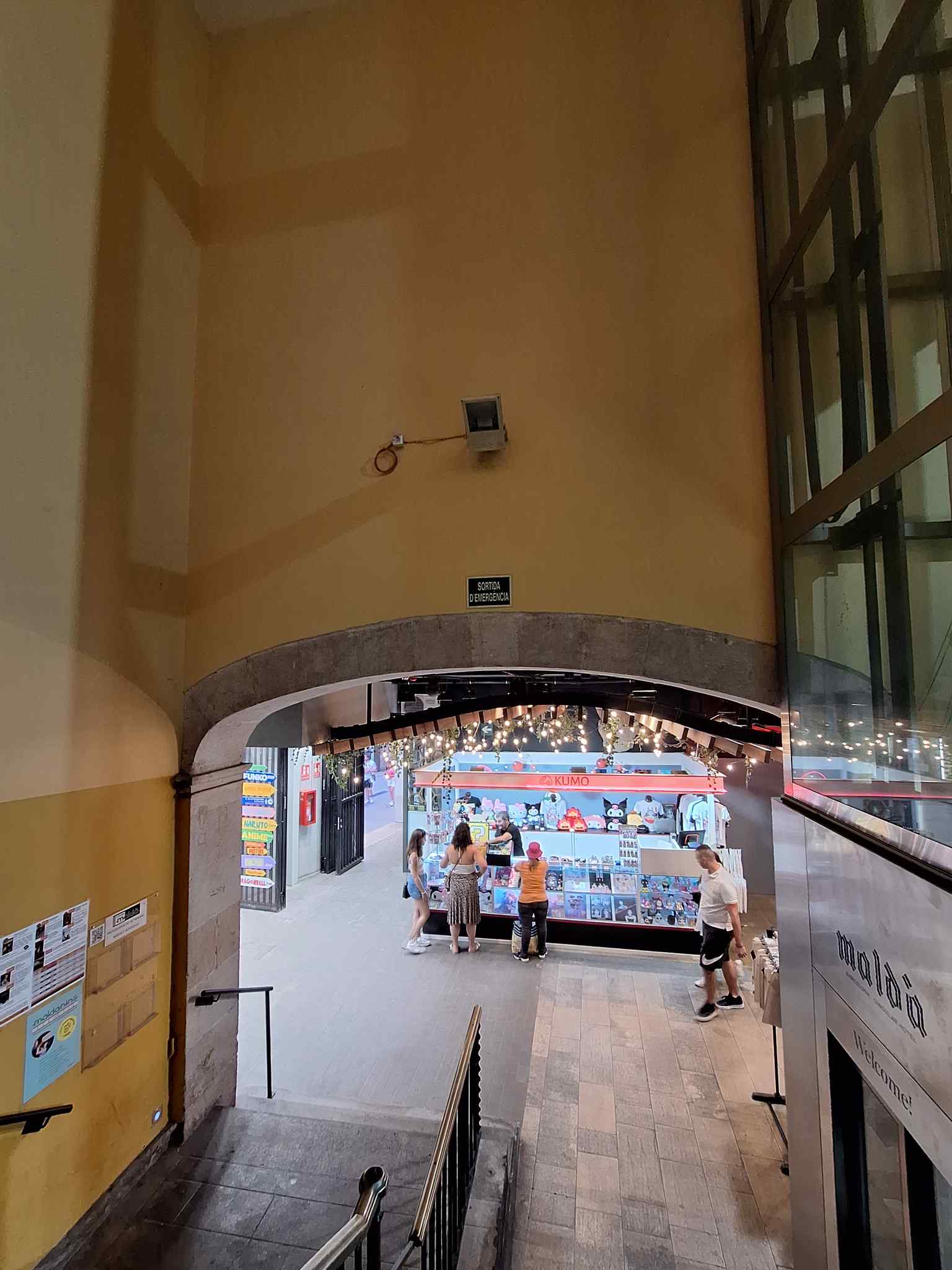
As for the shopping galleries below, they slowly turned into a ghost town by the 1980s. A sudden burst of modern progress arrived in 2017 when a massive Harry Potter store opened, briefly transforming the crumbling corridors into a booming hub for fantasy and pop culture fans. But the magic did not last. By late 2024, almost all the new themed shops abruptly closed their doors, leaving the historic corridors mostly empty once again.
It seems this palace is always caught in a tug of war between its grand visions of the future and the quiet echoes of its past. Let us leave this fading aristocratic playground behind and head toward an entirely different kind of survival. We are taking a five-minute walk over to our next stop, the Ancient Synagogue.






