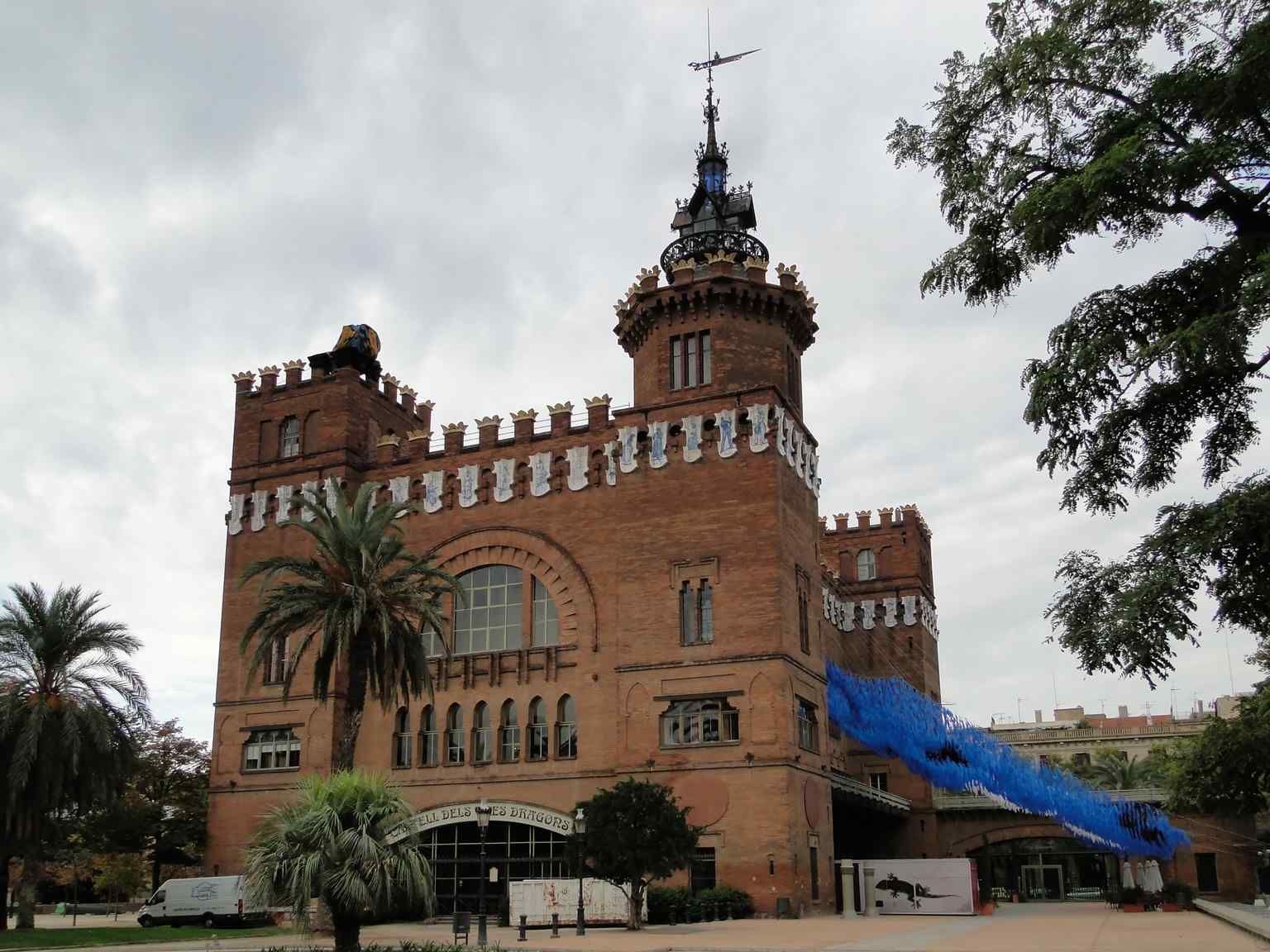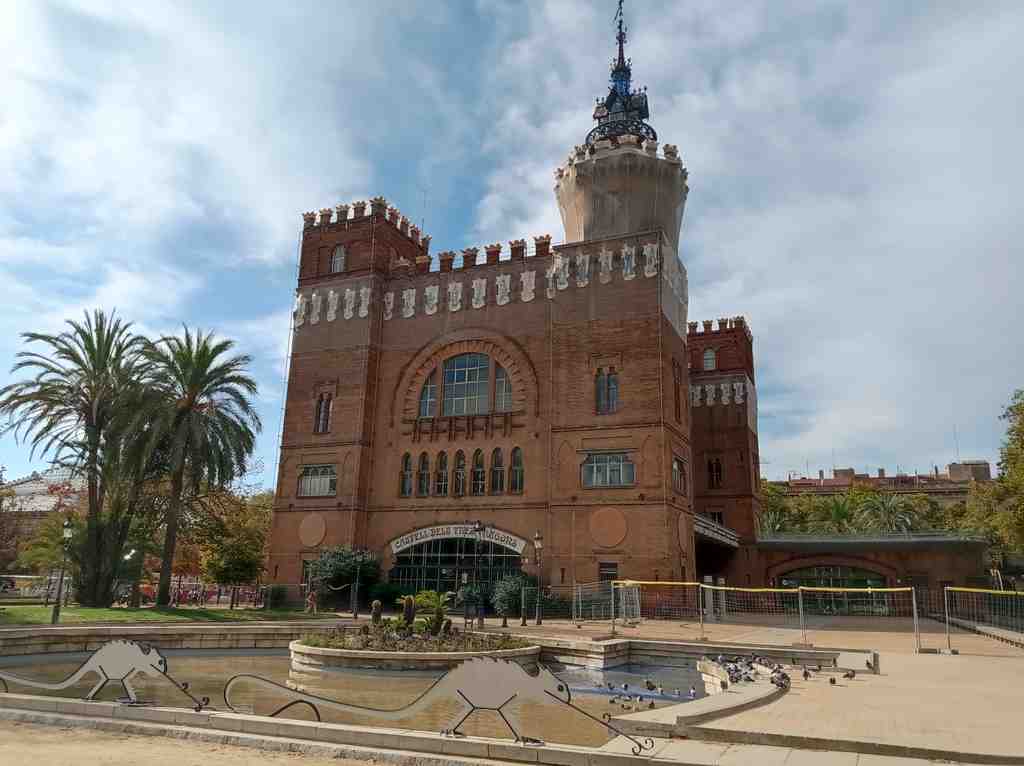
On your right stands a formidable square fortress built from exposed red brick, complete with defensive battlements and a highly ornate corner tower reaching toward the sky.
This is the Castle of the Three Dragons, and despite its ancient appearance, it was actually designed as a massive café and restaurant for The 1888 Universal Exposition. The city was in an absolute frenzy to show off its new industrial power to the world. The organizers pushed the architect, Lluís Domènech i Montaner, to deliver this architectural marvel on an impossibly tight schedule. Construction started late, the pressure was suffocating, and the workers were scrambling to lay the bricks. When the grand opening of the exposition arrived in April, the city's spectacular new dining hall was still a chaotic, dusty construction site. The humiliation was so profound that the architect outright resigned. The restaurant did not actually open its doors until August, leaving it only a few fleeting months of glory before the fair packed up.
But the public adored the building anyway. The locals took one look at its whimsical aesthetic and playfully named it after a popular satirical comedy of the era called The Castle of the Three Dragons. If you check your phone, you can see a close-up of the upper facade. Notice the ceramic shields lining the top. They feature a wonderfully bizarre mix of plants, animals, and alcoholic beverages. It was essentially a permanent, decorative menu meant to remind everyone of the building's festive culinary purpose.
After the exposition, while other massive pavilions were quickly demolished, this castle was spared. The architect eventually returned to his unfinished masterpiece and transformed it into an energetic, bohemian workshop. He gathered blacksmiths, glassmakers, and mosaicists to experiment. They wanted to pull forgotten medieval crafts out of history and collide them with modern industrial materials like raw iron. That specific tension, looking backward to traditional crafts to fuel a visionary future, laid the practical groundwork for Catalan Modernism.
Of course, a building this old carries some heavy shadows. During the Spanish Civil War, fascist bombers destroyed the castle's colossal stained-glass window, a masterpiece that once flooded the interior with light. In the grim post-war years, the space was turned into a charity dining hall. The massive, airy rooms originally designed for the international bourgeoisie to sip fine liqueurs were suddenly filled with impoverished citizens lining up for survival rations.
Let's continue our walk deeper into the trees. We will transition fully into Ciutadella Park in just a few minutes.