
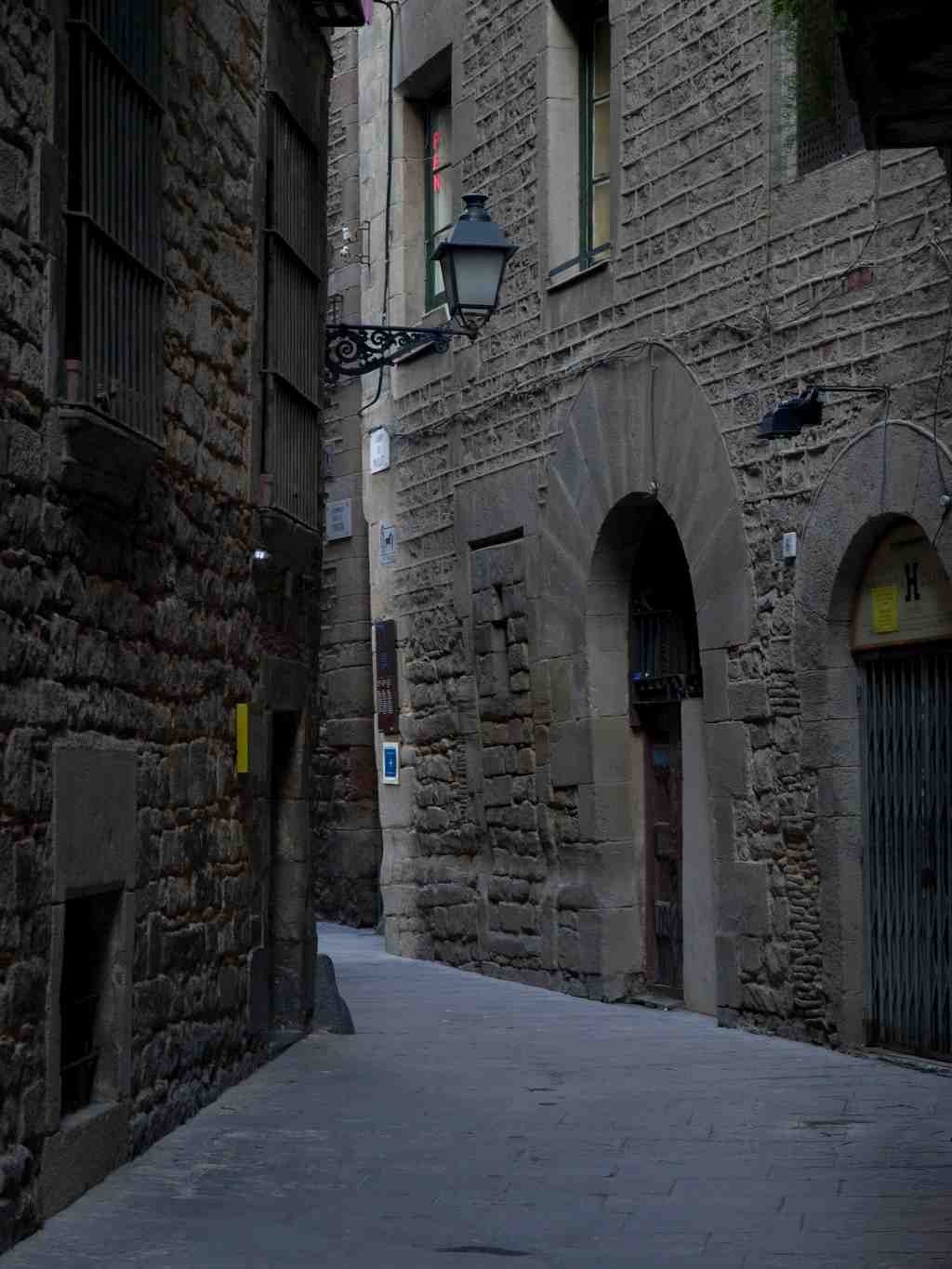
The name "El Call" comes from the Catalan language, meaning "little street" or "alley," referring to the narrow streets that were inhabited by the Jewish population. The community of Jews living here was known as the aljama.
The presence of Jews in Barcelona dates back to soon after 70 CE when small groups arrived in Europe, fleeing Roman repression during the First Jewish-Roman War. By 1079, the Jewish population in Barcelona had grown to around 70 families.
Over time, the Jewish population became concentrated within the Call, which expanded to include Carrer del Call, Carrer de Sant Domènec del Call, Carrer Marlet, and Arc de Sant Ramón del Call. As the community continued to grow and Jews expelled from France arrived, the Call Menor, or Minor Call, was established alongside the Call Major.
By the 13th century, the Call had become the largest Jewish quarter in Catalonia. During its golden age, around 15% of medieval Barcelona's population was Jewish, with the majority residing in the Jewish quarter. Jews held important positions as doctors, scientists, merchants, and money lenders for the Catalan aristocracy. Legislation even made Jews the official financiers of Catalonia's sovereigns.
However, life became more challenging for the Jewish community in Barcelona. At the Fourth Lateran Council in 1215, Jews were required to wear hoods and a red button sewn into their clothes for identification. King James I later removed this requirement in 1268.
The situation worsened in the 14th century when Barcelona faced famines and the devastating Black Death in 1348, which took the lives of many residents, including Jews. Blaming the Jewish community, an attack on the Jewish quarter occurred in 1349. The violent pogroms of 1391 across Spain essentially eradicated the Jewish quarter, with approximately 300 Jews being killed in Barcelona alone.
During the Spanish Inquisition, the Jewish population in Barcelona suffered greatly. King Ferdinand imposed restrictions on the size of synagogues and nearly wiped out the community. Nonetheless, in the center of the Jewish quarter stands the Ancient Synagogue, also known as the Sinagoga Major. This synagogue is believed to have existed since the 5th century and is one of the oldest synagogues in Europe. It underwent restoration in the 1990s and reopened to the public in 2003.
In the 21st century, Barcelona is home to an estimated 3,500 Jews, marking the largest concentration of Jews in Spain. The Jewish quarter, with its rich history and the Ancient Synagogue, serves as a reminder of the vibrant Jewish community that once thrived in Barcelona.


