
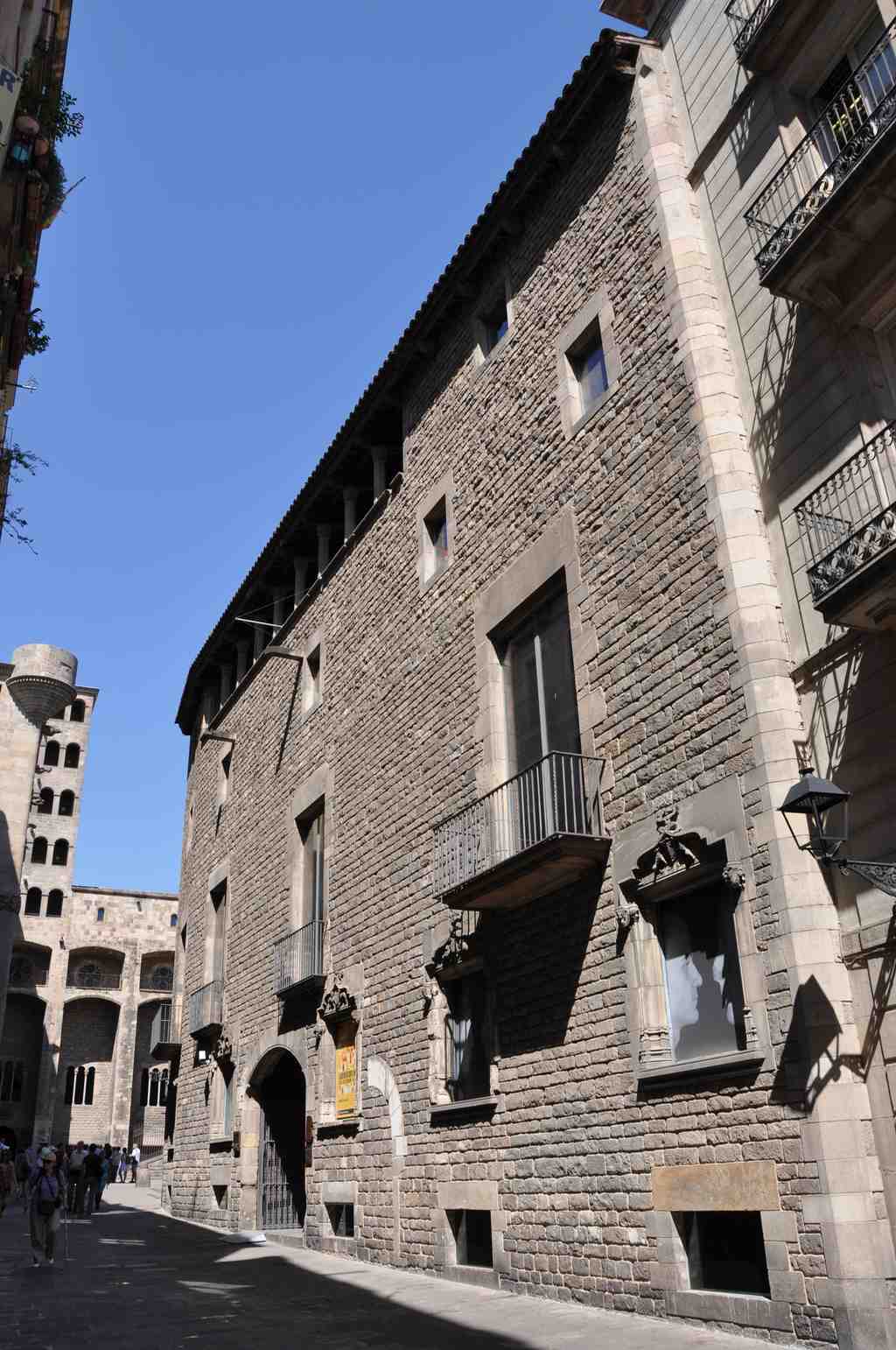
The Museum of the History of Barcelona (MUHBA) is a prestigious institution that preserves and showcases the historical heritage of Barcelona. Its main headquarters are situated on Plaça del Rei in the Gothic Quarter. However, the museum also manages several other significant sites throughout the city, ranging from ancient Roman remains to medieval landmarks such as the Jewish quarter and the Palau Reial Major. Additionally, it curates contemporary sites related to renowned architect Antoni Gaudí and the Spanish Civil War.
The museum was officially opened on April 14, 1943, under the guidance of historian Agustí Duran i Sanpere. It operates under the City Council of Barcelona as part of the Culture Institute. The museum's origins can be traced back to the late 19th century, with early attempts to establish a museum dedicated to the history of Barcelona. These efforts gained momentum during the 1929 Barcelona International Exposition when a temporary exhibition showcasing the city's past, present, and future was organized.
The construction of Via Laietana created the need to relocate Casa Padellàs, a late Gothic palace dating back to the 15th-16th centuries. During this relocation, significant remnants from the ancient city of Barcino were discovered. This discovery prompted an archaeological investigation, leading to the unearthing of an entire Roman quarter. Unfortunately, the Spanish Civil War interrupted these excavations. Nonetheless, the importance of the findings solidified the location as the optimal site for the long-awaited historical museum.
In 1943, after the war had concluded, the Museum of the History of Barcelona finally opened to the public. At the heart of the museum were the archaeological remains of the Roman and late antique city, coupled with the medieval Palau Reial Major on Plaça del Rei. The Palau Reial Major houses notable spaces such as the Saló del Tinell and the palatine chapel dedicated to Saint Agatha. Casa Padellàs also displayed objects that presented the history of Barcelona from the late medieval period to the beginning of the 20th century, encompassing various aspects such as governance, guilds, civic celebrations, wars, crafts, trade, and the city's industrial era.
Over time, the museum expanded, including the incorporation of new sites such as the Temple of Augustus and the Roman funeral way in Vila de Madrid square. The archaeological area on Plaça del Rei underwent significant renovations, with updated museography that reflects the latest knowledge on the city during the Roman and late antique periods.
In recent years, the museum has undergone further transformations. The permanent exhibition in Casa Padellàs was closed around 1990, and the space is now utilized for temporary exhibitions that offer dynamic and thought-provoking overviews of key aspects of Barcelona's history. Simultaneously, the archaeological area underwent a complete revamp, incorporating new insights into Roman and late antique times, culminating in its inauguration in 1998.
The Museum of the History of Barcelona stands as a place of reverence for the city's past, providing an invaluable resource for visitors to explore and understand Barcelona's rich historical tapestry.


